
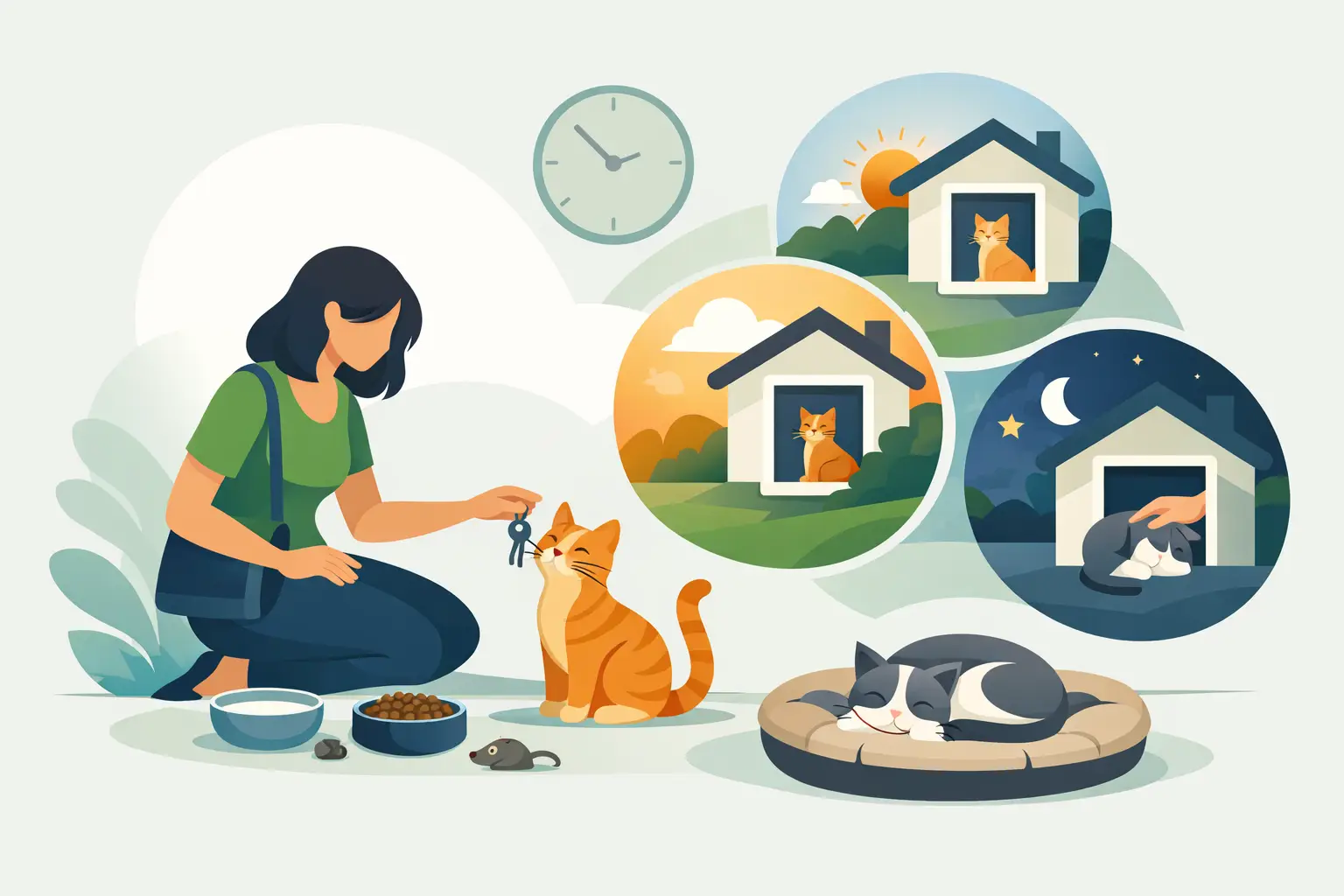
The first question most cat owners ask is simple: how many times a day should a cat sitter visit? The honest answer is that it depends on your cat, your home set-up, and how long they are being left. Some cats cope well with one good visit a day for a short period, while others are far better with two visits, or even overnight care if they are very young, elderly, unwell or need company. Looking for a cat sitter in Stockport?
Cats are often described as independent, but that can be misleading. Most are creatures of habit. They notice when breakfast is late, when the litter tray is not as clean as usual, and when the house feels unusually quiet. A good cat sitting plan is not just about topping up food. It is about keeping your cat safe, comfortable and settled while you are away.
How many times a day should a cat sitter visit for most cats?
For many healthy adult cats, one or two visits a day is usually the right range. If your cat is relaxed, has no medical needs, uses a litter tray reliably and is happy in their own home, one longer daily visit may be enough for a short trip. That visit should cover feeding, fresh water, litter cleaning, a basic wellbeing check and some time for fuss or play, depending on your cat’s personality.
Two visits a day often gives better peace of mind, both for cats and their owners. It keeps the gap between checks shorter, which matters if food bowls are knocked over, water needs refreshing, or your cat decides to hide somewhere unusual. It also helps maintain a more normal routine, especially for cats used to breakfast and tea at set times.
In practice, many owners choose two daily visits because it feels more reassuring. It means someone sees your cat morning and evening, notices changes more quickly, and keeps the home looking lived-in. That extra check can make a real difference if your cat is prone to stress, has a sensitive tummy or simply likes company on their own terms.
When one visit a day may be enough
One visit a day can work well in the right circumstances. Usually, that means a healthy adult cat, a short absence, and a calm cat who is comfortable being alone between visits. If your cat has access to enough fresh water, eats well on a simple routine and is not taking medication, one thorough visit may be perfectly suitable.
That said, the quality of the visit matters. Ten rushed minutes is not the same as a proper check-in. A professional sitter should have time to feed your cat, clean the litter tray, look for any signs of illness or upset, and spend a little time making sure everything feels normal.
Even with easy-going cats, owners sometimes underestimate how much can change in 24 hours. A cat can go off their food, become sick, get locked in a room, or stop using the litter tray properly. That is why one visit a day is usually best for shorter periods and lower-needs cats, rather than as a one-size-fits-all rule.
When two visits a day are the better choice
Two visits a day are often the safer and kinder option. If your cat is sociable, follows a routine closely or gets anxious when things change, morning and evening visits can help them stay settled. It also means meals can be spaced more naturally, particularly for cats who are used to being fed twice daily rather than grazing.
This schedule is especially helpful for indoor cats. Because they rely entirely on their home environment, regular checks matter more. There is no popping outside for stimulation or choosing another spot to settle in. A sitter visiting twice a day can spot changes quickly and give your cat a bit more interaction in between long stretches alone.
Owners often choose this option when going away for more than a night or two. It reduces the time your cat spends without any human contact and gives much better oversight of eating, drinking and litter habits. If you are already feeling uneasy about leaving your cat, two visits generally offers more reassurance without the disruption of moving them elsewhere.
Cats that may need more than two visits
Some cats need more support than the average healthy adult. Kittens are one example. They need more frequent feeding, closer supervision and more social interaction. Leaving a young kitten for long periods is rarely a good idea, so multiple visits or overnight care is usually more appropriate.
Older cats can also need extra attention, especially if they have arthritis, kidney issues, diabetes, thyroid problems or reduced mobility. Medication schedules may make one daily visit unrealistic. If a cat needs tablets, insulin, special meals or close monitoring, a tailored care plan is the sensible option.
Then there are cats recovering from illness or surgery. In those cases, the question is not simply how many times a day should a cat sitter visit, but what level of monitoring your vet would expect. More frequent visits may be needed to check wounds, appetite, toileting or behaviour.
Personality matters more than people think
Two cats in the same house can need completely different care. One may barely look up when a sitter arrives. The other may follow them from room to room and want a lap for half an hour. That is why personality matters just as much as age or health.
Timid cats still need checking properly, even if they hide. A sitter should know how to look for signs that they have eaten, used the tray and moved around normally. Very friendly cats may not be medically needy, but they can become stressed or lonely if left with too little interaction.
Routine-loving cats also tend to do better with more frequent visits. If your cat waits by the kitchen at 7am every day, a wildly different schedule while you are away can unsettle them. Keeping close to their usual pattern helps them feel secure.
Other factors that affect visit frequency
Your home set-up can influence what is sensible. If your cat uses timed feeders, has several water stations and there are no health concerns, one daily visit may be workable. If your cat is messy with food, likes turning over water bowls or has a habit of causing low-level chaos, a second visit becomes far more useful.
Multi-cat households also need a bit more thought. Even cats that usually live together peacefully can behave differently when their owners are away. One cat may guard food, another may become withdrawn, and litter trays can get soiled more quickly. More regular visits help keep things calm and hygienic.
Length of trip matters too. One daily visit for a single night is very different from one daily visit for a full week. The longer you are away, the more valuable regular monitoring becomes. Small issues are easier to manage when they are picked up early.
What a good cat sitter visit should include
A proper visit is about more than food and a quick glance. Your sitter should refresh water, feed according to your instructions, clean the litter tray, and check your cat’s general condition. That includes noticing changes in appetite, sickness, toileting, mobility or behaviour.
They should also make time for whatever your cat enjoys, whether that is play, brushing, a chat in the kitchen, or simply sitting quietly nearby. Not every cat wants cuddles, and good care means respecting that.
For owners, updates make a big difference. A message after each visit, along with photos where appropriate, can be very reassuring. When you know your cat has eaten, looked bright and had a clean tray, it is much easier to relax while you are away.
So, what is the best answer?
If you want the safest general rule, most adult cats are best with at least one proper visit a day, and many are better with two. One visit can be enough for some healthy, settled cats on short trips. Two visits are often the better option for routine, reassurance and earlier spotting of problems. Cats that are young, elderly, unwell or especially needy may require more frequent care.
The best plan is the one built around your cat, not a generic assumption that cats are fine on their own. At Scamps and Champs, that is exactly how we look at it – as individual care for individual pets, with the reassurance of trusted, insured and DBS-checked carers.
If you are ever unsure, it is worth asking yourself one simple question: would this schedule keep your cat comfortable, not just covered? That usually points you towards the right level of care.