
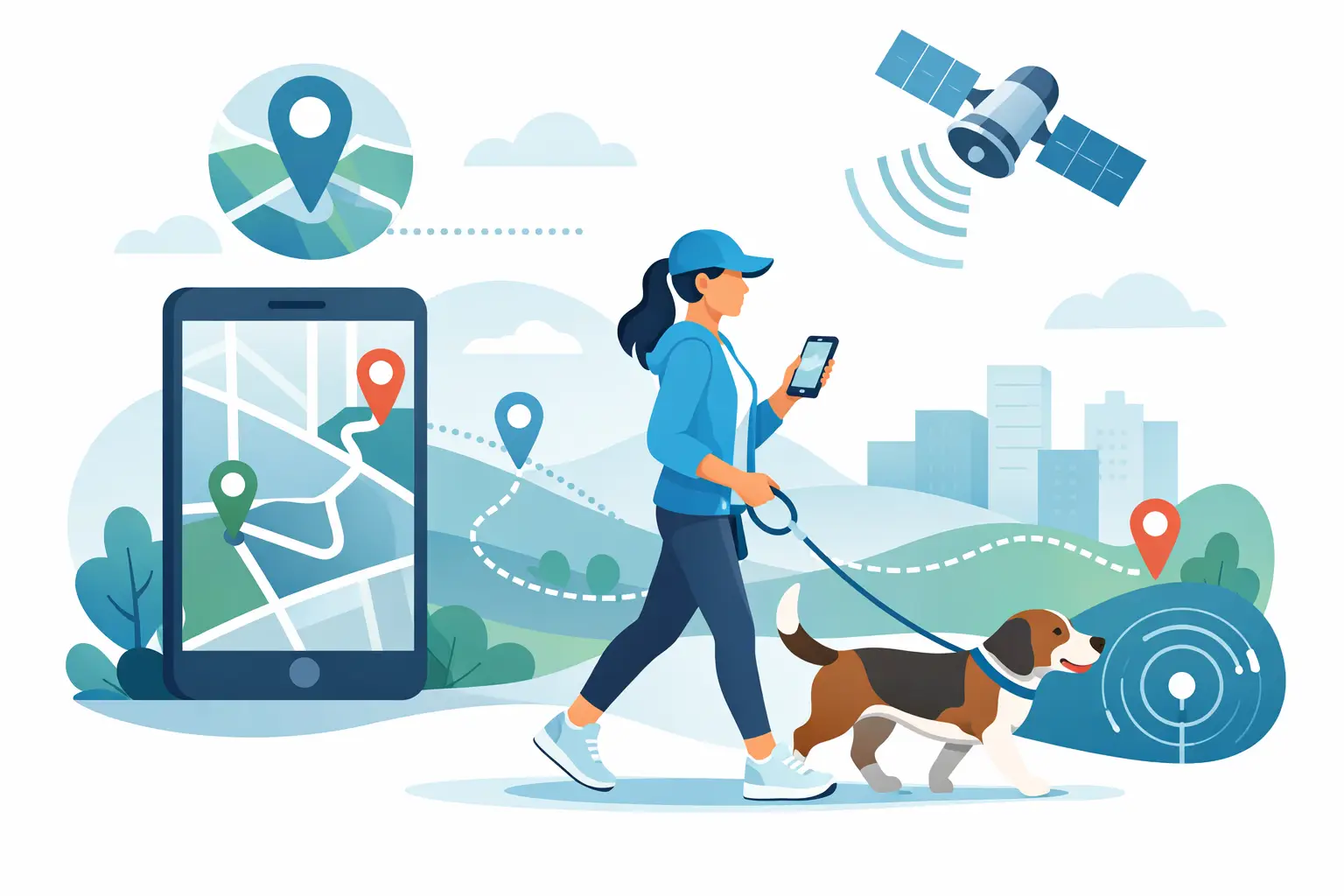
A walk can be the happiest part of your dog’s day, but it is understandable to wonder where they have been, how long they were out and whether everything went smoothly while you were at work or managing a busy family day. That is how dog walking GPS tracking works at its best: it turns a simple walk update into clear, practical reassurance.
Rather than needing to chase for information, you can see a record of your dog’s outing and feel closer to their day, even when you cannot be there yourself. It is not about replacing a caring, experienced dog walker. It is about adding visibility and accountability to the personal care your dog receives.
What GPS tracking does during a dog walk
GPS stands for Global Positioning System. A GPS-enabled mobile phone or device receives signals from satellites and uses them to calculate its approximate position. During a dog walk, the dog walker’s mobile phone usually does this job through a walking app. The app records location points as the walker moves, along with the time of the walk and its duration.
Those location points are then joined together on a map to create the route you see afterwards. Depending on the system being used, you may also receive a notification when the walk starts or finishes, plus a photo, note or update from the walker.
In plain English, the technology records the journey so you can see that your dog has enjoyed the outing booked for them. It may show the park, woodland path or local streets used, the distance covered and how long the walk lasted.
The information is usually sent through a secure app or booking system using mobile data or Wi-Fi. If signal is weak in a rural spot, under heavy tree cover or between buildings, the route may update later or show a small gap. That does not necessarily mean a walk has been missed. It usually means the mobile phone could not send or pinpoint every location point at that moment.
How dog walking GPS tracking works in practice
Before setting off, the walker opens the relevant app and starts the walk. The mobile phone begins logging location data in the background. As they move, it saves regular points along the route. At the end, the walker stops the activity, adds any notes needed and sends the completed update to the owner.
A good update should make sense alongside your dog’s usual routine. For example, a young and energetic spaniel may cover a longer route than an older dog who prefers a gentle sniff around the neighbourhood. Distance alone is never the full story. A slower, shorter walk can be exactly right for a senior dog, a puppy, a dog recovering from illness, or a pet who finds busy environments overwhelming.
This is why GPS tracking is most helpful when it sits alongside individual care. The map confirms the outing, while the walker’s update provides the context: whether your dog was relaxed, had a good sniff, enjoyed seeing a familiar dog friend or needed a quieter route that day.
What you will normally be able to see
Most dog walking GPS records include a map of the completed route, the start and finish time, total duration and an estimated distance. Some systems also display the walker’s location during the walk, though this depends on the app and the service’s settings.
Photos and short notes add the human detail that a map cannot provide. A route line cannot tell you that your Labrador found a favourite puddle or that your nervous rescue dog was pleased to see their regular walker. For many owners, that combination of practical records and personal communication is what brings the most comfort.
GPS tracking is reassurance, not a substitute for safe handling
A map is useful, but it should never be the only reason you choose a dog walking service. GPS data can show where a walk took place. It cannot, on its own, show whether your dog was handled thoughtfully, walked with suitable companions or given the right support around traffic, livestock and other dogs.
The foundations still matter: a reliable local carer, appropriate insurance, DBS checks, clear communication and a proper understanding of your dog’s needs. A responsible walker also plans routes with the dog in mind, checks leads and harnesses, carries water when appropriate and makes sensible decisions if the weather or environment is not right.
For dogs walked off lead, recall, temperament and the safety of the location need even more careful consideration. GPS tracking does not make an unsafe off-lead situation safe. It simply provides a record of where the person carrying the GPS-enabled device travelled.
It is also worth knowing the difference between walker tracking and a tracker attached to a dog’s collar. A walking app generally tracks the walker’s mobile phone, which is ideal for confirming the route completed during a professional visit. A collar tracker follows the individual dog and can be useful for some pets, but it relies on battery life, fit, signal and the dog keeping the collar on. The two tools solve different problems.
Why GPS updates help busy pet owners
When you are in a meeting, on the school run or travelling for work, a prompt update can remove a lot of uncertainty. You do not have to spend the afternoon wondering whether the walker arrived or whether your dog had their usual exercise. You can check the completed walk when it suits you.
This is particularly valuable for owners whose dogs have a set routine. Perhaps your dog needs a midday toilet break, is building confidence after being adopted, or benefits from regular exercise because they are full of beans at home. The record creates a useful rhythm and makes conversations with your walker easier. If your dog seems unusually tired, unsettled or keen for more exercise, you have a clearer picture of their recent activity.
At Scamps and Champs, GPS tracking is part of the reassurance we aim to provide, alongside caring local pet professionals and regular communication. Pets are individuals, and owners deserve to know they are being treated that way.
The limits of GPS data to keep in mind
GPS is highly useful, but it is not perfectly precise. A map may place a point on the wrong side of a road, cut across a corner or make a route appear slightly different from the path walked. Mobile phone battery, mobile coverage and satellite reception all affect the detail recorded.
A live location view can also be less useful than it sounds. Constantly checking a dot on a map may create worry if a walker pauses to let dogs sniff, deal with a lead adjustment or wait safely before crossing a road. A completed record, backed up by a friendly update, is often more meaningful than watching every minute unfold.
Privacy matters too. Professional services should handle customer and walk information responsibly, share it only with the relevant owner and use secure systems. It is reasonable to ask how updates are sent, whether records are retained and who can access them.
Making the most of your dog’s walk updates
At the start of a new arrangement, tell your walker what matters most to you. You may want confirmation of arrival and departure, a photo after the walk, or an update if your dog has toileting, medication or behaviour needs. Clear expectations help everyone.
Try not to judge each walk by mileage alone. Dogs need different things on different days. A hot afternoon may call for a shorter shaded walk. Heavy rain may mean a practical route followed by towel drying and a settled rest at home. A dog who has spent ten minutes calmly sniffing may have had a far more satisfying outing than one hurried along a longer route.
The most reassuring GPS update is one that fits the dog you know: a sensible route, an appropriate length of time and a note from a carer who has noticed the little details. When technology supports genuine attention, you can get on with your day knowing your dog’s time out has been properly cared for.