
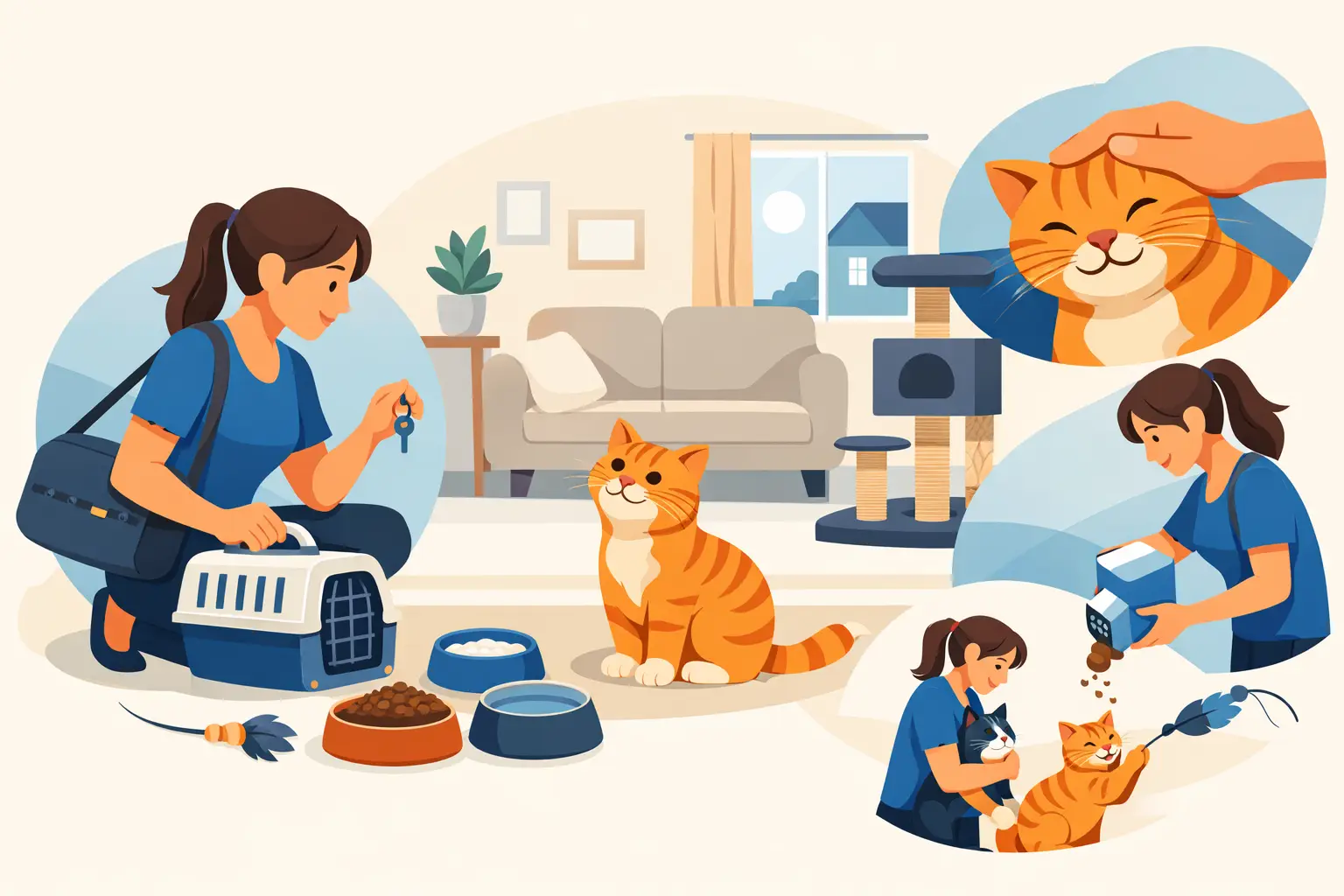
Cats have a reputation for being independent, but anyone who shares their home with one knows how quickly a missed meal, dirty litter tray or change in routine can unsettle them. This guide to cat sitter visits explains what good in-home care looks like, how to prepare, and what will help your cat feel safe while you are away.
For most cats, staying in their own home is the friendlier alternative to a cattery. They keep their familiar smells, favourite sleeping spots and usual territory, while a trusted carer comes to them. The right visits offer more than filling a bowl – they provide company, observation and the reassurance that somebody is checking your cat properly.
How often should a cat sitter visit?
The answer depends on your cat, not simply how long you are away. A healthy, confident adult cat may be content with one thorough visit a day for a short trip, particularly if they spend time outdoors and are used to their own company. Many owners prefer two visits daily, though, as this keeps feeding times consistent, gives the litter tray a second clean and means any change in behaviour is noticed sooner.
Kittens, elderly cats and cats taking medication usually need more frequent attention. The same applies to indoor-only cats, cats with health conditions, bonded pairs that rely heavily on people, or cats that become anxious when their routine shifts. A carer can recommend a visit pattern after meeting your cat and hearing how they normally spend their day.
A visit should never feel rushed. Feeding, fresh water and litter care come first, but a good sitter also takes time to look for signs that your cat is comfortable and well. That may mean a gentle play session with a lively young cat, quiet conversation with a shy one, or simply sitting nearby while they decide whether to come out.
What happens during cat sitter visits?
Every cat has their own idea of good company. Some will meet a sitter at the door and demand breakfast; others will appear only after a patient few minutes. A professional cat sitter adjusts their approach rather than expecting instant affection.
During a typical visit, your cat’s carer will provide the food you have asked for, refresh water bowls, clean the litter tray and check the areas your cat uses most. They will also look out for practical issues around the home, such as an open window, a knocked-over water bowl, an accident outside the litter tray or a room your cat has accidentally shut themselves out of.
Just as valuable is the wellbeing check. A sitter should notice whether your cat has eaten, drunk, used the litter tray, moved normally and behaved like themselves. Cats can be subtle when something is wrong. Hiding more than usual, refusing a favourite food, repeated vomiting, diarrhoea, straining in the tray or a sudden change in energy are all details worth acting on, not brushing aside.
With your permission, regular updates can make a real difference when you are away. A short message and a photo let you see that your cat is settled, while giving the carer a clear way to raise any concern promptly. You should not have to spend your holiday wondering whether the person has been in.
Prepare your home before the first visit
A little preparation gives your sitter the space to focus on your cat rather than searching through cupboards or trying to interpret vague instructions. Aim to have everything your cat needs in one obvious place, including food, treats, medication, litter, cleaning supplies and their carrier.
Write down your cat’s normal routine in plain English. Include what and when they eat, how much they usually have, whether they are allowed treats, where they tend to hide, and which toys or games they enjoy. Mention habits that may seem small but help a sitter judge what is normal – for example, whether your cat sleeps under the bed every morning or asks to go into the garden after tea.
It also helps to leave clear instructions for doors, windows, alarms and any cat flap. If your cat is allowed outside, be specific about when they can go out, whether they should be called in at night and what to do if they do not return at their usual time. Some cats are happiest kept indoors while their owner is away, so make that decision before you leave rather than assuming the sitter will know.
Make sure there is enough food and litter for the full booking, plus a little extra in case your return is delayed. Put your vet’s details somewhere visible and leave an emergency contact who can make decisions if you cannot be reached. If your cat has pet insurance, keep the policy information available too.
Do not forget the carrier
Even indoor cats should have an accessible, secure carrier. If a cat needs urgent veterinary care, the last thing anybody needs is a frantic search for one in the loft. Leave it out with the door open for a few days beforehand if your cat dislikes it. A familiar blanket inside can make it less stressful if it is needed.
The meet and greet matters
The first meeting is not a formality. It is the chance for your cat to meet their potential carer at their own pace, and for you to see whether the arrangement feels right. A caring sitter will ask questions, listen closely and avoid making promises that do not suit your cat’s needs.
Be honest about anything that could affect a visit. Tell them if your cat scratches when frightened, escapes through a particular window, hates being picked up or has a history of urinary problems. This is useful safety information, not something to be embarrassed about. The more a sitter knows, the better they can provide calm, appropriate care.
It is also sensible to ask how keys are handled, what happens if the sitter is unwell, how updates are sent and what their process is if they spot a health concern. Choosing a fully insured, DBS-checked carer adds practical reassurance, particularly when somebody is visiting your home while you are away.
At Scamps and Champs, care is built around the pet in front of us, not a one-size-fits-all checklist. A confident cat may enjoy a wand toy and a chat, while a nervous rescue cat may need quiet, predictable visits with no pressure to interact. Both deserve thoughtful care.
Help your cat settle into the arrangement
Avoid changing everything at once before you leave. If possible, keep food, litter and sleeping areas where they normally are. Do not introduce a new food, litter brand or automatic feeder immediately before a holiday unless your cat already knows and likes it.
For a shy cat, tell the sitter exactly where they are likely to hide and ask them not to pull them out. A sitter can speak softly, leave food nearby and watch for signs that the cat has been moving about after they leave. Trust is built through calm, repeated interactions, not forced cuddles.
For sociable cats, explain what affection they enjoy and where their boundaries are. Some love a lap but dislike tummy rubs; others are delighted by play but soon become overstimulated. Small details help a sitter give your cat pleasant company without making the visit too much.
When plans change while you are away
Travel delays happen. If you may not get home when planned, contact your sitter as soon as you can rather than hoping it will work itself out. An extra visit can be arranged far more easily with notice, and it keeps your cat’s care consistent.
Likewise, if your sitter notices something unusual, they may ask whether you would like them to monitor your cat, contact your vet or take further action. Agreeing your preferences in advance helps everyone respond quickly and calmly. For minor changes, a photo and update may be enough. For a cat who has not eaten, seems unwell or is struggling to use the litter tray, prompt veterinary advice can be the safest choice.
The best cat sitting arrangement is one that feels ordinary to your cat: familiar rooms, familiar routines and a kind person who turns up when expected. Leave clear notes, choose a carer you trust, and you can head away knowing your cat has more than an eye on them – they have someone looking after them properly.