
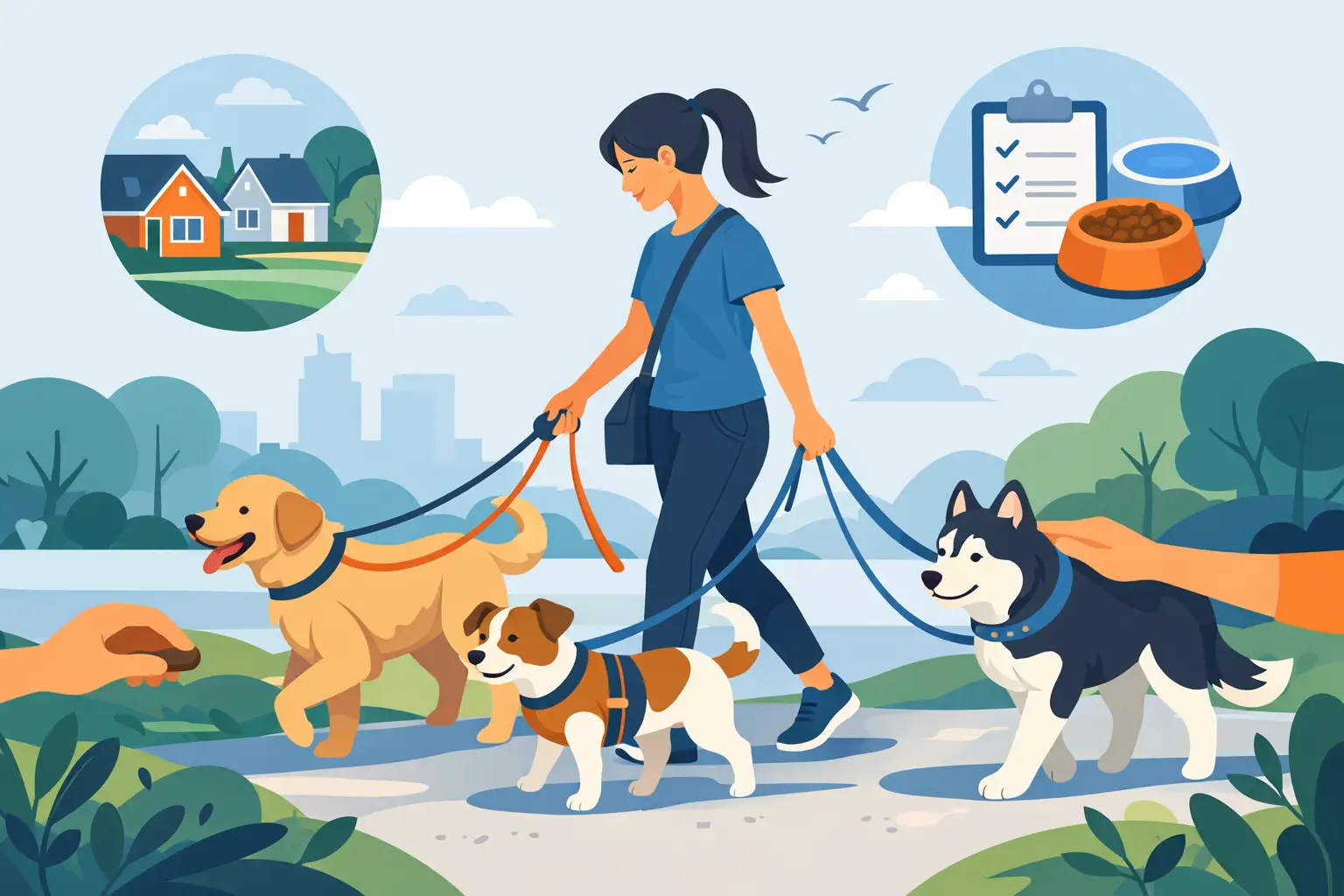
The difference between a quick lead walk and genuinely good dog walkers is often clear when you get home. Your dog is settled rather than overstimulated, has had the right amount of exercise for their age and temperament, and has been cared for by someone who knows their routine. For busy households, that peace of mind matters just as much as the walk itself.
A professional dog walking service should make daily life easier without making you worry about what is happening while you are at work, managing family plans or simply unable to get out. The best care is personal, practical and dependable – with your dog’s safety, confidence and enjoyment at the centre of every visit.
What dog walkers should get to know first
No two dogs walk in quite the same way. A young, energetic spaniel may need an active route and time to sniff, explore and practise good manners. An older dog may be happiest with a gentler stroll close to home. Some dogs are sociable and love company, while others need more space around unfamiliar dogs, cyclists or busy roads.
Before walks begin, a good carer will want to understand the details that make your dog comfortable. That includes their usual routine, feeding times, lead behaviour, recall, medical needs, favourite treats and any worries you have noticed. It is also worth discussing practical things such as where leads and towels are kept, whether your dog can be left with a chew afterwards, and how you would like the house secured.
This initial conversation is not a formality. It helps a walker make sensible decisions when plans change, the weather turns wet or your dog is having an off day. It also gives you the chance to see whether they listen carefully rather than offering a one-size-fits-all service.
Safety is more than a lead and a high-vis jacket
Anyone can take a dog around the block. Professional care requires clear standards behind the scenes. When choosing a service, ask how carers are vetted, whether they are insured, how emergencies are handled and what happens if your regular walker is unavailable. DBS checks, public liability insurance and straightforward communication are important signs that a business takes its responsibility seriously.
Local knowledge is valuable too. A walker who knows your area can choose suitable routes for the weather, avoid particularly busy times, and understand where dogs can safely enjoy a quieter pace. This can be especially reassuring for nervous dogs, puppies still learning the world, or dogs that need careful management around distractions.
Safety also means being honest about group walks. The right arrangement depends on your dog. Some dogs thrive with well-matched friends and benefit from calm social time. Others are more comfortable walking alone or with just one compatible companion. Larger groups are not automatically wrong, but the walker should be able to explain how they assess compatibility, supervise the dogs and keep each walk manageable.
A reliable routine makes a real difference
Dogs often feel happiest when the day has a familiar rhythm. A regular walk gives them more than a toilet break: it provides exercise, stimulation, reassurance and a chance to use their natural curiosity. For owners, a dependable booking can remove the rush of trying to get home at lunchtime or worrying that a long meeting has left their dog waiting.
Consistency matters, but flexibility matters too. A good service should be able to accommodate the realities of family life where possible, whether that is an extra walk during a busy week, support after an operation, or care when work patterns change. Clear booking arrangements help everyone plan ahead, particularly around school holidays and popular holiday periods.
It is sensible to be realistic about walk length. More time is not always better if a dog is elderly, recovering from illness or easily overwhelmed. Equally, an active dog may need more than a short circuit of the pavement. The aim is not to tire every dog out completely. It is to provide the right balance of movement, enrichment and rest for that individual dog.
Updates that reassure without interrupting your day
A simple message after a walk can lift a weight from an owner’s mind. You may want to know that your dog has been out, has had a drink and is settled back at home. A photo, route update or GPS tracking can add useful reassurance, particularly when you are new to using a walker.
The most helpful updates are honest as well as cheerful. If your dog seemed quieter than usual, pulled towards a sore paw, or was unsettled by a noisy bin lorry, you should be told. Small observations can help you spot changes early and allow the whole care team to stay on the same page.
At the same time, communication should feel easy rather than overwhelming. Agree what you would like to receive, how often, and the best way to contact you if something urgent arises. Good communication is one of the clearest signs that your dog is being treated as an individual, not simply another time slot.
Questions worth asking before you book dog walkers
The first meeting is your opportunity to ask the questions that will help you feel comfortable. You do not need a lengthy checklist, but you should leave knowing who will enter your home, who will walk your dog, and how the service will work day to day.
Ask whether the same carer will usually visit, how cover is arranged, and whether your dog will be walked alone or in a group. Find out how keys or access details are kept secure, what insurance is in place, and whether the service can follow your dog’s usual training cues. If your dog has allergies, medication or a history of anxiety, discuss this openly from the start.
It is also reasonable to ask what happens in poor weather. Most dogs still need exercise in rain, but conditions such as extreme heat, ice or storms may call for a shorter, safer outing and more indoor enrichment instead. A thoughtful walker will put welfare before trying to follow a plan at all costs.
Pay attention to how the answers make you feel. You are not looking for someone who promises that nothing can ever go wrong. You are looking for a calm, capable person who has sensible procedures and will contact you promptly if they need to.
Helping your dog settle into a new walking service
Even friendly, confident dogs can need a little time to adjust to a new person and routine. A meet and greet gives your dog the chance to say hello with you nearby, and gives the carer a chance to see how they respond. If possible, begin with a short visit or a familiar route before expecting your dog to settle into a longer group walk.
Keep instructions clear and consistent. Let the walker know which commands your dog knows, whether they are allowed treats, and anything that might cause fear or excitement. Please mention behaviours you find embarrassing as well. Pulling towards squirrels, barking at delivery drivers or refusing to walk past a particular gate are useful details, not reasons for judgement.
Prepare the practical essentials before the first booking: a well-fitting collar or harness, lead, poo bags, towels for muddy days and any approved treats. If your dog wears a coat in winter or needs paw care after wet walks, explain how you would like this managed. These small preparations allow the visit to start calmly.
Care that fits around real life
A dog walking service can be a regular part of the week, a helping hand during a temporary change, or support alongside pet sitting and home boarding. The right choice depends on your dog’s needs and your household routine. What should not change is the expectation of kind, accountable care.
For owners across Greater Manchester and nearby branch areas, Scamps and Champs brings together local carers, insured and DBS-checked support, and the reassurance of clear communication. That combination can be particularly helpful when you need more than a one-off walk and want a trusted team who can get to know your pet over time.
Your dog does not need a perfect adventure every afternoon. They need to feel safe, understood and pleased to see the person at the door. Choose care that gives them that familiar, happy routine – and gives you the freedom to get on with your day knowing they are in good hands.