
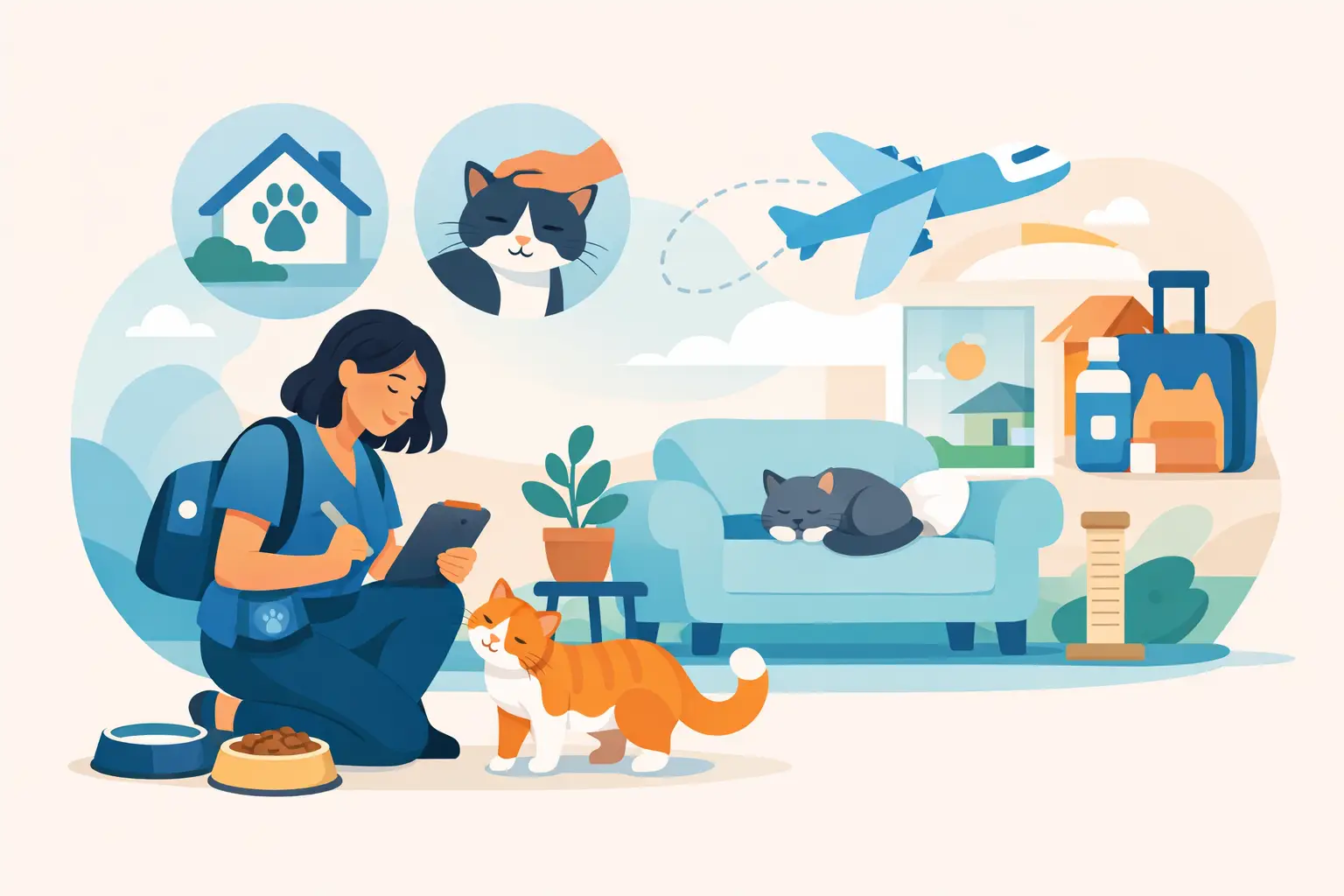
A cat can make their feelings about change very clear. Move their food bowl, bring out the carrier, or leave them somewhere unfamiliar, and many will let you know exactly what they think. That is why cat care home visits are such a sensible option for many owners. Instead of disrupting your cat’s routine, a trusted carer comes to them, keeps things familiar, and makes sure their day carries on as normally as possible.
For plenty of cats, home is not just where they sleep. It is their safe place, their territory, and the centre of their routine. Even confident cats can become unsettled in a cattery, while more sensitive cats may stop eating properly, hide away, or become withdrawn. Home visits reduce that upheaval. They give your cat care in the place where they already feel secure, which often means less stress for them and far more peace of mind for you.
Why cat care home visits suit so many cats
Cats are often seen as independent, but that does not mean they do not need careful, consistent attention. They may not ask for it in the same way a dog does, yet their wellbeing depends heavily on routine. Feeding times, clean litter trays, fresh water and a familiar environment all matter.
That is where cat care home visits work so well. A visit can be built around your cat’s normal habits rather than forcing them into a new setting. If your cat likes breakfast at a certain time, prefers one room over another, or has a particular way they like to be approached, that can all be respected.
There is also a practical side. Staying at home means your cat avoids travel, shared spaces with unfamiliar animals, and the general noise and smell of a boarding environment. For older cats, nervous rescue cats, indoor cats and multi-cat households, that can make a real difference.
What happens during cat care home visits
A proper home visit is more than putting food in a bowl and heading off again. Good care is about noticing the little things and keeping your cat comfortable while you are away.
During cat care home visits, a carer will usually feed your cat, refresh water, clean litter trays and spend time checking that all is well. That might include giving fuss to a sociable cat, sitting quietly with a shy one, or making sure medication is given correctly if required.
The best visits are tailored. Some cats want company and playtime. Others want calm, predictable care with very little interaction beyond what they choose. A professional carer understands that both are perfectly normal. The aim is not to force attention, but to make sure your cat feels safe and properly looked after.
Many owners also value regular updates. A quick message or photo can go a long way when you are away for work, on holiday, or simply out for a long day. Knowing your cat has eaten, used the litter tray normally and seems settled can ease a lot of worry.
The biggest benefit is often peace of mind
Most owners are not just booking a service. They are handing over responsibility for a pet they love. That can feel like a big ask, especially if your cat is elderly, shy, or has particular needs.
Trust matters here. You want to know the person coming into your home is reliable, experienced and accountable. You also want to feel confident that if something seems off with your cat, it will be spotted rather than missed.
That is why professionalism should sit alongside warmth. Friendly care is important, but so are clear processes, secure key handling, insurance, DBS checks and good communication. When those things are in place, cat care home visits feel much less like a gamble and much more like a practical, dependable solution.
Is a home visit always better than a cattery?
Often, yes, but not in every single case. It depends on your cat and your circumstances.
For most cats, staying at home is the less stressful option. They keep their own bed, their own smells and their usual surroundings. That is particularly helpful for cats who dislike change, struggle with travel, or become anxious around other animals.
There are situations, though, where owners worry about a cat being alone between visits. A very young kitten, a cat with complex medical needs, or a pet recovering from illness may need more frequent support or even overnight care. In those cases, a standard once-a-day visit may not be enough. The right answer is not always the cheapest or simplest one. It is the one that matches your cat’s actual needs.
For multi-cat homes, home visits are especially useful. Your cats can stay together, keep to their own routine and avoid the stress of transport. For many families, that is far more manageable than arranging boarding for several pets at once.
How to choose the right cat care home visits
Not all pet care is equal, and this is one area where asking a few sensible questions really helps. You are looking for someone who is kind with animals, but also organised and professional.
Start with the basics. Are they insured? Are carers DBS-checked? Is there a clear booking process? Do they take the time to understand your cat’s routine, feeding, health needs and behaviour? If your cat needs tablets, a special diet or careful handling, that should be discussed properly rather than treated as an afterthought.
It is also worth paying attention to how they communicate. Good carers do not brush off your concerns or make you feel silly for asking questions. They understand that leaving your cat can be emotional. Reassurance should come naturally.
A local service often makes a difference too. Someone who knows the area and works within a nearby branch network can usually offer a more responsive, personal experience. For owners around Greater Manchester and nearby areas, that local feel matters. It means support is close to home, not being managed from a distance.
Preparing your home and cat for visits
Once you have booked, a little preparation makes everything easier. Leave clear feeding instructions, enough food for the full period, any medication your cat needs and details of their usual habits. If they have favourite hiding spots, odd quirks or areas they should not access, mention those as well.
It helps to think beyond the basics. Make sure litter, cleaning supplies and emergency contact details are easy to find. If your cat is an indoor cat, confirm doors and windows that should stay shut. If they are allowed outside, be clear about their routine and whether that should continue while you are away.
The more your carer knows, the more smoothly the visits are likely to go. Cats are creatures of habit, and small details can matter a lot. Something as simple as using the usual bowl in the usual place can help keep things calm.
Cat care home visits for holidays, work trips and busy weeks
Many people think of home visits only for holidays, but they are useful in all sorts of situations. Work travel, family events, overnight stays, hospital appointments and weddings can all leave a gap in your usual routine.
That flexibility is one of the reasons services like this are so popular. You do not have to wait for a long trip to justify getting help. If your week is unusually hectic and you know your cat will not get the attention they need, arranging visits can be the simplest way to keep things ticking over without stress.
For owners who feel guilty about being away, that support can be a real relief. You are not choosing between cancelling your plans and leaving your cat to fend for themselves. You are making a sensible arrangement that puts their comfort first.
Why the personal touch matters
Cats may not always rush to the door to greet someone, but they do notice consistency. The same calm approach, the same familiar routine and the same dependable care all help build trust over time.
That is why a service-led, personal approach matters so much. At Scamps and Champs, the focus is on giving pets care that feels safe, familiar and properly managed, while giving owners the reassurance that someone dependable is keeping an eye on everything at home.
When cat care home visits are done well, they do not just cover the basics. They reduce stress, protect routine and help your cat stay comfortable in the place they know best. If you are planning time away, the most helpful question is not simply who can feed the cat. It is who can care for them in a way that feels calm, reliable and kind from the moment you lock the door.