
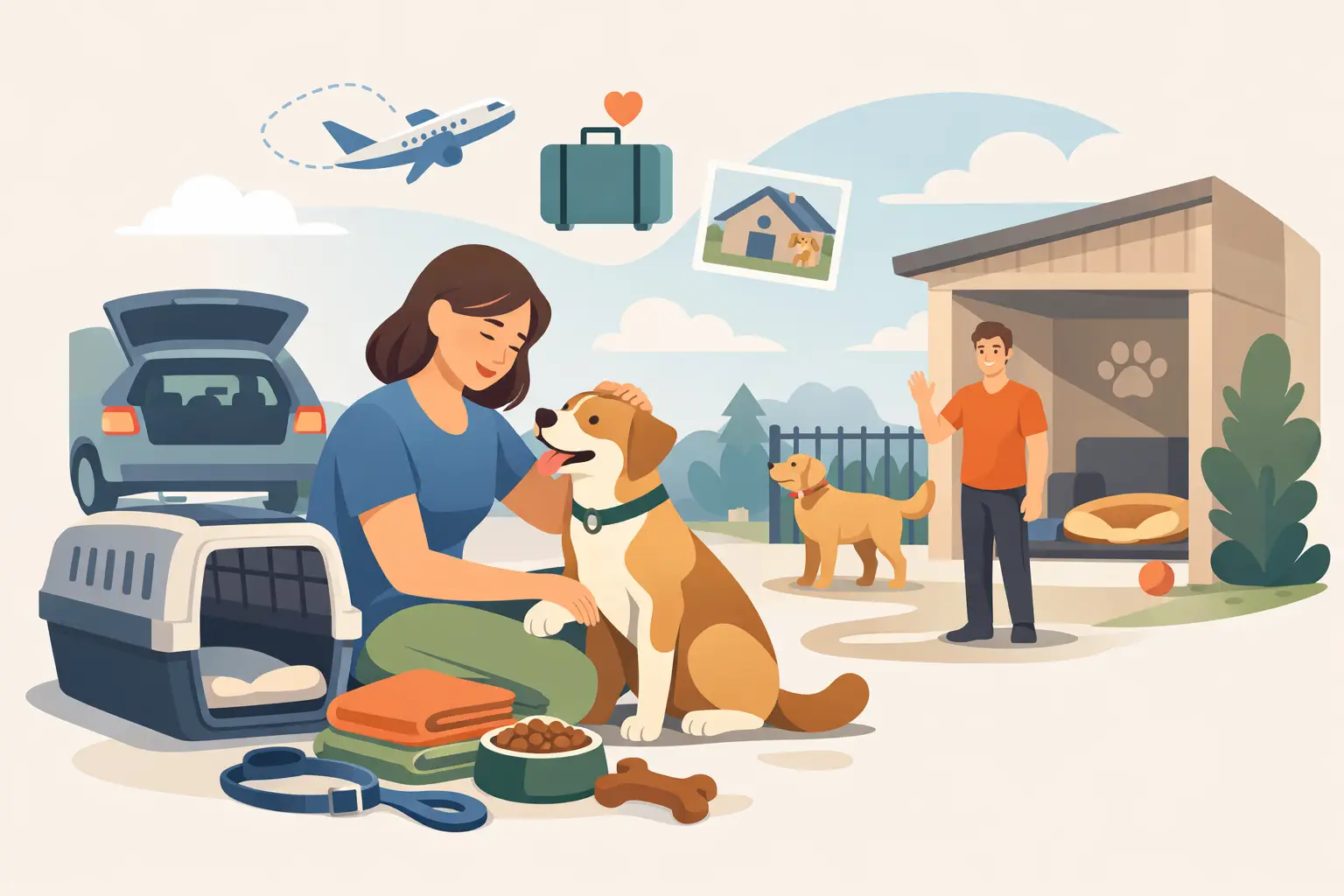
A home boarding stay should not feel like being dropped somewhere strange with a suitcase full of toys. The best stays begin well before departure day, with a carer who understands your dog and a little preparation at home. When you prepare your dog for home boarding properly, you give them the best chance to settle happily while giving yourself genuine peace of mind.
Home boarding can be a lovely alternative to kennels for dogs who enjoy company, home comforts and a more personal routine. However, every dog is different. A sociable young spaniel may settle quickly into a busy family home, while an older rescue dog may need a quieter setting, familiar walks and more time to build trust. Honest information and a gradual introduction make all the difference.
Start with the right boarding match
The most useful preparation is choosing a home environment that suits your dog, rather than simply finding a space for the dates you need. Think about their normal day: whether they are used to children, other dogs, stairs, visitors, car journeys or being left for short periods. Share both the lovely bits and the less polished ones. A good carer needs to know if your dog guards food, pulls towards squirrels, worries during thunderstorms or takes a while to warm up to new people.
Be clear about their energy levels too. Some dogs need long, purposeful walks and games that occupy their brains. Others are happiest with a gentle stroll, a comfortable bed and company nearby. There is no prize for pretending your dog is easier than they are. Accurate information helps the carer plan safely and prevents your dog being placed in a routine that does not suit them.
Ask how the boarding household works day to day. Find out who lives there, whether other dogs may be present, where your dog will sleep, how walks are managed and what happens if a carer needs support. Professional arrangements should also include clear safety standards, insurance and appropriate checks, so you know who is caring for your dog and how they will be looked after.
Arrange a meet and greet before home boarding
A meet and greet is more than a friendly introduction. It lets your dog take in the carer, the home and the other pets at their own pace, while giving you time to discuss practical details without rushing. If possible, choose a time when your dog is reasonably calm rather than just before their dinner or after a long day indoors.
Watch their body language, but do not expect instant excitement from every dog. A calm sniff, a soft posture and a willingness to explore are all positive signs. Some dogs are naturally reserved and may take several visits to feel comfortable. That is perfectly normal. The aim is not to force a friendship in half an hour, but to make the first overnight stay feel less unfamiliar.
For dogs who are sensitive, anxious or new to being cared for away from home, a short trial stay can be especially helpful. It may be a walk with the carer, a few hours in the home, or one overnight stay before a longer holiday booking. A trial gives everyone useful information. Your carer can see how your dog settles, eats and sleeps, and you can make small changes before the main stay.
Keep routines familiar where you can
Dogs do not read calendars, but they do notice when breakfast appears at a different time or their usual walk disappears. Before boarding, write down your dog’s normal routine in plain English: meal times, walk times, toilet habits, sleeping arrangements and anything that helps them wind down in the evening.
You do not need to expect the boarding home to copy every minute of your day. A little flexibility is healthy, and a new household will have its own rhythm. What matters is keeping the core parts of your dog’s life recognisable. If they normally eat slowly from a puzzle feeder, say so. If they need a quiet ten minutes after a walk before meeting another dog, include that too.
Avoid making major changes just before the stay if you can help it. Changing food, introducing a new harness or suddenly moving their bed downstairs can create unnecessary stress. Keep the days leading up to boarding calm and ordinary. Your dog will benefit more from familiar routine than from an elaborate farewell.
Pack familiar items, but do not overpack
A few well-chosen belongings can help your dog settle. Their usual food is usually the most important item, particularly if they have a sensitive stomach. Pack enough for the full stay, with a little extra in case travel plans change, and label it clearly with feeding instructions.
Their bed or a familiar blanket can offer comfort through familiar scent. A favourite toy may help too, provided it is safe and your dog does not become possessive around it. If your dog tends to chew, shred or guard toys, tell the carer rather than packing a high-value item that could cause tension.
Bring their lead, harness or collar, plus a spare if you have one. Make sure identification details are current and that any required tags are attached. It is also sensible to provide a recent photograph, veterinary contact details and clear information about any medical conditions. Familiar possessions are useful, but your carer also needs the practical tools to keep your dog safe.
Give your carer a complete care note
The best care notes are specific, not lengthy for the sake of it. Instead of writing that your dog is “fine with other dogs”, explain that they enjoy walking alongside calm dogs but can bark if a dog rushes into their space. Rather than saying they are “fussy with food”, note that they eat better if their meal is warmed slightly or their bowl is placed away from noise.
Include feeding amounts, medication instructions, allergies, exercise needs and emergency contacts. Let the carer know which words your dog understands, such as “wait”, “leave”, “bed” or “in”. Share their fears and triggers without embarrassment. A dog who dislikes men in hats, bicycles, fireworks or nail trimming is not a difficult dog. They are a dog whose carer needs the right information.
It also helps to explain how your dog shows discomfort. Some become quiet and clingy; others pace, pant, bark or refuse food. Knowing the difference between your dog’s usual quirky behaviour and a genuine sign that they are unsettled allows the carer to respond appropriately.
Make departure day calm and clear
On the day, allow enough time that you are not flustered at handover. Give your dog their usual walk where possible and make sure they have had the chance to toilet before travelling. Arriving in a rush can make even a confident dog more unsettled.
Keep your goodbye warm but low-key. Dogs are very good at picking up on our emotions, and a long, tearful departure can make them wonder whether something is wrong. Hand over their belongings, confirm any final instructions, then leave confidently once your carer is ready. This is often harder for owners than it is for dogs.
If you have agreed updates, discuss what will be most reassuring for you. A photo after the first walk, a message after dinner or a daily update can make a real difference when you are away. Try not to request constant contact unless there is a reason for it. Regular, agreed communication lets your carer focus their attention where it belongs – on your dog.
Be realistic about what your dog needs
Home boarding is not the right answer for every dog at every stage of life. A dog with severe separation anxiety, a history of aggression, an untreated health concern or a strong dislike of other dogs may need a different arrangement, such as care in their own home or a quieter, specialist setting. Being honest about this is an act of care, not a failure.
Equally, do not assume that a confident dog needs no preparation. Even easy-going dogs can feel tired after new sights, scents and routines. Give them a gentle day or two when they return home, especially after a longer stay. They may sleep more than usual while they catch up on rest.
At Scamps and Champs, we know that leaving your dog can feel like a big step, whether it is for one night or a fortnight. A thoughtful introduction, clear communication and the right local carer turn home boarding from an unknown into a comfortable, caring experience. Your dog does not need a perfect suitcase or a dramatic send-off – they need familiar cues, kind people and the confidence that you will be back.