
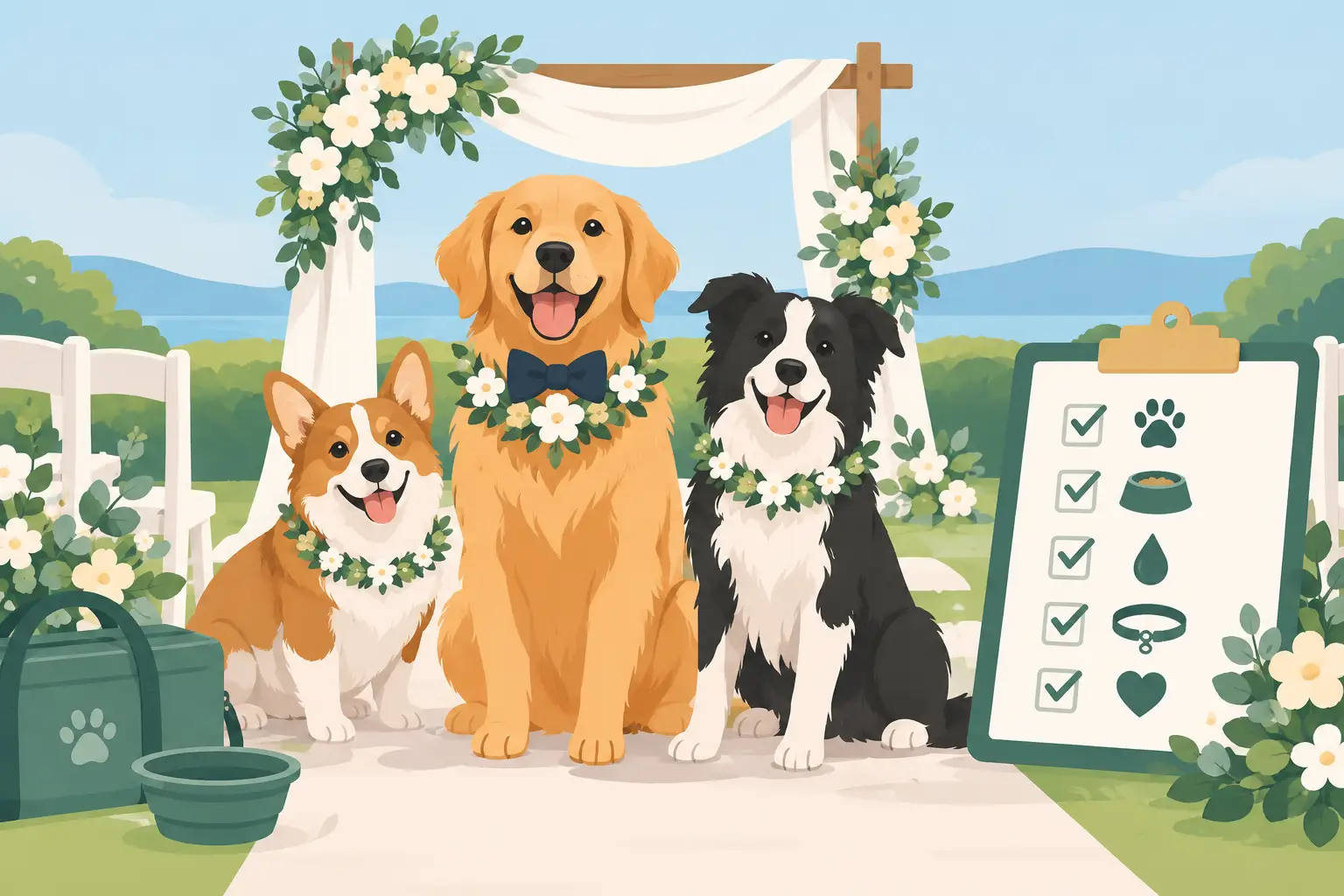
Your dog may be part of the family, but a wedding venue is not their usual walk around the park. A thoughtful dog wedding chaperone checklist helps turn a lovely idea into a day that feels safe, calm and enjoyable for them too. With the right person, clear timings and a bag packed for every eventuality, your dog can share in the photographs and cuddles without becoming overwhelmed by the noise, people and long hours.
Start with your dog’s needs, not the photographs
Before choosing a flower collar or planning an aisle entrance, consider whether your dog will genuinely be comfortable at your wedding. A confident, sociable dog may enjoy greeting familiar guests and posing briefly with you. A shy dog, an older dog or one who finds crowds difficult may be happiest making a short appearance before heading home or to a quiet place with their chaperone.
There is no prize for having your dog present from breakfast until the final dance. In fact, shorter visits are usually kinder. Think about their normal routine: when they eat, walk, nap and need the toilet. Your wedding plans should work around those essentials rather than expecting them to fit around a packed schedule.
It also helps to be honest about the setting. A relaxed garden wedding is very different from a busy city-centre venue with polished floors, loud music and lots of unfamiliar smells. Ask the venue where dogs are allowed, whether there is a quiet indoor space, and where your chaperone can take them for toilet breaks and a breather.
Choose a chaperone who can focus on the dog
A well-meaning family member is often asked to look after the dog, but they may also want to enjoy the ceremony, eat their meal and join the celebrations. That can leave everyone trying to keep an eye on the dog, with no one fully responsible.
Your chaperone should be the person whose priority is your pet’s welfare throughout the day. They need to know your dog’s habits, triggers, recall, feeding routine and body language. They should also be comfortable saying, kindly but firmly, when your dog needs a break from guests or the camera.
A professional wedding pet chaperone can collect your dog, provide a pre-wedding walk, bring them to the venue for their planned moments and take them home afterwards. This gives you more freedom to enjoy your day while knowing your pet has dedicated care. At Scamps and Champs, this kind of personalised support is built around the individual pet, not a one-size-fits-all timetable.
Arrange a meet-and-greet first
Do not leave introductions until the wedding morning. Arrange for the chaperone to meet your dog beforehand, ideally on a walk or at home where they are relaxed. This is the time to share practical information and let your dog build trust with them.
If possible, practise part of the plan. Walk near the venue, try on the outfit for a few minutes, or rehearse a calm handover. A little familiarity can make a big difference when the day itself is full of excitement.
Your dog wedding chaperone checklist for the day
Pack your dog’s bag the night before and keep it with the chaperone rather than in a bridal suite or car that may be difficult to access. Labels are useful, particularly if several people are handling bags and transport.
Your essentials should include:
- A secure collar or harness with an ID tag, plus a lead and a spare lead
- Their usual food, treats, a collapsible bowl and plenty of fresh water
- Any medication, written dosage instructions and your vet’s contact details
- Poo bags, pet wipes, a towel and a small pet-safe first-aid kit
- A familiar blanket, bed or crate so they have somewhere quiet to settle
- A favourite toy or chew, used sparingly to provide comfort during waiting periods
- A recent photograph of your dog and details of their microchip number
- A coat, cooling mat or drying towel if the weather could be cold, wet or warm
For long-haired dogs, add a brush and perhaps a clean cloth for muddy paws or post-treat whiskers before photographs. If your dog is wearing an accessory, pack it separately and only put it on for short periods under supervision.
Keep outfits comfortable and simple
Flower collars, bow ties and little bandanas can look wonderful in pictures, but comfort comes first. Avoid anything tight, heavy, hot or easy to chew. Check that decorations do not restrict movement, cover your dog’s vision or create a choking risk.
Never rely on an outfit to make your dog look calm. If they are scratching, freezing, panting heavily or trying to escape it, remove it. A happy dog in their normal collar will always make a better wedding guest than an uncomfortable dog in a perfect costume.
Build a realistic wedding timetable
The best dog-friendly wedding plan has clear arrival and departure times. Rather than saying your dog will be there for the ceremony, decide exactly when they arrive, where they wait, what happens if they need a break and who takes them away afterwards.
For many couples, a good plan is a morning walk and breakfast at home, followed by a short visit for photographs before guests arrive. Others prefer their dog to come for the ceremony, have a few family photos, then leave before the drinks reception. This avoids the busiest part of the day and allows them to rest in familiar surroundings.
Give your photographer a realistic window too. Ten focused minutes of photographs with treats, shade and patient handling is far more likely to work than asking a dog to stay posed for an hour. Let the photographer know in advance that the chaperone will be directing the dog, so nobody crowds them or keeps calling their name from different directions.
Plan for weather, noise and unexpected changes
British weather has a habit of changing its mind, so have a wet-weather option and a shady area for warm days. Dogs can overheat quickly in a crowded conservatory, warm car or sunny courtyard. Equally, a cold or damp dog may become uncomfortable and restless.
Noise is another consideration. Applause, confetti cannons, live bands and cheering guests can be alarming, even for a usually confident dog. Keep your dog away from fireworks, party poppers and loud speakers. If the ceremony is likely to involve lots of noise, a brief photo visit may be a better choice than an aisle role.
Your chaperone also needs permission to change the plan if your dog is not coping. That is not a failure. It is good care. A dog who has had enough should be taken somewhere quiet, offered water and allowed to rest, even if that means missing a planned photograph.
Brief the people around your dog
Tell close family, the wedding party, the venue coordinator and photographer who is responsible for your dog. Ask guests not to feed them, pick them up, let children crowd them or open doors and gates without checking first.
It is worth sharing a few simple instructions with the chaperone in writing: foods to avoid, commands your dog knows, whether they are comfortable with strangers, where they can be touched, and any signs that mean they are becoming worried. Include emergency contacts for both of you and a trusted local person who can make decisions if you are unavailable during the ceremony.
Most importantly, make sure your dog has a safe transport plan home. They should travel secured in a suitable vehicle, ideally with their usual blanket and some water available. If they are staying overnight with a carer, send their normal food and keep their bedtime routine as familiar as possible.
Your wedding day will be full of moments you cannot predict. Giving your dog a calm, capable person of their own means they can be part of the memories without carrying the pressure of the occasion. The kindest plan is the one that lets them be themselves: loved, safe and ready for a well-earned nap when their important work is done.