
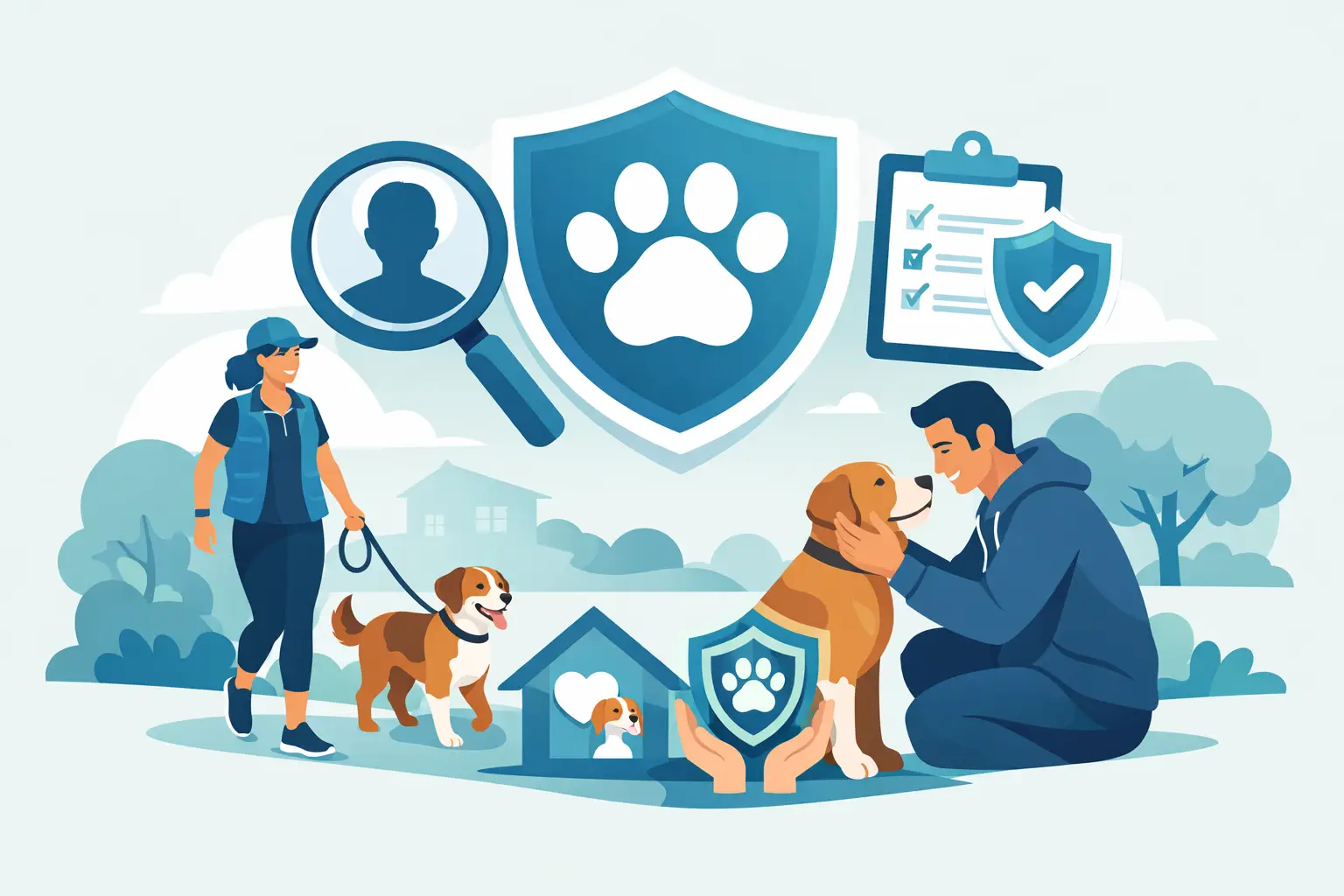
Handing over your front-door key and watching your dog trot away with someone new can feel like a big step. You are trusting that person with a much-loved family member, your home and your daily routine. So, are DBS checked dog walkers safer? A DBS check can be a valuable layer of reassurance, but it is not a complete answer on its own.
The safest choice usually comes from looking at the whole picture: proper checks, insurance, experience, clear communication, safe walking practices and a carer who takes the time to understand your dog. A certificate matters, but so does what happens on a wet Tuesday when your dog is nervous around traffic, pulls towards squirrels or simply does not fancy leaving the house.
What a DBS check can tell you
DBS stands for Disclosure and Barring Service. Depending on the type of check and the role it is being used for, it may reveal certain criminal convictions, cautions and other relevant information. Enhanced checks can also include checks against barred lists where the role is eligible.
For a pet owner, the main benefit is accountability. A professional dog walker who is willing to be checked is showing that they understand the trust involved in entering clients’ homes and caring for pets alone. It can offer added confidence, particularly when keys, alarm details or regular access to your property are part of the arrangement.
It is also worth remembering that dog walking is not automatically a role that qualifies for every level of DBS check. Eligibility depends on the work being carried out. A carer may hold a basic DBS certificate, which shows unspent convictions, while standard and enhanced checks are only available for eligible positions. A reputable provider should be open about what check their carers hold rather than making vague claims.
Are DBS checked dog walkers safer in practice?
Potentially, yes – but a DBS check is a snapshot, not a guarantee of good judgement or excellent pet care. It cannot tell you whether someone knows how to read canine body language, keeps dogs on secure leads, checks gates properly or will contact you promptly if something goes wrong.
It also does not replace sensible recruitment and day-to-day standards. Someone can have a clear DBS certificate and still be inexperienced with reactive dogs, careless about group sizes or poorly prepared for hot weather. Equally, an experienced walker may be brilliant with dogs but should still be able to show you that their business is organised, insured and accountable.
Think of DBS checking as one useful filter. It helps reduce one area of concern, especially when a person has access to your home. The wider question is whether the service has earned your trust in practical, visible ways.
The checks that matter alongside DBS
A professional dog walking service should be happy to explain how it keeps dogs safe. You should not have to feel awkward asking. The right carer will understand that careful questions come from love for your pet, not mistrust.
Start with insurance. Public liability insurance is important if an accident, injury or damage occurs while your dog is in the walker’s care. Ask whether their cover is appropriate for the services offered, including solo walks, group walks, transport or home visits where relevant.
Then ask about their experience and matching process. A young, bouncy spaniel, a senior terrier and a rescue dog who finds strangers worrying will not all suit the same walk. A thoughtful carer will want to know about your dog’s health, recall, habits, triggers, medication, feeding routine and personality before accepting a booking.
Safe handling matters just as much. Find out whether dogs are walked individually or in groups, how many dogs are taken out at once, and how introductions are managed. Ask where walks take place, whether dogs are transported in a secure vehicle, and when dogs are kept on lead. There is no single right answer for every dog, but there should be a clear policy based on welfare rather than convenience.
Communication is another strong sign. Regular updates, photos, GPS-tracked walks where available and prompt replies can make a real difference when you are at work or away on holiday. They also show that the business has systems in place, rather than relying on crossed fingers and informal arrangements.
Questions to ask before booking a dog walker
A short conversation before your first walk can tell you a great deal. Ask what level of DBS check the carer holds, when it was completed and whether the business checks the identity of its team members. You can also ask how often staff are reviewed or retrained, especially if the company uses several local carers.
Talk through your dog’s normal routine in detail. A good walker will ask follow-up questions, not simply agree to everything. If your dog has unreliable recall, for example, a responsible answer may be that off-lead exercise is not suitable until a safe, enclosed arrangement is agreed. That can be disappointing if your dog loves to run, but honest boundaries are safer than promises designed to win a booking.
It is sensible to ask what happens in an emergency. Who will contact you? Is there a named emergency contact? What is the procedure if a dog becomes unwell, slips a lead or gets into a scuffle? Your walker does not need to have a dramatic story for every scenario, but they should have calm, practical answers.
Finally, pay attention to how the meet and greet feels. Your dog does not have to become best friends immediately, especially if they are shy, but the carer should be patient and respectful. They should never rush a nervous dog or dismiss behaviour that you have flagged as a concern.
Why local knowledge makes a difference
A local dog walker often brings useful knowledge that a certificate cannot capture. They may know which nearby paths become muddy and slippery, where traffic is busiest at school-run time, which parks are crowded after work and where quieter routes suit a sensitive dog. That familiarity helps them make better choices day to day.
It can also make communication easier. If your plans change, you want a service that understands your area and can respond realistically. For families in Stockport, Halifax, Macclesfield and surrounding communities, having a trusted local carer can turn a stressful schedule into something far more manageable.
At Scamps and Champs, our carers are fully insured and DBS checked, but those checks are only part of the care we aim to provide. Getting to know pets as individuals, keeping owners updated and delivering dependable local support are what make the reassurance meaningful.
Watch for promises that sound too easy
Price alone should not decide who walks your dog. Very low prices can sometimes reflect a new business building its client base, but they can also mean corners are being cut on insurance, staffing, transport or the number of dogs being walked together. Ask enough questions to understand what is included.
Be cautious if a walker cannot provide clear information about their insurance, availability, group sizes or emergency arrangements. The same applies if they are reluctant to arrange a meet and greet, dismiss your dog’s needs or promise that every dog will be allowed off lead. Professional care involves judgement, and judgement sometimes means saying no.
Online reviews can be helpful too, particularly when they mention reliability, updates, handling of special requirements and how a service responded when plans changed. Look for patterns over time rather than relying on one glowing comment.
Choose reassurance you can see
A DBS check is a worthwhile trust signal, particularly for a dog walker with access to your home. Yet the best reassurance is built through several small, practical things: transparent policies, suitable insurance, careful introductions, sensible walking plans and a person who genuinely listens when you explain what makes your dog tick.
Your dog does not need the flashiest service. They need a kind, capable carer who turns up when promised, keeps them safe and treats every walk as time entrusted to them. When that care is backed by proper checks and clear communication, you can leave the lead by the door with a little more peace of mind.