
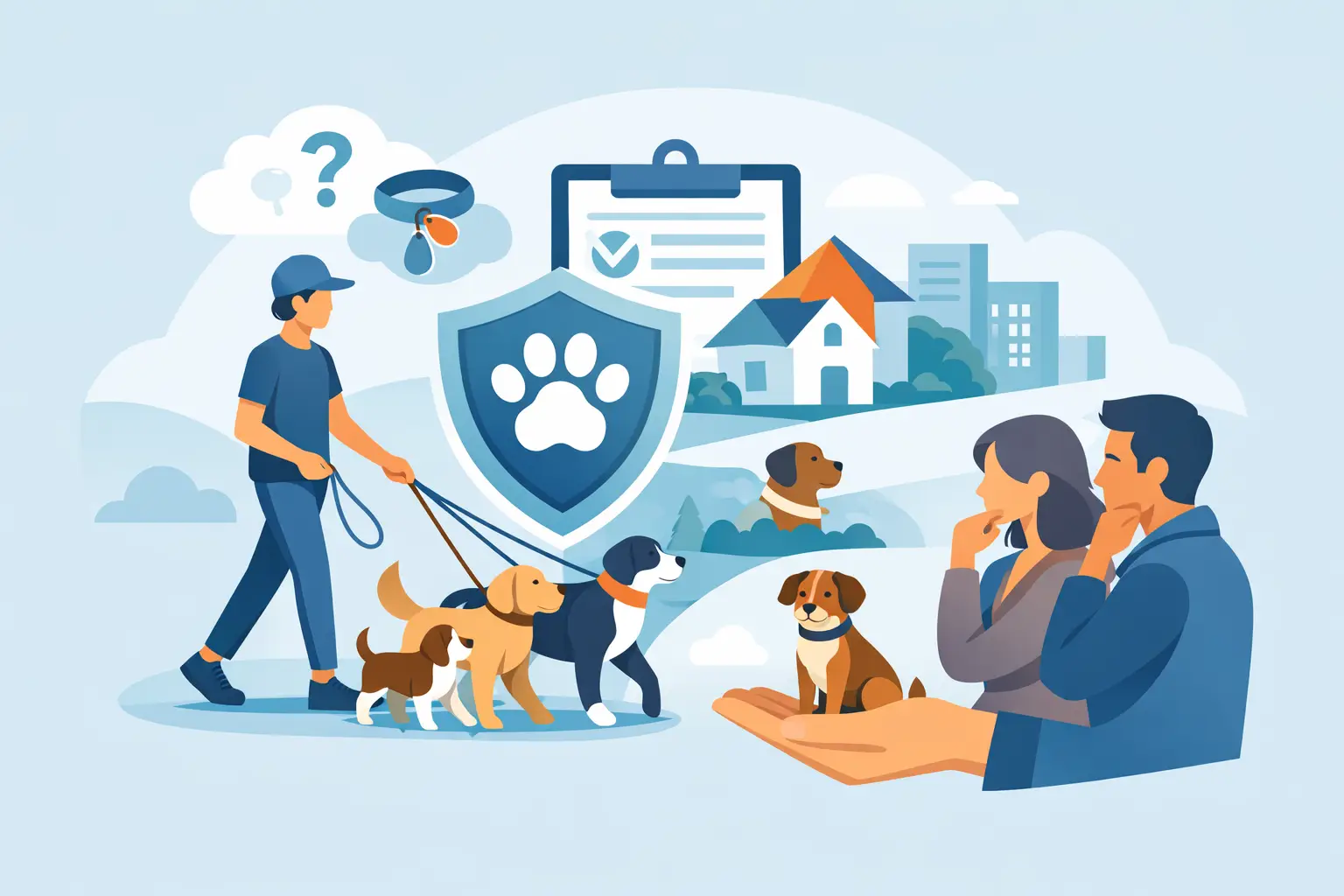
A wet lead, an excited dog at the front door and a packed work diary can make finding a dog walker feel urgent. But before arranging that first walk, one question deserves a clear answer: are walkers insured?
The short answer is that professional dog walkers should be insured, but not every person offering walks has the same level of cover. Insurance is one of the practical signs that a carer takes their responsibility seriously. It cannot remove every risk, but it helps provide accountability if something unexpected happens while your dog is in somebody else’s care.
For pet owners, this is not about being suspicious or assuming the worst. It is about choosing care with the same thought you would give to a nursery, holiday accommodation or anyone trusted with a family member. A good walker will be happy to talk openly about their insurance, how they work and what they do to keep dogs safe.
Are walkers insured, and what does that actually mean?
“Insured” can sound reassuring, yet it is worth asking what policy is in place rather than treating the word as a blanket guarantee. Insurance for a professional dog walking business commonly includes public liability cover. This is designed to help if a dog in the walker’s care causes accidental injury to another person or damage to someone else’s property.
For example, if a dog slipped their lead and knocked a cyclist over, or damaged a neighbour’s fence during a visit, public liability cover may be relevant. The precise circumstances, policy limit and exclusions will always matter, so no responsible carer should promise that every possible incident is automatically covered.
A stronger policy may also include care, custody and control cover. This is particularly relevant in pet care because the walker has temporary responsibility for an animal that belongs to someone else. It can offer protection in certain situations where a pet is injured, lost or becomes ill while under the carer’s supervision.
That wording is important. Your own pet insurance and a walker’s business insurance do different jobs. Pet insurance usually relates to your dog’s veterinary treatment under the terms of your policy. A professional carer’s insurance relates to their liability and responsibilities while providing a service. One does not necessarily replace the other.
The cover that matters for dog walking
The right cover depends on what you are booking. A walker taking one dog around the local park has different risks from a provider collecting several dogs in a vehicle, visiting your home or offering home boarding.
When you ask about insurance, it is helpful to understand whether the service includes public liability and care, custody and control cover. If the walker holds keys to your home, ask whether key cover is included too. This can matter if keys are lost or stolen while a carer is carrying out visits.
Transport is another area to discuss. If your dog will travel in a vehicle, the car should be suitable and safely set up for pets, with appropriate restraints, ventilation and cleaning arrangements. The driver should also have insurance that allows them to use the vehicle for their dog walking business. Ordinary social and domestic car insurance may not be enough for paid pet transport.
Businesses with staff may need employers’ liability insurance. This is less about your dog directly and more about whether the company has proper protection and processes for the people working within it. It is another sign that a provider is operating professionally rather than casually.
Insurance is one part of safe care
A policy document matters, but it should sit alongside sensible day-to-day practice. The most reassuring dog walkers combine insurance with careful matching, clear communication and a genuine understanding of canine behaviour.
Before a first booking, a professional service should want to know about your dog’s routine, recall, medical needs, fears, trigger points and how they behave around other dogs, people, traffic and livestock. A dog who is friendly at home may still find busy pavements, unfamiliar dogs or group walks overwhelming. Sharing an honest picture helps the carer make safe choices.
Ask how dogs are walked. Are they walked alone, with dogs from the same household or in carefully managed small groups? How are groups selected? What happens if a dog cannot safely be let off lead? There is no single answer that suits every pet. Some dogs love a sociable walk with familiar companions, while others are happier with individual attention and a quieter route.
You should also expect secure handovers, a clear plan for emergencies and regular updates. GPS-tracked walks, photographs and messages can be lovely to receive, but they also give owners useful reassurance that the agreed service has taken place. Reliable booking records make it easier for everyone to check dates, instructions and care details.
At Scamps and Champs, fully insured and DBS-checked carers are part of the approach because practical safeguards and kind, personal care belong together. Owners should never have to choose between a friendly local service and professional standards.
Questions worth asking before you book
There is no need to make an enquiry feel like an interrogation. A trusted walker will understand why these details matter and answer in plain English. If you are comparing providers, ask these questions before your dog’s first walk:
- What insurance do you hold, and does it include public liability and care, custody and control?
- Can I see confirmation that your policy is current, and are there any exclusions I should know about?
- Will my dog travel in a vehicle, and if so, how are they secured and insured for business use?
- Do you hold keys, and what arrangements do you have for key security and lost-key cover?
- What happens if my dog is injured, becomes unwell or cannot be safely walked as planned?
- How do you assess dogs before group walks, and what is your maximum group size?
The response can tell you as much as the paperwork. Look for someone who answers directly, explains their procedures and does not brush off reasonable concerns. Vague replies such as “I’ve never had a problem” are not the same as having a plan if a problem occurs.
Read the booking terms, not just the headline
Insurance policies have limits, excesses and exclusions. So do service agreements. A good pet care provider will set out what they need from you too, such as up-to-date contact details, vaccination information where relevant, behaviour disclosures, secure access to your home and instructions for veterinary emergencies.
Be especially clear about pre-existing health conditions. If your dog has arthritis, anxiety, allergies, a history of escaping or a tendency to react to other dogs, tell the walker before the booking begins. This is not about labelling your pet as difficult. It allows the right route, equipment, walking arrangement and emergency plan to be put in place.
It is also sensible to agree how veterinary decisions will be handled if you cannot be reached. Many owners authorise a carer to seek urgent veterinary attention, with a preferred practice and spending limit recorded in advance. In a genuine emergency, those few minutes of clarity can make a real difference.
Red flags to take seriously
A lower price can be tempting, particularly when you need regular walks, but the cheapest option is not always the best value. Be cautious if a walker cannot explain their insurance, refuses to provide basic business details or has no written terms at all.
Other warning signs include overcrowded group walks, dogs travelling loose in a vehicle, a reluctance to meet your dog beforehand, or pressure to hand over keys and payment without a proper discussion. Trust your instincts. You are looking for a carer who is calm, organised and interested in your dog as an individual.
DBS checks are another useful trust signal, particularly when someone will be entering your home, although they are not a substitute for insurance or sound pet-care procedures. References, local feedback and a meet and greet all add useful pieces to the picture.
A little preparation brings real peace of mind
The best dog walking relationship starts before the lead is clipped on. Choose a provider who is insured for the work they actually do, ask clear questions and make sure they understand your dog’s needs. Then give your dog time to build familiarity through a meet and greet or a short introductory visit where possible.
When care is properly organised, you can head to work, manage family plans or enjoy a day out knowing your dog is with someone who treats safety as seriously as affection. That confidence is what a good local dog walker should provide, one happy walk at a time.