
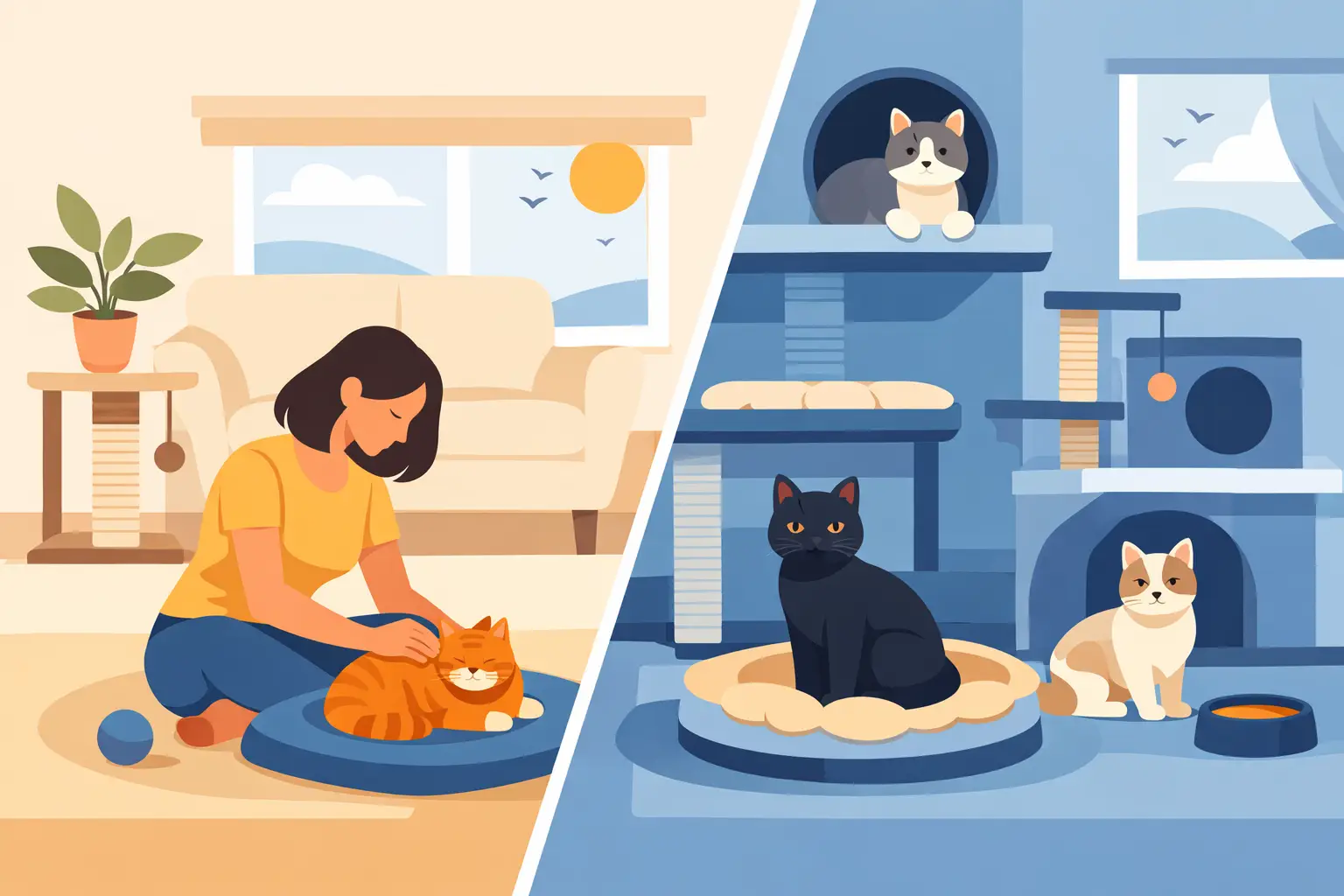
The suitcase is by the door, your plans are finally booked, and then comes the question that can make even a well-organised holiday feel complicated: who will look after the cat? When weighing up cat sitting versus cattery, there is no one right answer for every household. The best choice depends on your cat’s personality, health, routine and how they cope with change. See our cat home visits in Stockport.
Many cats are happiest where they know every scent, sleeping spot and sunbeam. Others can settle well in a carefully run cattery, particularly if they are confident, sociable and used to new surroundings. What matters is choosing care that feels safe, calm and suited to your individual pet – not simply choosing the most convenient option on paper.
Cat sitting versus cattery: the main difference
Cat sitting means a professional carer visits your home while you are away. They provide food, fresh water, litter tray cleaning, companionship and any agreed care, usually once or twice a day. Your cat stays in their own territory, with their usual bed, toys, feeding area and familiar household sounds.
A cattery involves taking your cat to a boarding facility for the duration of your trip. They will have an individual pen or chalet, with meals, cleaning and supervision provided by the cattery team. Good catteries work hard to create a clean, secure and peaceful environment, but it is still a new place with unfamiliar people, smells and animals nearby.
This difference matters because cats are generally territorial. While every cat is an individual, many find a change of location more unsettling than a change of carer. That is why in-home visits are often a natural fit for cats who hide when visitors call, dislike the carrier or take time to relax after a house move.
When cat sitting may be the kinder option
For a cat who loves their home comforts, staying put can keep disruption to a minimum. They can follow their regular routine: breakfast in the same bowl, a patrol around the garden if this is part of their normal day, then a nap on the sofa. A familiar setting can be especially reassuring for older cats, nervous cats and those who do not enjoy travelling.
Cat sitting also has practical benefits for the rest of the household. There is no need to wrestle a reluctant cat into a carrier, transport them to boarding and collect them again after a long journey home. Your carer can bring in post, open and close curtains, and spot obvious issues around the home while they are there. Those small checks can offer welcome peace of mind when a property is empty.
The quality of the visits is key. A rushed feed-and-go service may cover the basics, but many cats benefit from quiet time with a patient person who understands cat body language. Some want a fuss and a play with a wand toy. Others prefer the carer to sit nearby, speak softly and let them decide when to approach. Both are valid forms of care.
At Scamps and Champs, local cat sitting is designed around that individual approach, with insured and DBS-checked carers providing dependable visits and updates while owners are away. Knowing who is coming into your home, and receiving a message or photo after a visit, can make the distance feel much smaller.
Home visits work particularly well for
In-home care is often worth considering when your cat is elderly, anxious, on a settled feeding routine, or has a strong dislike of travel. It can also suit multi-cat homes, where moving several cats together may be stressful and boarding costs can add up.
Cats on medication may be able to stay at home too, provided the carer is fully briefed, comfortable with the treatment required and the medication plan is realistic. Be clear about timings, doses, how your cat responds and what to do if a dose is refused. For complex medical needs, speak to your vet first and choose a care arrangement that gives your cat the appropriate level of monitoring.
When a cattery could be the better fit
A reputable cattery can be an excellent choice in the right circumstances. It offers a dedicated, secure setting with staff on site or close by, which may reassure owners whose cats need frequent observation. Some cats are confident travellers, settle quickly in a quiet chalet and cope perfectly well with a temporary change of scene.
Boarding may also be more practical if you are having building work done, moving house, hosting a large event or dealing with an issue that makes your home unsuitable for visits. If your cat cannot safely use their normal space, a well-managed cattery can provide consistency while the disruption is resolved.
Not all catteries are alike, so visit before booking if possible. Look beyond a clean reception area. Ask to see where cats stay, check that individual units are secure and well ventilated, and notice whether the atmosphere feels calm. A good facility should ask detailed questions about your cat’s diet, routine, health, temperament and veterinary contact details. It should also have clear vaccination requirements and sensible procedures for illness.
Be honest about how your cat behaves away from home. A cheerful cat in the vet waiting room is not automatically a cat who will enjoy boarding for a week. Equally, a reserved cat may settle better than expected in a peaceful, well-run cattery. Your own knowledge of their habits is more useful than any broad rule about what cats are meant to prefer.
Comparing the day-to-day experience
The decision often comes down to routine versus supervision. With cat sitting, your cat keeps their environment but spends parts of the day without a person in the house. With a cattery, there are people and care systems around them, but their environment is unfamiliar.
For a healthy adult cat on a short break, one or two quality home visits each day may be exactly what they need. Ask what happens between visits, particularly if your cat goes outdoors. Many owners prefer to keep cats indoors while they are away, reducing the risk of a cat wandering, being shut in a shed or missing a visit. This should be discussed in advance, not decided at the last minute.
For longer holidays, think about whether your cat enjoys social contact or simply tolerates it. A cat sitter can vary their approach over time, adding gentle play, grooming or quiet company as trust builds. A cattery team can provide regular care too, but the available one-to-one time may differ depending on staffing and the number of cats boarding.
Cost should be considered, but not in isolation. A cattery may charge per night, while home visits are usually charged per visit. The total can change depending on the number of cats, the number of visits needed, medication, travel dates and your location. Rather than looking only for the lowest figure, compare what is included: visit length, updates, litter care, feeding, insurance and contingency arrangements.
Questions to ask before you book
Whether you choose a sitter or a cattery, clarity prevents worry later. Ask how your cat’s care plan will be recorded, how often you will receive updates, what happens if the named carer is unwell, and how emergencies are handled. Confirm that your vet’s details, your contact information and an emergency contact are all kept up to date.
For home visits, ask whether the carer is insured, DBS checked and able to meet you beforehand. A meet and greet gives you a chance to show them food storage, litter trays, hiding places, carrier location and any doors or windows that need particular care. It also lets your cat meet them without pressure.
For boarding, ask about vaccination rules, cleaning routines, overnight arrangements and how cats are kept separate. Find out whether you can bring your cat’s usual food, bedding or a familiar item that carries the scent of home. Small comforts can help, although some facilities may have restrictions for hygiene and safety reasons.
Help your cat settle, whichever option you choose
Preparation makes a real difference. Leave clear written instructions, even if you have discussed everything in person. Include feeding amounts, treats, litter preferences, medication, behaviour quirks, favourite hiding spots and signs that something is not quite right. Cats can be very good at disguising discomfort, so tell the carer what is normal for yours.
Avoid making big changes just before you leave. This is not the ideal week to introduce a new food, move the litter tray or test a new harness. Keep things predictable, and make sure you have enough supplies for the whole trip plus a little extra.
The right care arrangement should leave you able to enjoy your time away without constantly wondering whether your cat is coping. Trust your observations of them at home, ask straightforward questions, and choose the option that protects the routine and reassurance they value most.