
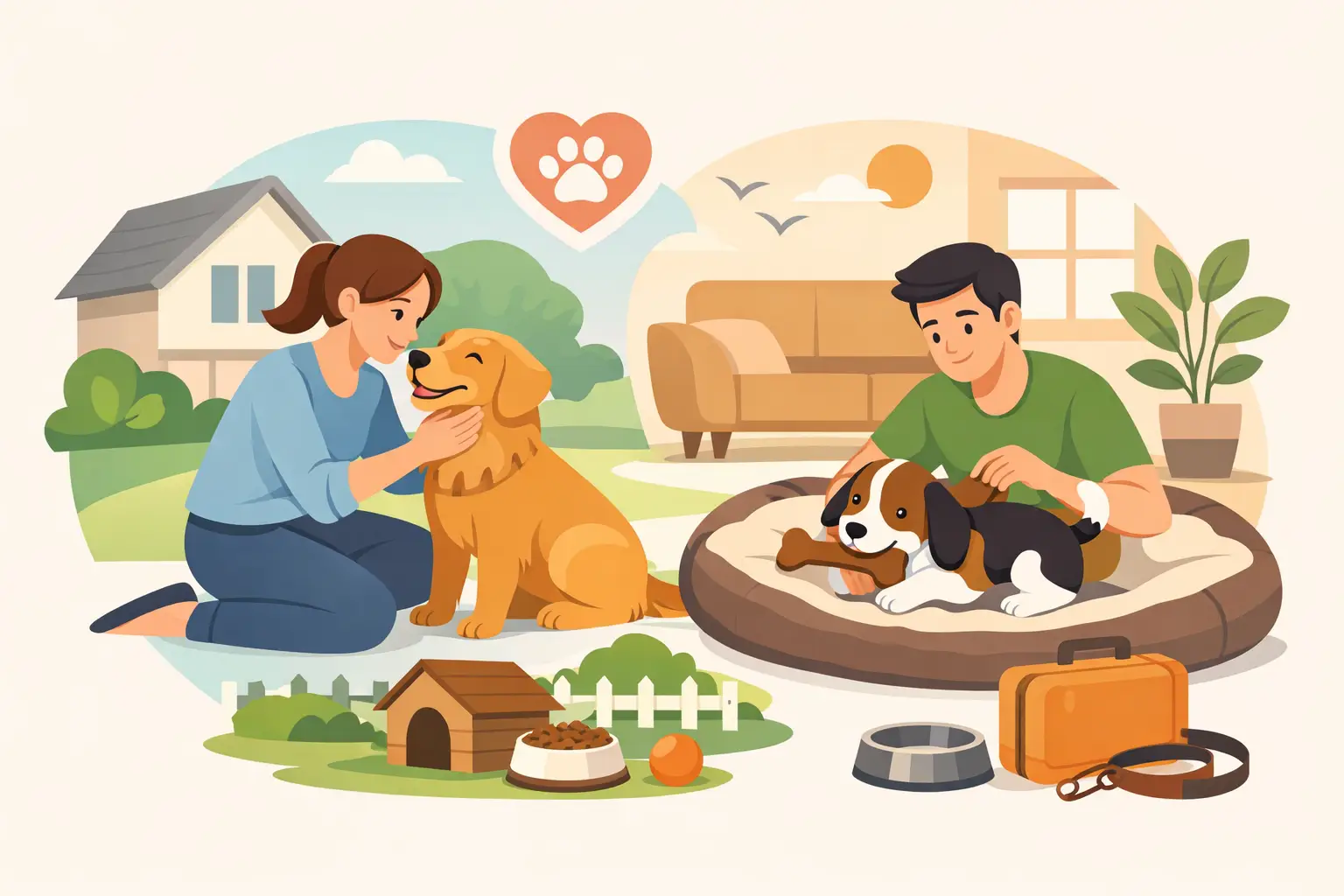
Leaving your dog behind can put a shadow over an otherwise exciting holiday, family visit or work trip. The dog home boarding benefits that matter most are often the simplest: a warm home environment, a carer who gets to know your dog properly, and the reassurance that their usual needs will not be treated as an afterthought.
For many dogs, a busy kennel setting is not the right fit. Some are unsettled by barking, unfamiliar smells or long periods without individual attention. Home boarding offers a friendly alternative, giving your dog care in a domestic setting while you are away. It is not about finding a place for them to stay. It is about finding the right people and routine to help them feel safe.
What is dog home boarding?
Dog home boarding means your dog stays overnight in the home of a trusted carer rather than in a traditional kennel. They become part of that household for the duration of their stay, with meals, walks, rest and companionship organised around their individual requirements.
The arrangement should begin well before you leave. A good carer will want to understand your dog’s character, habits, feeding schedule, exercise needs and any medical requirements. They should also ask about things that can make a big difference, such as whether your dog sleeps downstairs, is nervous around other dogs, dislikes traffic or needs a little time to settle with new people.
This personal approach is one of the strongest dog home boarding benefits. It gives carers the information they need to look after your dog thoughtfully, and gives you a clearer picture of the care they will receive.
A calmer setting for dogs who value routine
Dogs notice changes. Even the most confident pet can be affected when their family is away, so keeping life as familiar as possible can ease the transition. In a home boarding setting, dogs can usually enjoy a quieter pace than they would in a larger boarding environment.
Their day can be built around the routine they already know: breakfast at their usual time, regular toilet breaks, appropriate walks, quiet time after exercise and a comfortable place to sleep. Bringing their normal food, bed, blanket and a favourite toy can help too. Familiar scents and possessions are small comforts, but they can make a real difference during the first few days.
That does not mean every dog will settle immediately. A young, energetic dog may need more time and activity, while an older dog may need a calm household and extra rest. The right boarding match matters more than choosing the closest available space.
More individual attention
In a home environment, your dog’s carer has the opportunity to notice the details. They may spot that your dog is drinking less than usual, taking longer to settle, avoiding a certain route or becoming excited at a particular time of day. Those observations are valuable because they allow care to be adjusted early.
Individual attention also makes everyday life more enjoyable for your dog. Rather than fitting into a rigid group timetable, they can have walks and enrichment suited to their energy level. A lively spaniel and a gentle senior terrier should not necessarily have the same day, and home boarding can allow for that difference.
For dogs that enjoy human company, having someone present through the day and evening can be especially comforting. This is often a better option for pets who become lonely when left alone for long periods or who find unfamiliar, noisy environments overwhelming.
Regular updates bring peace of mind
When you are away, it is natural to wonder how your dog is getting on. Are they eating? Did they sleep well? Have they made themselves at home? A reliable home boarding service understands that reassurance is part of the care.
Updates, photos and short messages let you see your dog enjoying their stay rather than simply hoping everything is fine. They are particularly helpful on the first day, when both dog and owner may be adjusting. Knowing your dog has been out for a walk, had their dinner and settled down comfortably can make it much easier to relax.
Communication should be honest as well as cheerful. If a dog is taking longer to settle, a professional carer should let you know what they are doing to support them. Clear communication builds trust and means you are never left guessing.
A safer choice starts with the right checks
Home boarding is only as good as the standards behind it. Before booking, ask sensible questions about the carer’s experience, insurance, home setup and emergency procedures. You should know who will be caring for your dog, whether other dogs will be present, and how introductions are managed.
A meet and greet is invaluable. It gives your dog the chance to visit the carer and allows everyone to see whether the arrangement feels right. Use the visit to discuss feeding, medication, lead manners, recall, sleeping arrangements and anything your dog finds stressful. There is no such thing as being too specific when it comes to your pet’s welfare.
It is also wise to check that the service is properly insured and that carers have been DBS checked where appropriate. If home boarding is provided as a business, the relevant local authority licensing requirements should be met. These measures are not just paperwork. They show that care, accountability and animal welfare are being taken seriously.
At Scamps and Champs, the focus is on helping owners feel confident in the person looking after their pet, with local carers, clear communication and professional safeguards forming part of that reassurance.
When home boarding may not be the best fit
Home boarding has many advantages, but it is not automatically right for every dog. Some pets are happiest staying in their own home with a pet sitter, particularly if they are elderly, highly territorial or unsettled by any change of location. Dogs with complex medical needs may need a specialist arrangement or advice from their vet.
Equally, a sociable dog may thrive in a boarding home, while a dog that is anxious around other animals may need a carer with no resident pets. Be open about your dog’s behaviour, including any worries around food, visitors, other dogs or being handled. The information helps a professional service make a safe, kind decision rather than placing your dog in a situation that does not suit them.
The aim is never to force a dog to adapt to a service. It is to choose care that fits the dog.
Preparing your dog for a comfortable stay
Once you have found a suitable carer, preparation can make the handover much smoother. Keep your dog on their normal routine in the days before boarding, rather than making big changes to meals or exercise. Pack enough of their usual food for the full stay, plus a little extra in case travel plans change. Sudden diet changes can upset a dog’s stomach, particularly when they are already adjusting to a new place.
Provide written instructions even if you have discussed everything in person. Include feeding quantities, medication details, vet contact information, emergency contacts, microchip details and any useful notes about their habits. A simple note such as “waits by the door at 7pm” or “needs encouragement to drink after a long walk” can be genuinely helpful.
Leave calmly when it is time to go. Dogs often pick up on our emotions, and a long, worried goodbye can make the moment harder. A trusted carer will help them settle into the next part of their day with gentle attention and something familiar.
The best home boarding experience gives your dog more than somewhere to sleep. It gives them a caring temporary home, while giving you the freedom to be away without feeling far from the pet who is waiting for you.