
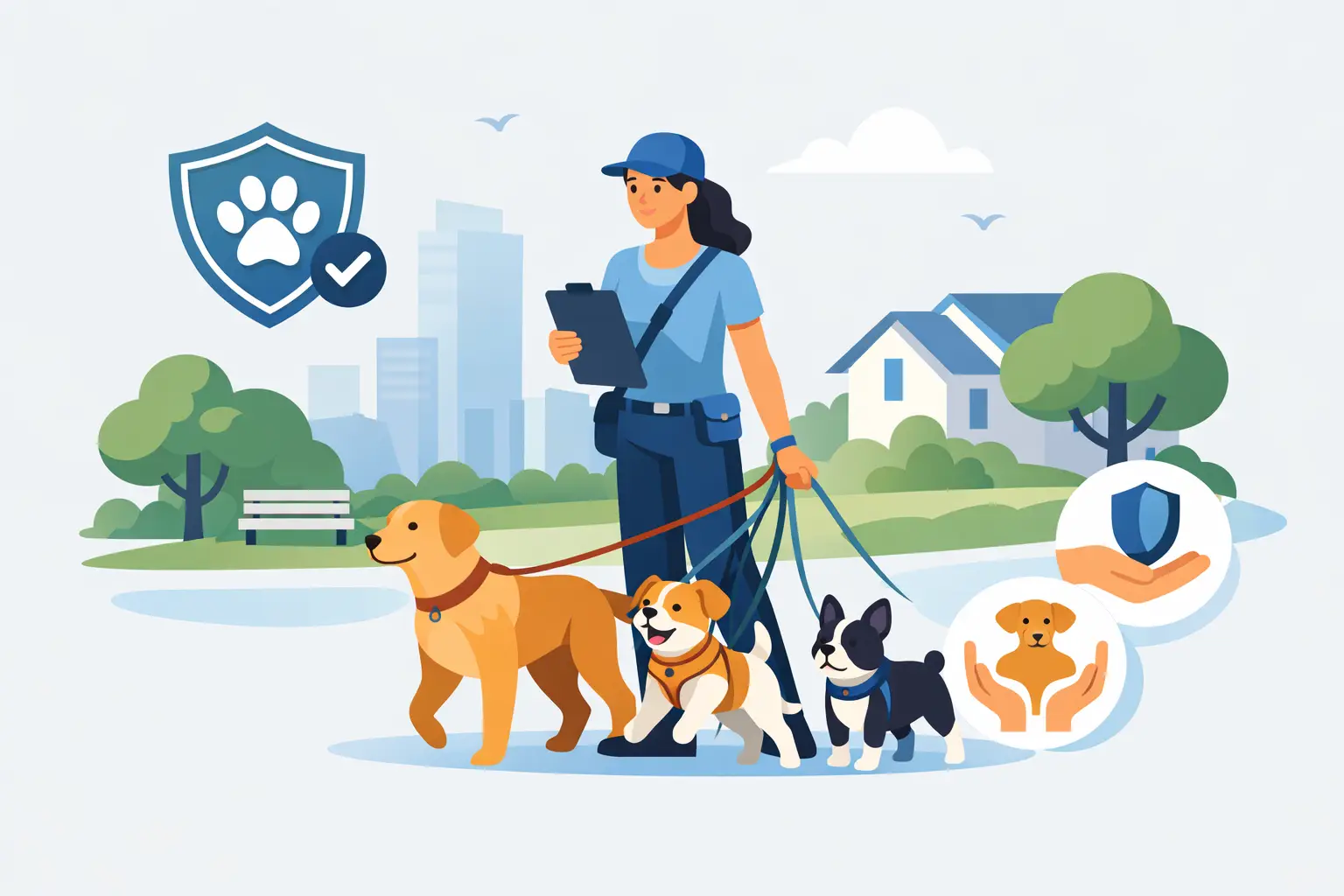
The moment your dog trots off with someone else, you are placing a great deal of trust in them. A fully insured dog walker gives you more than help with a busy weekday schedule. They provide a clear layer of protection if something unexpected happens, along with the reassurance that your dog’s care is being treated properly.
For many owners, dog walking is not simply about getting their pet out for a toilet break. It is about exercise, companionship, routine and safety. Whether you are at work in Stockport, managing family life in Halifax, or need regular support from a local branch, choosing the right person matters.
What does a fully insured dog walker mean?
A fully insured dog walker has suitable business insurance in place for the services they provide. The exact policy can vary, but it should be relevant to professional pet care rather than a personal policy that may not cover paid work.
Public liability insurance is one of the key things to ask about. This can help if a dog causes accidental injury to a person or damage to property while in the walker’s care. For example, if a dog slips its lead and damages a neighbour’s garden, or knocks somebody over during an excitable greeting, the right cover offers a route for dealing with the situation responsibly.
Many professional carers also hold cover for the animals themselves while they are in their care, custody and control. This can be relevant if a dog is injured, becomes unwell or needs emergency veterinary attention during a walk. It is not a replacement for pet insurance, and it will have terms, limits and exclusions, but it shows that the walker has considered the responsibilities that come with looking after someone else’s pet.
Insurance cannot stop every mishap. Dogs are wonderfully unpredictable, and even the most careful walk can involve a startled squirrel, a loose gate or an upset tummy. What it does provide is accountability and a practical plan should a problem arise.
Why insurance matters on everyday walks
Most dog walks pass without incident. That is exactly what everyone wants. But professional care is about preparing for the less likely moments as well as enjoying the ordinary ones.
A good dog walker should know how to manage leads, road crossings, other dogs and changes in weather. They should understand that a nervous rescue dog may need more space, while a strong young Labrador may need different handling from an older dog with stiff joints. Insurance sits alongside that knowledge. It supports a careful, professional approach rather than replacing it.
It also matters when responsibility changes hands. If your dog has a minor injury while you are out, you need to know who will contact you, what information they will provide and whether they can act quickly if veterinary care is needed. A reliable service will discuss emergency contacts, your preferred vet, known health conditions and consent arrangements before the first walk.
For owners, this clarity reduces the worry that can come with being away from home. You should not have to spend your working day wondering whether your dog is safe, whether they have been walked, or what would happen if plans changed at short notice.
Insurance is not the only trust signal
It is tempting to see the words “fully insured” and assume every part of a service will be excellent. Insurance is essential, but it is one part of a bigger picture.
Look for a carer who takes time to get to know your dog before taking them out. A proper meet and greet gives them the chance to learn about feeding, recall, triggers, medication, lead manners and favourite walking routes. It also lets your dog meet them in a calm setting, rather than being handed straight over on a rushed morning.
DBS checks offer further reassurance, especially as dog walkers may collect pets from your home. Clear communication matters too. You should know who is caring for your dog, when walks are scheduled and how to get in touch if your plans change. GPS-tracked walks and regular updates can be especially comforting for owners whose dogs are new to a walking service or need careful management.
Questions to ask before you book
There is nothing awkward about asking a dog walker about their insurance. A professional will expect the question and be happy to explain their cover in plain English. You do not need to read every line of their policy, but you do need enough information to make a confident choice.
Ask whether they are insured specifically for dog walking and pet care, and whether their policy includes public liability and care, custody and control. It is sensible to ask if they can provide confirmation that their insurance is current. You may also want to know what their procedure is if a dog becomes ill or injured, and whether they are trained in pet first aid.
The way they answer can tell you a lot. Straightforward answers, sensible boundaries and a written process are good signs. Be cautious if someone dismisses your concerns, cannot explain what they are covered for or relies on vague promises that “nothing has ever happened”.
You should also ask about group sizes. A larger group may suit a confident, sociable dog who enjoys company and has good recall. It may be unsuitable for a dog that is reactive, elderly, very young or easily overwhelmed. There is no single perfect format. The right choice depends on your dog’s temperament, health, training and what helps them feel settled.
Check the practical details too
Insurance works best alongside strong day-to-day systems. Find out how dogs are transported if transport is part of the service, how keys are stored, and what happens in extreme heat, icy conditions or heavy rain. A walker should have a sensible approach to weather, not a one-size-fits-all rule.
It is also worth discussing off-lead walks honestly. Some dogs are happiest with freedom in a safe, familiar area. Others should remain on lead or use a long line, even if their owner feels their recall is usually good. A professional carer will make decisions based on the dog in front of them, the location and the circumstances that day.
At Scamps and Champs, our local carers are fully insured and DBS-checked, with care arranged around the individual pet rather than a generic routine. That means taking the time to understand whether your dog needs a lively adventure, a quieter sniff-filled walk, medication support or simply a familiar face during a long day at home.
What to share with your dog walker
The more your walker knows, the safer and happier the experience is likely to be. Tell them about any medical conditions, allergies, previous injuries and medication. Be open about behavioural concerns too, including pulling, resource guarding, chasing wildlife, fear of traffic or discomfort around certain dogs.
Share the details that make your dog themselves. Perhaps they are frightened by bin lorries, cannot resist a puddle, or need a few minutes to warm up to new people. Maybe they have a favourite treat, a sensitive stomach or a habit of trying to greet every dog they see. None of this is a nuisance to a good carer. It helps them provide kind, informed care.
Keep your contact details and emergency contacts up to date, particularly before a holiday or a period of regular work travel. If your vet changes or your dog starts new medication, let the walker know promptly. Good pet care is a partnership, and small updates can make a big difference.
Peace of mind starts before the lead goes on
The best dog walking relationship should feel calm from the start. You know who is collecting your dog, your dog recognises their carer, and there is a clear plan if anything does not go as expected. That dependable routine can be especially valuable for dogs who thrive on familiarity and for owners balancing work, school runs and everyday life.
Before arranging the first walk, take a little time to ask the questions that matter to you. A fully insured dog walker who listens carefully, communicates clearly and treats your dog like family gives you a much better reason to leave the house with confidence.