
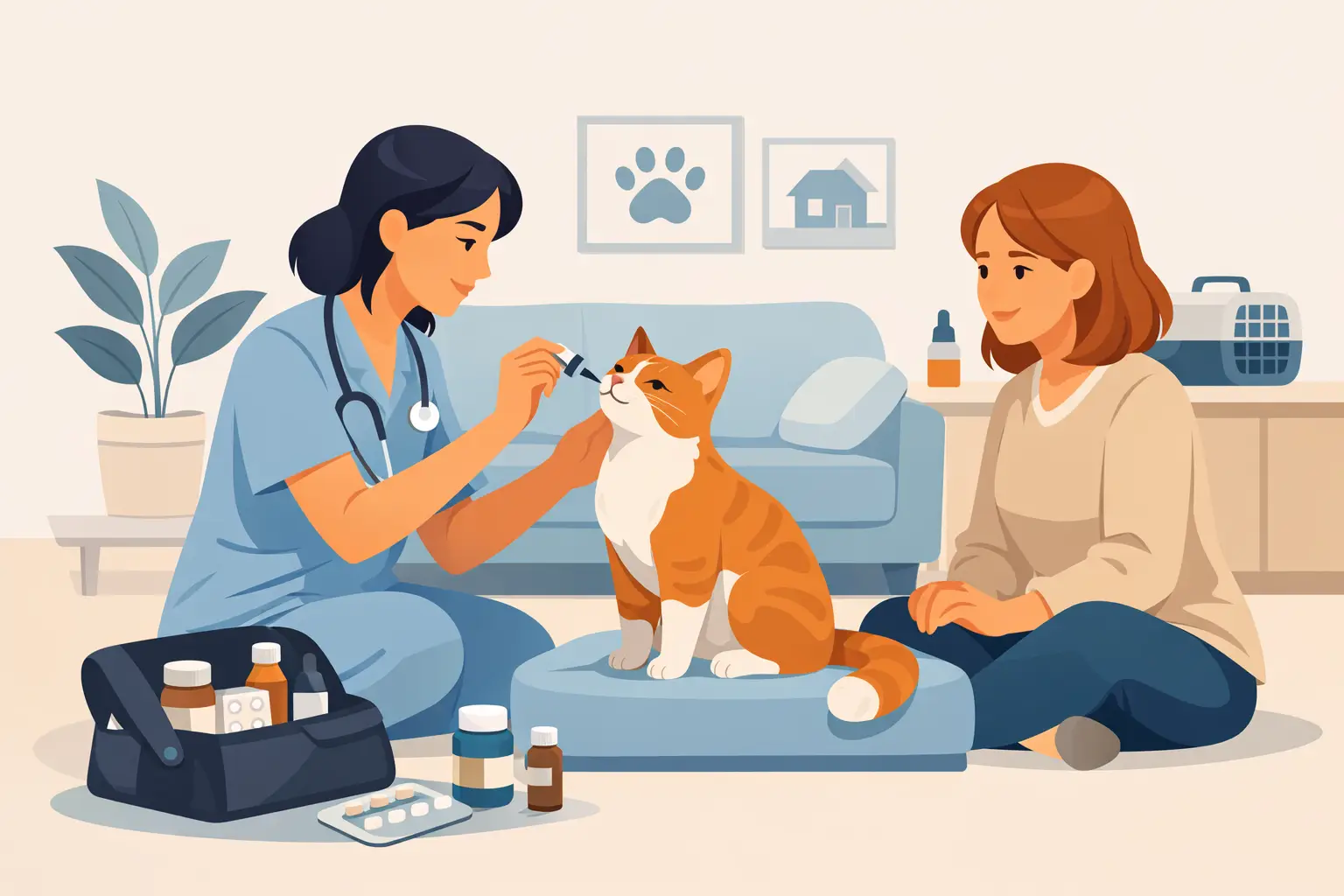
A cat can spot a tablet wrapper from the other side of the kitchen. That is why medication visits are about much more than popping in, putting food down and hoping for the best. When you are at work, away for the weekend or heading off on holiday, a calm, capable carer can help keep treatment on track without disrupting your cat’s familiar home routine. Meet our local cat sitters in Stockport.
This guide to cat medication visits explains what good support looks like, what to prepare before your first visit and when a different care plan may be safer. Every cat is different, especially when they are unwell, older or wary of new people, so the details matter.
What is a cat medication visit?
A cat medication visit is a planned home visit where a trusted pet carer provides prescribed medication alongside essential daily care. Depending on your cat’s needs, this may include tablets, capsules, liquids, topical treatments, eye drops, ear drops or medication mixed into food, if your vet has confirmed that is appropriate.
The visit should also cover the things that help a cat feel settled: fresh water, meals, litter tray care, a quick check of their usual behaviour and some gentle company on their terms. For many cats, staying at home is far less stressful than travelling to unfamiliar surroundings. Familiar smells, favourite hiding places and their normal feeding spot can make a real difference.
Medication visits are particularly useful for cats recovering from illness or surgery, managing long-term conditions, or needing a short course of treatment while their owner is away. They are not a replacement for veterinary care. If your cat’s condition changes, a responsible carer should contact you promptly and follow the plan you have agreed with your vet.
Start with the vet’s instructions
Before arranging care, make sure you understand exactly what has been prescribed. Ask your vet to explain the dose, timing, method and any signs that mean you should seek advice. If your cat is difficult to medicate, it is worth asking for a demonstration before you leave.
Do not assume that a tablet can be crushed, hidden in a treat or mixed into food. Some medicines must be given whole, while others can be made less effective or unsafe if altered. Similarly, a dose missed by an hour may not matter for one prescription but could matter for another. Your vet is the right person to clarify this.
Give your carer the medication in its original labelled packaging, with enough supply for the full booking plus a little extra in case of an accidental spill or delayed return. Avoid decanting tablets into an unlabelled pot. Clear labels help prevent mix-ups, particularly in homes with more than one pet.
How to prepare for cat medication visits
A detailed handover makes the visit safer for your cat and less worrying for you. At Scamps and Champs, personalised care starts with understanding the individual pet, not just the task on the booking.
Write down your cat’s usual routine in plain language. Include feeding times, food portions, where they prefer to eat and whether medication is given before, during or after a meal. Explain their normal habits too. A cat who always hides until the house is quiet may be perfectly well, while a friendly cat suddenly hiding and refusing food could need attention.
Your instructions should cover:
- the medicine name, dose, schedule and administration method
- your vet’s name and contact number, plus any relevant case or prescription details
- your contact details and a local emergency contact
- your cat’s temperament, handling preferences and known triggers
- where the carrier is kept in case veterinary transport is needed
- any other household pets and how they should be managed during the visit
Keep medication, treats, a towel if one is normally used, and any approved administration tool in one easy-to-find place. A quiet room can be helpful for cats who become anxious when medication is given, but only if it is somewhere they already know and tolerate well.
Arrange a meet and greet
A meet and greet is not simply a nice extra. It gives your cat time to see, smell and hear the person who will be visiting, while allowing the carer to learn the practical routine. It is also the best opportunity to talk honestly about whether your cat accepts medication easily, needs patience, or may become frightened and defensive.
If possible, show the full process rather than describing it. Demonstrate how you approach your cat, where they tend to settle and what usually works when they are reluctant. A skilled carer will not rush or force a frightened cat. They will assess what is safe, follow the agreed plan and communicate clearly if the medication cannot be administered.
Choosing the right type of medication care
The right arrangement depends on the medicine, your cat’s health and how predictable the process is. A straightforward daily tablet hidden in a vet-approved treat may suit a standard visit. Eye drops several times a day, insulin injections or medication for a cat with a changing condition may require more frequent visits, a longer booking or veterinary support.
Be upfront about injections and any condition that could deteriorate quickly. Not every pet carer offers every form of medication administration, and that is a safety measure rather than a limitation. The carer must be appropriately trained, confident and insured for the task they are undertaking.
It also depends on your cat. Some cats will take medicine politely from a familiar person but refuse it from anyone else. Others are relaxed with a calm, consistent visitor. If medication is critical and your cat is known to be very difficult to handle, your vet may recommend a boarding arrangement through the practice or another clinical option instead of home visits.
What a good visit should include
The best medication care combines accuracy with observation. Your carer should give the medicine at the agreed time, record whether it was successfully administered and let you know how your cat was during the visit. Regular updates are especially reassuring when you are away, because they tell you more than whether the door was opened and closed.
A useful update might mention that your cat ate well, used the litter tray normally, came out for a fuss, or was quieter than usual but accepted the dose. Photos can be lovely to receive, but they are not the only sign of good care. Clear, honest communication is more valuable than a cheerful photo that misses a problem.
A carer should never double-dose because they are unsure whether medication was swallowed, unless a vet has specifically advised this. They should also avoid chasing a distressed cat around the house or using force. Stress can make future doses harder and may put both cat and carer at risk.
Have a plan for missed doses and emergencies
Even with careful preparation, cats can refuse medication, vomit shortly after a dose or disappear behind the washing machine at exactly the wrong moment. Agree in advance what the carer should do in these situations. Your vet may have specific advice for a missed dose, but it is often safer not to guess.
Tell the carer what counts as urgent for your cat. Warning signs may include repeated vomiting, trouble breathing, collapse, severe lethargy, straining to urinate, sudden confusion or not eating when that is unusual for them. For cats with diabetes, kidney disease, heart conditions or recent surgery, ask your vet for condition-specific guidance before you travel.
Leave permission for emergency veterinary treatment and make practical arrangements for payment. Check that your carer knows the preferred practice, the out-of-hours service and where the cat carrier is stored. These details can save precious time if something unexpected happens.
Help your cat feel comfortable between visits
Medication can make even an affectionate cat a little suspicious at first. Keep the rest of their routine as normal as possible. Leave familiar bedding in place, avoid changing food just before you go away and make sure the litter tray is easy to access. If your cat enjoys play or brushing, let the carer know, but do not expect interaction on demand.
Some cats benefit from visits at broadly similar times each day. Others need a longer, quieter visit so they have time to emerge from a hiding place before medication is attempted. This is why a care plan should be built around your cat rather than fitted into a one-size-fits-all schedule.
A well-prepared medication visit gives your cat the comfort of home and gives you a clearer picture of how they are coping while you are apart. Leave thorough instructions, choose a carer you can trust and keep your vet involved whenever the treatment plan is unclear. That little bit of planning can make the whole experience calmer for everyone, especially the cat.