
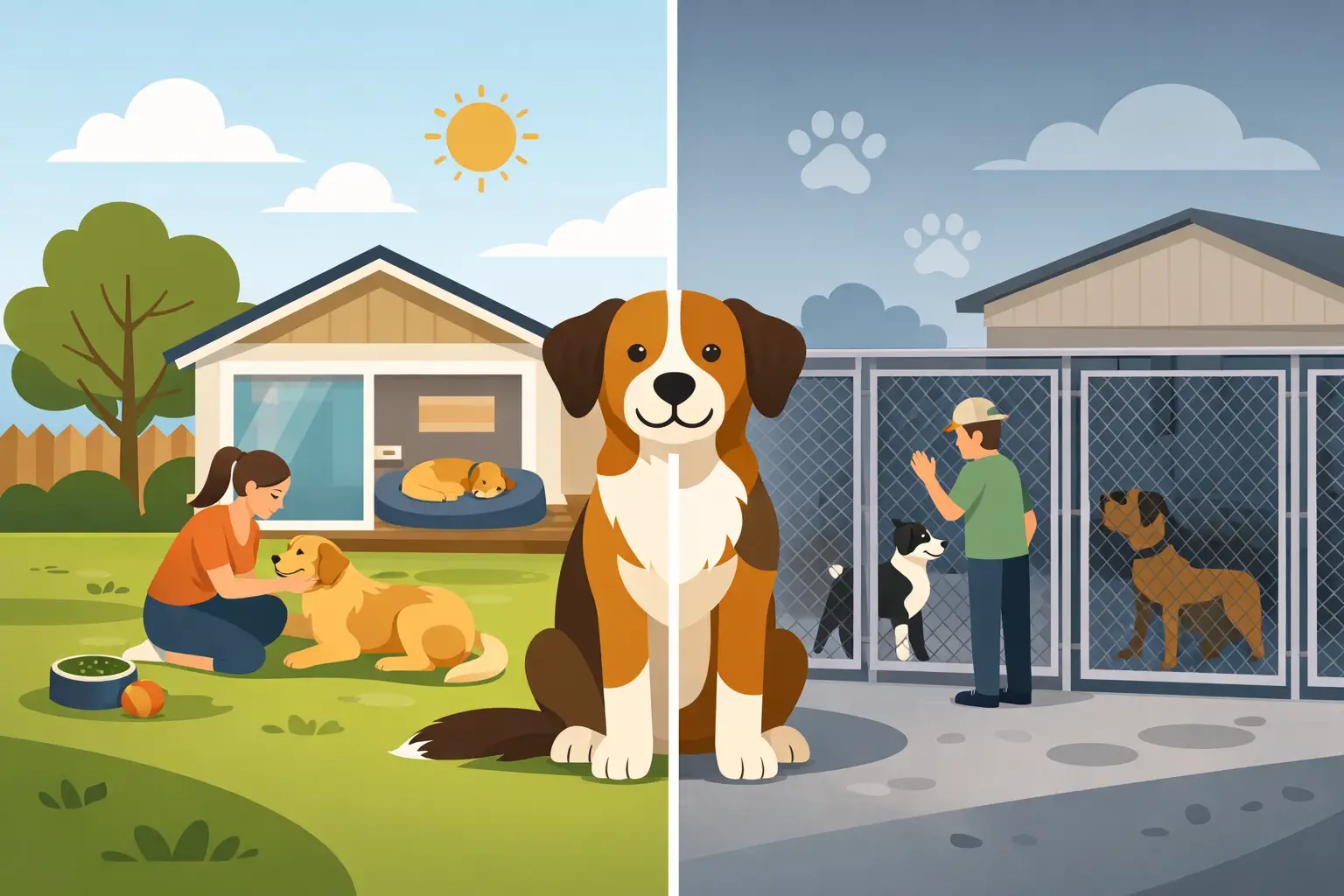
The suitcase coming out can be enough to make some dogs follow you from room to room. For owners, choosing holiday care is rarely just a practical booking – it is about knowing your dog will be safe, settled and properly understood while you are away. When weighing up home boarding versus kennels, the right answer depends on your dog’s temperament, health, routine and previous experiences, not simply on which option sounds best.
Both can provide good care when run responsibly. The real difference lies in the setting, the number of dogs being cared for and how closely your dog’s usual life can be maintained.
Home boarding versus kennels: the main difference
Home boarding means your dog stays in the home of a professional carer, becoming part of a household for the duration of their stay. They may have a garden, go on familiar-style walks and settle down in a living room or designated sleeping area, depending on the carer’s set-up and your dog’s needs.
Kennels are purpose-built facilities where dogs usually stay in individual runs or pens, with scheduled exercise, feeding and cleaning. A well-run kennel can be clean, secure and carefully managed, particularly for dogs that are used to this sort of environment.
Neither arrangement is automatically right for every dog. A confident, sociable dog may enjoy either. A dog who finds unfamiliar noise, confinement or change difficult may be more comfortable in a quieter home setting. Equally, a dog that needs very structured handling or prefers space from people and other dogs may not enjoy being immersed in a busy household.
Why many dogs settle well with home boarding
For dogs who are used to family life, home boarding can feel like a gentler change of scene. Rather than sleeping in a kennel block with unfamiliar sounds and scents, they stay in a home environment with one-to-one attention and everyday companionship.
That continuity can make a meaningful difference. Your carer can follow familiar feeding times, offer the walks your dog is used to and keep an eye on the little things that matter: whether they have eaten breakfast, how they have settled overnight or whether they are looking for their usual afternoon nap.
Home boarding can be especially reassuring for dogs who dislike being left alone. Many carers are at home for much of the day, although this should always be confirmed before booking. Dogs are sociable animals, but they are also individuals. For some, having a calm person nearby is what helps them relax.
A good home boarding arrangement should not feel like a free-for-all, however. Ask how many dogs will be staying at once, whether they will be introduced before the stay, where they sleep and how the carer separates dogs if needed. A cosy home is valuable, but clear boundaries, supervision and safe management are just as important.
The value of a meet and greet
A meet and greet gives everyone the chance to assess whether the arrangement feels right. Your dog can meet the carer, explore the environment and, where relevant, meet any resident dogs. It also gives you an opportunity to discuss routines, medication, feeding, exercise and any worries your dog has.
Pay attention to your dog’s body language. They do not need to be instantly enthusiastic, particularly if they are naturally reserved, but they should be able to settle with kind, patient handling. A professional carer will be honest if they do not believe their home is the best fit.
When kennels may be the better choice
Kennels are not an inferior option simply because they are different. Some dogs genuinely cope well with a structured kennel routine, especially if they have stayed there successfully before. Established facilities may have trained staff on site, secure exercise areas and systems designed to manage multiple dogs safely.
A kennel can suit dogs who are comfortable in their own space and do not need constant household interaction. It may also be appropriate where a dog has specific behavioural needs that the facility is equipped to manage, or where the owner prefers the reassurance of a larger operation with staff available around the clock.
The trade-off is that kennels can be busier and noisier. Barking carries, unfamiliar dogs come and go, and routines must work for the whole facility rather than one household. Sensitive dogs, elderly dogs or those who become anxious away from home may find this more challenging.
Before choosing a kennel, visit it in person. Look beyond a tidy reception area. Ask to see where your dog will sleep and exercise, find out how often they will be walked, and ask how staff handle dogs that struggle to settle or stop eating. Cleanliness, ventilation, secure fencing and calm, observant staff all matter.
Think about your dog, not just the brochure
The best choice starts with an honest picture of your dog’s everyday character. A young, bouncy dog who loves meeting people may flourish with a friendly home boarder and plenty of appropriate exercise. A nervous rescue dog may need a quieter arrangement with minimal dogs and a very gradual introduction. An older dog may benefit from a carer who can preserve their slower routine and administer medication exactly as instructed.
It is also worth considering how your dog behaves after changes to routine. Do they settle easily at a friend’s house? Are they happy to sleep away from you? Do they guard food or toys around other dogs? Do they become unsettled by noise? These answers are more useful than choosing based on price or photographs alone.
If your dog is not comfortable around other dogs, tell the provider from the beginning. The right professional will not try to squeeze them into a group arrangement that is unsuitable. They may recommend an individual home boarder, overnight pet sitting in your own home or a different care plan altogether.
Safety questions worth asking
Whether you choose home boarding or kennels, reassurance should come from clear answers, not vague promises. You are trusting someone with a member of your family, so it is reasonable to ask practical questions before you book.
Check whether the provider is insured and whether carers have been DBS checked. Ask how they store food and medication, what happens if your dog becomes unwell, and how they would contact you and a vet in an emergency. You should also know who will be caring for your dog, rather than being left uncertain about who is responsible on the day.
For home boarding, ask about licensing requirements in the local area, secure garden access, sleeping arrangements and whether dogs are ever left unattended together. For kennels, ask about staff supervision outside normal opening hours, vaccination requirements, exercise provision and the cleaning routine.
Regular updates can be a real comfort while you are away, but they are more than a nice extra. A message, photo or short update lets you see that your dog is eating, walking and settling as expected. It also shows that the carer is attentive and communicating properly should anything change.
Cost, convenience and continuity
Home boarding can sometimes cost more than a basic kennel place because it offers a smaller-scale, more personal service. That difference may be worthwhile if your dog needs close attention, a home environment or a routine tailored around them. Kennels can offer a more predictable price structure and may have greater availability at busy times such as school holidays.
Convenience matters too. A local carer can make drop-off and collection easier, particularly when travel plans are already demanding. Some owners prefer care near home, while others choose a boarding setting closer to their departure route. The key is not to leave the decision until the week before your holiday, when the best options may already be booked.
For dogs that find any new location difficult, overnight pet sitting at home can be worth considering. They remain in their own bed, with their usual smells and surroundings, while a trusted sitter keeps their feeding and walking routine on track. Scamps and Champs offers local pet care options designed around that kind of continuity, including home boarding and overnight care where suitable.
Give your dog time to prepare
A trial stay is often one of the kindest things you can arrange, particularly before a longer holiday. One night with a home boarder, or a short day visit where appropriate, can show how your dog settles and give the carer a clearer understanding of their needs.
Pack familiar food, clear feeding instructions, medication and a comfort item if the provider allows it. Avoid making a dramatic farewell at drop-off. Dogs take their cue from us, and a calm, confident handover is usually easier for everyone.
The best care choice is the one that lets your dog feel safe while giving you genuine peace of mind. Take the time to meet the carer or visit the facility, ask the awkward questions and choose the setting that respects your dog as the individual they are.