
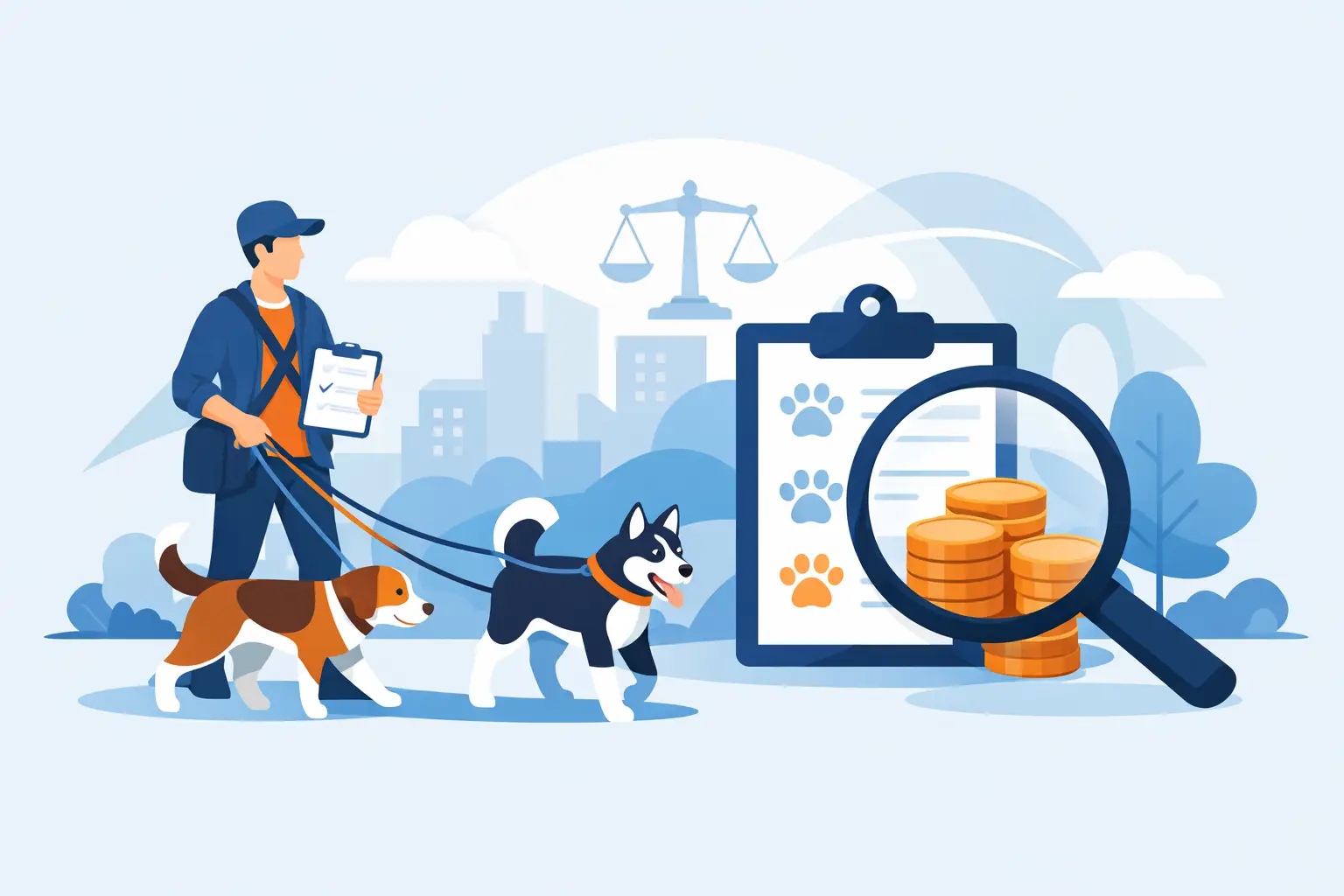
If you have ever compared dog walking services prices and wondered why one quote looks perfectly reasonable while another seems surprisingly high, you are not alone. On the surface, a dog walk can sound simple. In reality, the price often reflects much more than time spent on the lead – it can include safety checks, travel, insurance, experience, route planning, updates for owners and a proper understanding of your dog’s needs.
For busy owners, the question is rarely just, “What does a dog walker charge?” It is usually, “What am I getting for that price, and can I trust this person with my dog?” That is the part worth looking at closely, because the cheapest option is not always the best value, and the highest price is not automatically a sign of better care either.
What dog walking services prices usually cover
In the UK, dog walking services prices can vary depending on where you live, the type of walk you choose and the level of care involved. A solo walk will usually cost more than a group walk because your dog gets one-to-one attention and the walker cannot combine your booking with others. Group walks are often more affordable, but they still need careful planning to make sure the dogs are well matched by size, temperament and energy level.
You are also paying for the parts of the job you do not always see. A professional dog walker is not simply turning up, clipping on a lead and heading to the park. They may be collecting your dog from home, drying muddy paws afterwards, topping up water, locking up securely and sending you an update once the walk is done. Those details matter, especially if you are at work and relying on someone else to keep your pet safe and settled.
For some dogs, the walk itself is only half the service. Nervous dogs, older dogs and puppies may need slower routines, shorter outings or a gentler approach. That extra care often affects pricing, and rightly so.
Why dog walking services prices vary so much
One of the biggest factors is location. Urban areas and places with higher business costs tend to have higher rates. If you are comparing quotes across different towns, the difference may have less to do with quality and more to do with local overheads, travel time and demand.
Length of walk also makes an obvious difference, but not always in a perfectly neat way. A 30-minute walk is not necessarily half the work of a 60-minute walk once collection, return and admin are included. Some providers price around the full time commitment rather than the walking time alone.
Then there is the service model itself. A local independent walker working alone may charge less than a larger professional company. On the other hand, a structured pet care business may include booking systems, back-up cover, GPS tracking, insured services and DBS-checked carers. That can raise the price, but it can also offer peace of mind that is hard to put a figure on when your dog is part of the family.
Experience plays a part too. Walkers who are confident with reactive dogs, multi-dog households or dogs needing medication may charge more because they are bringing specialist handling skills. That is not a premium for the sake of it. It reflects responsibility.
Typical pricing for dog walking in the UK
While every area is different, many UK owners will see 30-minute dog walks starting from around £10 to £15, with 60-minute walks often sitting somewhere between £15 and £25. In busier areas or for more tailored services, prices can go beyond that.
Solo walks are usually at the upper end of the range. Group walks often cost a little less per dog, especially if your dog is sociable and suited to walking with others. Some walkers also offer discounted rates for regular weekday bookings, which can help if you need ongoing support rather than the occasional walk.
It is worth being careful with broad averages, though. A low price may exclude travel, weekend cover or key handling. A higher one may include photo updates, flexible booking and a stronger level of accountability. Prices make more sense when you compare what is actually included, rather than judging the number on its own.
What should be included in a fair price?
A fair price should cover more than just exercise. At a minimum, you would expect safe handling, punctual collection, a walk suited to your dog’s age and temperament, and secure return home. If your dog walker has access to your property, trust and professionalism become part of the package too.
Many owners now look for practical reassurance as standard. That might include confirmation that the service is insured, that carers have been DBS checked, and that there is a clear system for bookings and communication. If your dog has a regular walker but illness or holidays come up, it also helps to know whether there is reliable back-up in place.
This is where a professional service can justify a stronger price point. A business such as Scamps and Champs is not only offering the walk itself, but a wider support system designed to make life easier for owners and safer for pets. For many households, that consistency is a big part of the value.
The cheapest quote is not always the best deal
It is understandable to keep an eye on cost, especially if you need several walks each week. But very low prices can be a sign that corners are being cut somewhere. That might mean no insurance, no formal checks, poor communication or an unrealistic number of dogs being walked together at once.
Sometimes the issue is not negligence but lack of structure. A walker may mean well and still struggle with reliability, scheduling or emergency planning. When you are working long hours or juggling family commitments, that uncertainty can become stressful very quickly.
A good dog walking service should leave you feeling more at ease, not less. If a slightly higher fee gives you dependable care, updates, proper vetting and someone who genuinely understands your dog, that often works out better value over time than a bargain service that leaves you worrying at your desk.
Questions to ask when comparing dog walking services prices
Before choosing a provider, it helps to ask what type of walk your dog will get and whether it is one-to-one or grouped. You should also ask how many dogs are walked together, what happens in bad weather, and whether the walker is insured.
It is sensible to ask how keys are handled, whether updates are sent after walks and what happens if your usual walker is unavailable. If your dog has particular needs, ask how those are managed in practice rather than accepting a vague reassurance.
A trustworthy provider will not mind these questions. In fact, they should welcome them. Good pet care is built on confidence and clear expectations, not guesswork.
When paying more makes sense
There are times when a standard group walk is ideal. A friendly, active dog may enjoy the company, burn off energy and come home happy at a sensible weekly cost. In that case, a mid-range price can offer excellent value.
But there are also situations where paying more is entirely worthwhile. Puppies may need shorter, more careful outings. Senior dogs may need patience and gentler pacing. Dogs that are nervous, strong on the lead or unsettled around other dogs may be far better suited to solo walks. Owners with unpredictable schedules may also value a service that offers dependable communication and flexible support.
In those cases, the higher price is not an add-on. It reflects a service tailored to your dog rather than squeezing your dog into a service.
How to decide what is right for your dog and budget
Start with your dog’s needs, not just the price list. Think about temperament, age, health, sociability and how often support is needed. A cheaper group walk can be brilliant for one dog and completely wrong for another.
Then consider your own peace of mind. If you are handing over house keys and trusting someone with your pet while you are out, professionalism matters. Clear communication, proper checks and a reliable booking process are not luxuries. They are part of feeling confident that your dog is in safe hands.
The best choice is usually the one that balances affordability with consistency, care and trust. Dog walking is not simply a task to tick off. Done properly, it supports your dog’s routine, behaviour and wellbeing while making everyday life easier for you.
When you are weighing up prices, look past the headline figure and ask yourself a better question: does this service give my dog the kind of care I would want if I were there myself? That is often where the real value becomes clear.