
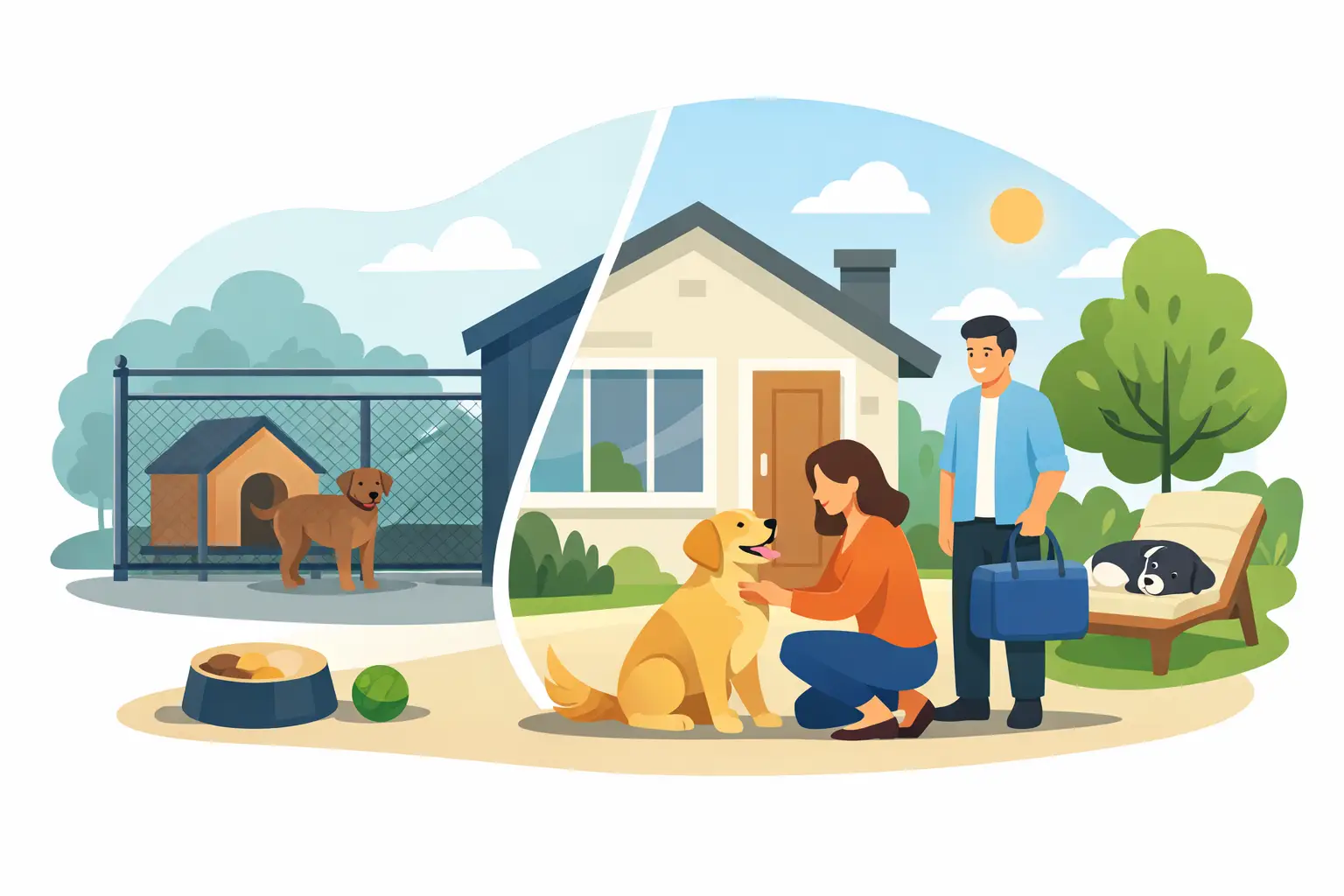
The hardest part of booking a holiday is often not packing the suitcase. It is deciding who will look after the dog who normally follows you from room to room. A dog home boarding alternative to kennels can offer a calmer option: your dog stays in a real home with a carefully chosen carer, rather than in a traditional kennel setting.
For many dogs, that means familiar routines, sofa time, gentle walks and individual attention. For their owners, it can mean leaving home with far more confidence. Home boarding is not the right fit for every dog or every household, but when it is managed properly, it is a warm, safe and practical choice.
What is dog home boarding?
Dog home boarding is overnight care in a carer’s home. Your dog becomes part of that household for the length of their stay, with feeding, exercise, rest and companionship planned around their usual needs.
It is different from dog sitting in your own home. With pet sitting, a carer comes to you and your dog remains in their familiar surroundings. With home boarding, your dog stays away from home but enjoys the comforts of a domestic environment.
That distinction matters. Some dogs settle best where everything smells familiar, particularly older dogs, cats, or pets that become unsettled by travel. Other dogs are sociable, adaptable and happiest with company, making a suitable home boarder a lovely alternative to spending time in kennels.
Why owners choose a dog home boarding alternative to kennels
Traditional kennels provide an essential service and can suit independent, confident dogs. However, they are busy environments, often with separate sleeping areas, scheduled exercise and the sounds and smells of many other dogs nearby. Even well-run kennels can feel very different from home.
Home boarding tends to feel more personal. Instead of being one dog among many, your pet’s personality, routine and preferences can shape their stay. Perhaps they need a slow morning before a walk, sleep best with a radio on, prefer quiet company or have a favourite bedtime treat. These details are not small when they help a dog feel secure.
Owners also value regular communication. A message, photo or update from a trusted carer can make a huge difference when you are away for work, a family break or a special occasion. You can see that your dog is eating well, getting out for a walk and settling into their temporary home.
The benefit is not simply comfort. It is continuity. Dogs thrive on predictable routines and calm, kind handling. A good boarding arrangement aims to provide both, while giving your dog a safe place to stay.
The right fit depends on your dog
Home boarding is personal care, not a one-size-fits-all service. Before choosing it, think honestly about how your dog copes with new people, other dogs and a change of setting.
A friendly dog who enjoys meeting people and settles quickly may love the attention of a home boarder. Dogs that are used to family life can often enjoy being part of another household, especially if the carer can mirror their normal routine.
A very nervous dog, a dog with strong guarding behaviours, or one that struggles around other pets may need a quieter arrangement. In-home pet sitting can be the better option if your dog is most comfortable in their own bed and territory. Puppies, elderly dogs and pets with medication needs can also be boarded successfully, but only where the carer’s experience, household set-up and care plan are right for them.
The aim is never to squeeze a dog into an available space. It is to find care that genuinely suits them.
What a trustworthy home boarder should offer
The word “home” should never mean informal or unstructured. Professional dog home boarding combines affection with clear standards. Ask how the provider assesses dogs and carers, what happens in an emergency, and how they keep owners informed.
In England, anyone providing commercial home boarding should hold the appropriate local authority licence. A responsible service should be open about this, along with its insurance and safety procedures. It should also explain how it matches dogs to suitable carers and manages introductions before a longer stay.
Look for carers who are DBS-checked, fully insured and happy to discuss your dog’s needs in detail. They should ask you plenty of questions too. Feeding instructions, exercise levels, sleeping habits, recall, health concerns, behaviour around children and contact with other dogs all help build a safer, happier stay.
At Scamps and Champs, our local carers are fully insured and DBS-checked, because reassurance should be backed up by proper safeguards, not just a friendly promise.
Arrange a meet and greet first
A meet and greet is one of the most useful parts of the process. It gives your dog a chance to meet their potential carer without the pressure of you immediately disappearing with a suitcase.
Use the visit to see how your dog responds to the home, people and any resident pets. Your dog does not need to become best friends instantly, but they should have space to settle and be handled with patience. The carer should take time to listen, rather than rushing through a checklist.
It is also sensible to ask practical questions. Where will your dog sleep? Will they be boarded with other dogs? How many dogs are cared for at one time? Are walks on lead or off lead, and where do they take place? Who is responsible if the carer becomes unwell or there is an emergency?
There is no need to feel awkward about asking. A professional will expect these questions and welcome the chance to put your mind at rest.
Share the details that help your dog settle
Once you have chosen a carer, provide a clear care plan. Bring enough of your dog’s normal food for the full stay, as sudden changes can upset their stomach. Include any medication with written instructions, along with vet details and an emergency contact.
A familiar blanket or bed can help, provided your dog is not likely to chew or guard it. Their usual lead, harness and a safe favourite toy may also make the transition easier. Avoid sending a whole basket of treasured belongings, though. A few familiar items are comforting; too much can be difficult to manage and may become a source of tension if dogs share space.
Be upfront about behaviour. If your dog pulls on the lead, dislikes bicycles, reacts to doorbells or needs distance from other dogs, say so. The right carer will not judge you for it. Honest information lets them plan safely and helps prevent avoidable stress.
Make the first stay easier
If your dog has never been boarded before, consider a short trial stay before a fortnight away. Even one overnight visit can show whether they settle, eat normally and enjoy the routine. It also allows the carer to learn what helps them relax.
Keep your goodbye calm. Dogs notice when we are anxious, and a long emotional farewell can make the handover harder. Give the carer the information they need, say goodbye warmly, and let them begin building a connection.
During your trip, updates are reassuring, but try not to expect constant contact. A good carer will be busy doing the important work: walking, feeding, supervising and spending time with the dogs in their care. Agree in advance what update schedule feels right, whether that is a daily message or a photo after a walk.
Home boarding is care, not simply accommodation
The best home boarding feels less like dropping your dog off somewhere and more like introducing them to a trusted extension of their care circle. It is built on the small things: a carer who notices a changed appetite, follows your feeding routine, gives a nervous dog time to settle and keeps you updated without fuss.
Whether you live in Stockport, Halifax, Macclesfield or another nearby area, take the time to choose a properly checked, local professional whose home and approach suit your dog. When your dog is cared for as an individual, you can focus on your plans knowing that their own little holiday is in kind, capable hands.