
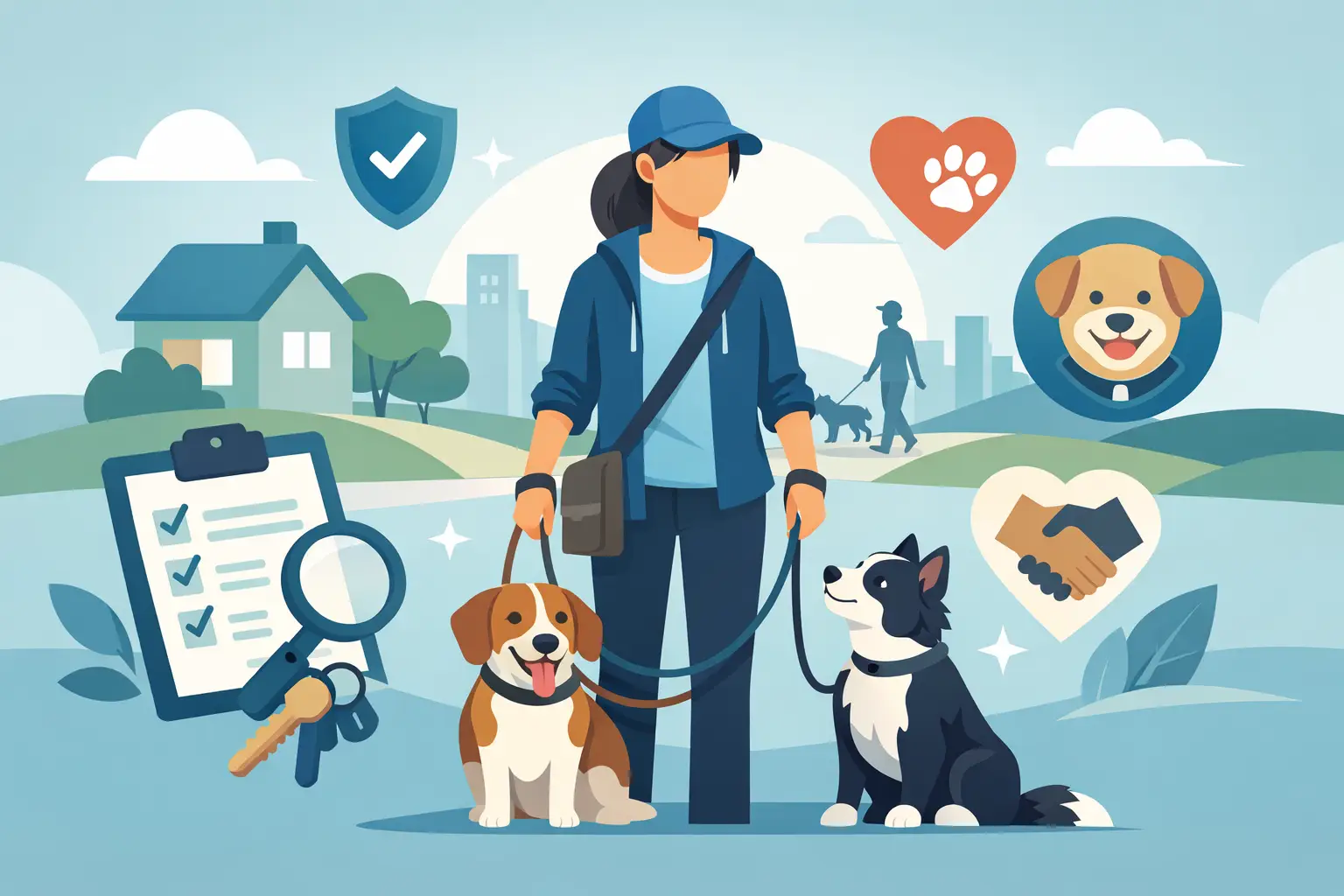
The moment you hand over your dog’s lead, you are placing more than a daily chore in someone else’s hands. You are trusting them with your dog’s safety, routine and happiness. This guide to choosing dog walkers is designed to help you make that decision with confidence, whether you need regular weekday support, occasional cover or help during a particularly busy spell.
A good dog walker does far more than make sure your dog gets from A to B. They learn what makes your dog comfortable, notice changes in their behaviour and give you the reassurance that they are cared for properly while you are at work, with family or simply juggling a full day.
Start with what your dog actually needs
The right walker for one dog may not suit another. A young, energetic spaniel may love a lively group walk and plenty of play, while an older dog, a nervous rescue or a dog recovering from injury may need a quieter route, a slower pace or one-to-one attention.
Before contacting local walkers, think about your dog’s usual routine. Consider how long they are comfortable walking, whether they are sociable with other dogs, how they behave around traffic, cyclists or livestock, and whether they have any medical needs. Be honest about pulling, recall, reactivity and separation anxiety too. A professional will not judge you for it. Clear information helps them keep your dog safe and choose the most suitable arrangement.
It is also worth deciding what matters most to you. Some owners need a consistent walker who can visit at the same time each day. Others value flexibility for changing work patterns. Regular updates, GPS tracking, collection from home and small group sizes can all make a real difference, but priorities vary from household to household.
Look for safety standards, not just a friendly face
A warm introduction and obvious love of dogs are reassuring, but they should sit alongside clear professional standards. Anyone caring for your dog should be able to explain how they work and what protection is in place if something goes wrong.
Ask whether the business is fully insured and whether its carers are DBS-checked. Insurance matters because dog walking can involve unexpected situations, from a slipped lead to an accident on a walk. DBS checks provide another layer of reassurance, particularly when a walker will be collecting your dog from your home.
You should also ask about their procedures for emergencies. A reliable walker will have a plan for illness, injury, extreme weather and delayed returns. Find out whether they carry basic first-aid supplies, how they contact you if there is a concern and whether they hold canine first-aid training. There is no need to expect every walk to be risk-free, because dogs are dogs, but you should expect a calm, sensible response when plans need to change.
Check how dogs are transported and managed
If your dog will be driven to a walking location, ask how they travel. Secure crates, harness attachments or guarded vehicle areas are all signs that transport has been properly considered. Dogs should not be loose in a vehicle or left unattended while a walker deals with another errand.
On the walk itself, find out how leads, gates and recall are managed. A responsible walker should not promise off-lead exercise before they understand your dog’s recall and temperament. They should also be clear about the environments they use. A peaceful woodland walk may sound ideal, but it may not be suitable for every dog if there are livestock, busy roads nearby or known triggers.
Meet the person who will be walking your dog
A meet and greet is one of the most useful parts of choosing a dog walker. It gives your dog the chance to meet the person in their familiar surroundings and gives you the opportunity to ask questions without feeling rushed.
Watch how the walker approaches your dog. They should allow a nervous dog time and space rather than insisting on a fuss. They should listen carefully when you explain routines and ask thoughtful questions of their own, such as where your dog likes to be dried after a wet walk, what treats they can have and how they show they are uncomfortable.
Trust your instincts, but make them practical. You are looking for someone who is kind, punctual and easy to speak to, as well as someone who takes notes, confirms arrangements and communicates clearly. The best relationship is not built on vague promises. It is built on knowing who is coming, what your dog will do and how you will be kept informed.
Ask about group sizes and matching
Group walks can be brilliant for dogs that enjoy company. They offer social time, varied play and often a more stimulating outing than a solo stroll around the same streets. However, they are not automatically the best option for every pet.
Ask how many dogs are walked together and how the group is chosen. A sensible service will match dogs by size, energy, temperament and walking style where possible. A gentle older Labrador may not enjoy being bundled in with several boisterous adolescent dogs, even if everyone is friendly.
Smaller groups can allow more individual attention, while larger groups may suit confident dogs who thrive around others. What matters is that the walker can safely supervise every dog in their care. If the answer to questions about group size feels unclear, keep looking.
Be realistic about timing
A 60-minute walk does not always mean your dog is actively walking for a full hour. Collection, towel drying, travel and dropping dogs home can affect the schedule. There is nothing wrong with this if the service is transparent about it.
Ask how long your dog will spend outside, whether travel time is included and when they are likely to be collected and returned. This is especially useful for dogs that need toileting at regular intervals, puppies, elderly dogs or pets with medication routines. Clear expectations prevent disappointment and help your dog settle into a predictable pattern.
Communication should make life easier
Most owners do not need a long report after every outing, but a short update can be hugely reassuring. A photo, a note that your dog has had a good walk or a message about muddy paws can help you feel connected without interrupting your working day.
Discuss how the walker communicates and what happens if they cannot attend. Illness and emergencies happen to everyone, so the key question is whether there is a dependable backup plan. A professional local service may be able to arrange cover from another trained carer, rather than leaving you to find last-minute help.
Online booking systems and GPS tracking can be particularly helpful for busy households. They provide a clear record of bookings and walks, while giving you a better picture of where your dog has been. Technology is not a replacement for good care, but it can add useful accountability and peace of mind.
Read reviews, then ask better questions
Customer feedback can reveal a lot about a dog walking service. Look beyond star ratings and notice what owners repeatedly mention. Comments about reliability, kindness, communication and dogs being excited to see their walker are often more meaningful than a general statement that the service was ‘great’.
It is also sensible to ask for recommendations from neighbours, friends or your local dog-owning community. A walker who knows the area may understand local routes, parking, seasonal hazards and the needs of nearby owners. For families in Greater Manchester and surrounding areas, that local knowledge can be a genuine advantage.
Still, reviews are only one part of the picture. Follow them up with questions about your own dog. How would they handle a dog that is unsure of strangers? What would they do if your dog refused to walk? Can they accommodate a dog that needs a quieter route? The response should be thoughtful rather than overly polished.
Arrange a gentle first walk
Even when everything looks right on paper, allow time for the relationship to develop. A first walk may be short, and some dogs need several meetings before they are fully relaxed. This is normal, particularly for dogs that are sensitive to change or have had unsettled experiences in the past.
Give the walker practical information in writing: feeding restrictions, vet details, emergency contacts, microchip information, medication instructions and anything that unsettles your dog. Let them know if your dog can slip a collar, guards toys or reacts to particular noises. These details are not embarrassing. They are part of responsible care.
After the first few walks, assess how your dog seems at home. Are they settled and content? Are they happily greeting the walker? Has the walker shared useful observations about their mood, toileting or behaviour? A good dog walker becomes another trusted person in your dog’s routine, not simply someone who turns up with a lead.
At Scamps and Champs, we know that choosing care for your pet can feel like a big step. Take your time, ask the questions that matter and choose a walker who treats your dog with the same patience and attention you would. The right support should leave your dog happily exercised and leave you free to get on with your day knowing they are in caring, capable hands.