
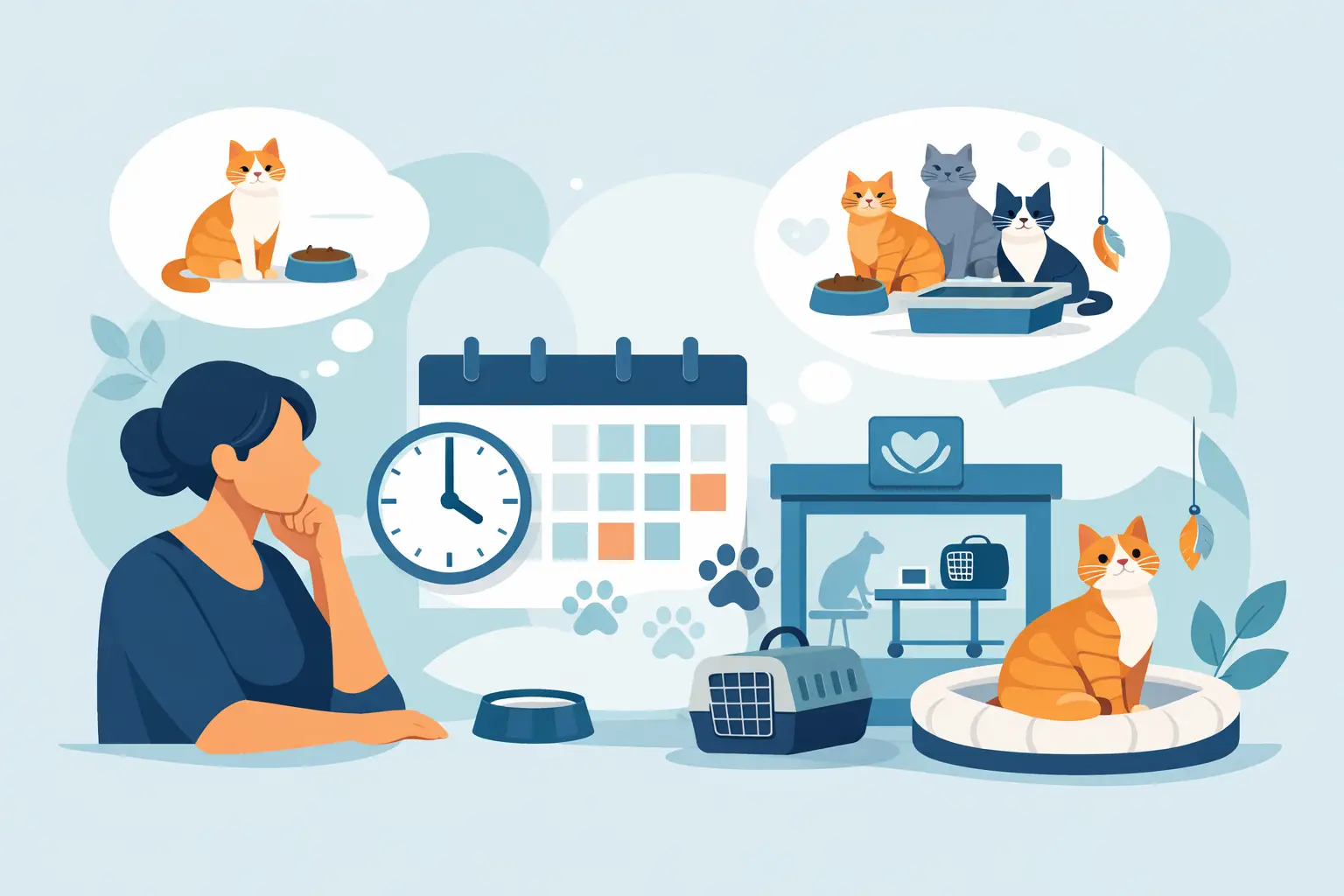
A full food bowl is reassuring, but it does not tell you whether your cat has eaten, is hiding because they feel unwell, or has knocked over their water. When deciding how many cat visits daily your cat needs while you are away, the answer is usually about more than feeding. It is about having somebody check that your cat is safe, settled and behaving like themselves.
For many healthy adult cats, two visits a day is the most reassuring routine. It gives them breakfast and supper at familiar times, keeps the litter tray clean, and means any change in appetite, mood or health is more likely to be spotted early. However, every cat and household is different. A confident, independent cat may cope well with one longer visit in some circumstances, while a kitten, senior cat or cat on medication may need more frequent care.
How many cat visits daily does your cat need?
As a general guide, most cats benefit from at least one proper daily visit when their owners are away overnight. At Scamps and Champs, we often find that two visits each day offer the best balance of routine, companionship and practical care for cats staying in their own homes.
A morning visit allows the carer to refresh food and water, clean the litter tray, give medication if needed and check that your cat is bright and comfortable. An evening visit repeats those essentials, while also offering a little play, fuss or quiet company on your cat’s terms. It also prevents a long gap overnight if something unexpected happens, such as sickness, an upset tummy or a water bowl being tipped over.
One visit a day can be suitable for some healthy adult cats for a short period, particularly cats who prefer plenty of space and have a calm, predictable home. The visit still needs to be thorough rather than rushed. A quick top-up of biscuits is not the same as a welfare check.
Three visits, or a tailored arrangement, can make sense where a cat needs regular medication, insulin, close monitoring after illness, or extra reassurance. Cats recovering from surgery should only be left under a plan agreed with your vet. If you are unsure, it is always sensible to choose more observation rather than less.
Why twice-daily visits are often the kinder choice
Cats have a reputation for being independent, but independence is not the same as being happy without human contact or daily checks. Many cats hide discomfort very well. A trained, attentive carer can notice small signs that may otherwise go unseen, such as untouched food, diarrhoea, a change in toileting, unusual hiding, limping or a cat who is suddenly much quieter than usual.
Two visits also keep the home environment more comfortable. Litter trays can be scooped promptly, wet food does not sit out for hours, and fresh water is available. During warmer weather, a carer can check that rooms are not overheating and that curtains, windows and ventilation are sensible and secure.
There is an emotional benefit too. Some cats will happily greet a familiar visitor, chat away and enjoy a game with their favourite toy. Others may only watch from the stairs or accept a slow blink from across the room. Both are perfectly normal. A good cat sitter does not force attention. They build trust and let the cat decide what feels safe.
The factors that change the right routine
Your cat’s age is a major consideration. Kittens are curious, fast and remarkably good at finding trouble. They often need more frequent checks, regular meals and plenty of gentle interaction. Leaving a young kitten for long stretches is rarely a comfortable option, especially if they are still settling into their new home.
Older cats may be less energetic, but they can need closer observation. Arthritis, kidney problems, dental pain and changes in appetite can develop gradually. A twice-daily routine provides useful continuity, especially when owners are away for several days.
Health needs come next. Cats taking tablets, receiving insulin, following a prescription diet or managing a long-term condition need care planned around their veterinary advice. Be clear with your sitter about the medication, dose, timing, where it is stored and what to do if your cat refuses it. A professional carer should also have your vet’s details and an emergency contact before the first visit.
Temperament matters just as much. A sociable house cat who follows you from room to room may find a single daily visit lonely. A shy rescue cat may not want cuddles, yet still benefits greatly from a calm person checking their food, litter, safety and wellbeing twice a day. The aim is not to turn every visit into a social occasion. It is to provide reliable care that respects the cat in front of you.
Finally, consider how long you will be away. One night away is different from a fortnight’s holiday. The longer a cat is without their family, the more valuable a steady routine, familiar care and regular communication become.
What a proper cat visit should include
A reassuring cat-sitting visit combines practical jobs with genuine observation. Your carer should check that your cat is present and appears well, refresh food and water, clean the litter tray and deal with any little messes around the home. They should also take time to notice what is normal for your cat.
That may mean checking whether breakfast has been eaten, seeing if there has been normal litter tray use, offering play to an active cat, or simply sitting quietly nearby for a nervous one. If your cat enjoys brushing, lap time or a treat after medication, those familiar rituals can be part of the visit too.
Home security should not be overlooked. A responsible sitter makes sure doors and windows are secure, brings in post if requested, checks for obvious leaks or hazards, and leaves your home as they found it. For owners, updates after visits can make a real difference. A message with a photo and a clear note about eating, toileting and mood means you are not left wondering how things are going.
When one visit a day may not be enough
It is worth planning for two visits a day if your cat is very young, elderly, unwell, anxious, newly adopted or used to frequent company. The same applies if you have more than one cat, particularly where their relationship can be tense. Extra check-ins make it easier to ensure each cat is eating and using the litter tray normally.
Cats that go outdoors need particular thought. Some owners prefer their cat kept indoors while they are away, which can be the safest choice and avoids a sitter waiting anxiously for a cat who has decided to explore. If your cat has a usual outdoor routine, discuss it honestly with your sitter in advance. There is no one-size-fits-all rule, but safety, road awareness and your cat’s habits should guide the decision.
If you are away for longer or your cat is struggling with change, overnight pet sitting may be a better fit than standard visits. Staying in the familiar home can be especially helpful for cats who need company, medication or closer support. It is a more involved service, so it should be chosen because it genuinely suits your cat’s needs rather than because it sounds like the default luxury option.
Help your cat sitter get to know your cat
The best care starts before you leave. Arrange a meet and greet so your cat can see the sitter in their home while you are there. Share the everyday details that make your cat feel understood: their feeding routine, favourite hiding places, toys they love, words they respond to, dislikes and any unusual habits.
Leave enough food, litter, medication and cleaning supplies for the full booking, plus a little extra in case your return is delayed. Write down your vet’s contact details, your emergency contact and clear instructions for accessing your home. If your cat wears a collar, make sure identification details are current. Microchip information should be kept up to date too.
It can also help to leave carriers easy to find. In an emergency, nobody wants to search through cupboards while a frightened cat has vanished under the bed. A calm plan makes difficult situations easier to manage.
Choose care based on your cat, not a label
The right number of visits is the number that lets your cat stay safe, clean, fed and emotionally settled while you are away. For plenty of cats, that means two thoughtful visits a day. For others, one longer visit, three check-ins or overnight care will be the better match.
Your cat does not need a packed social schedule. They need a dependable person who notices the small things, follows their routine and gives you honest updates. That quiet consistency is often what helps a cat feel most at home while you are away.