
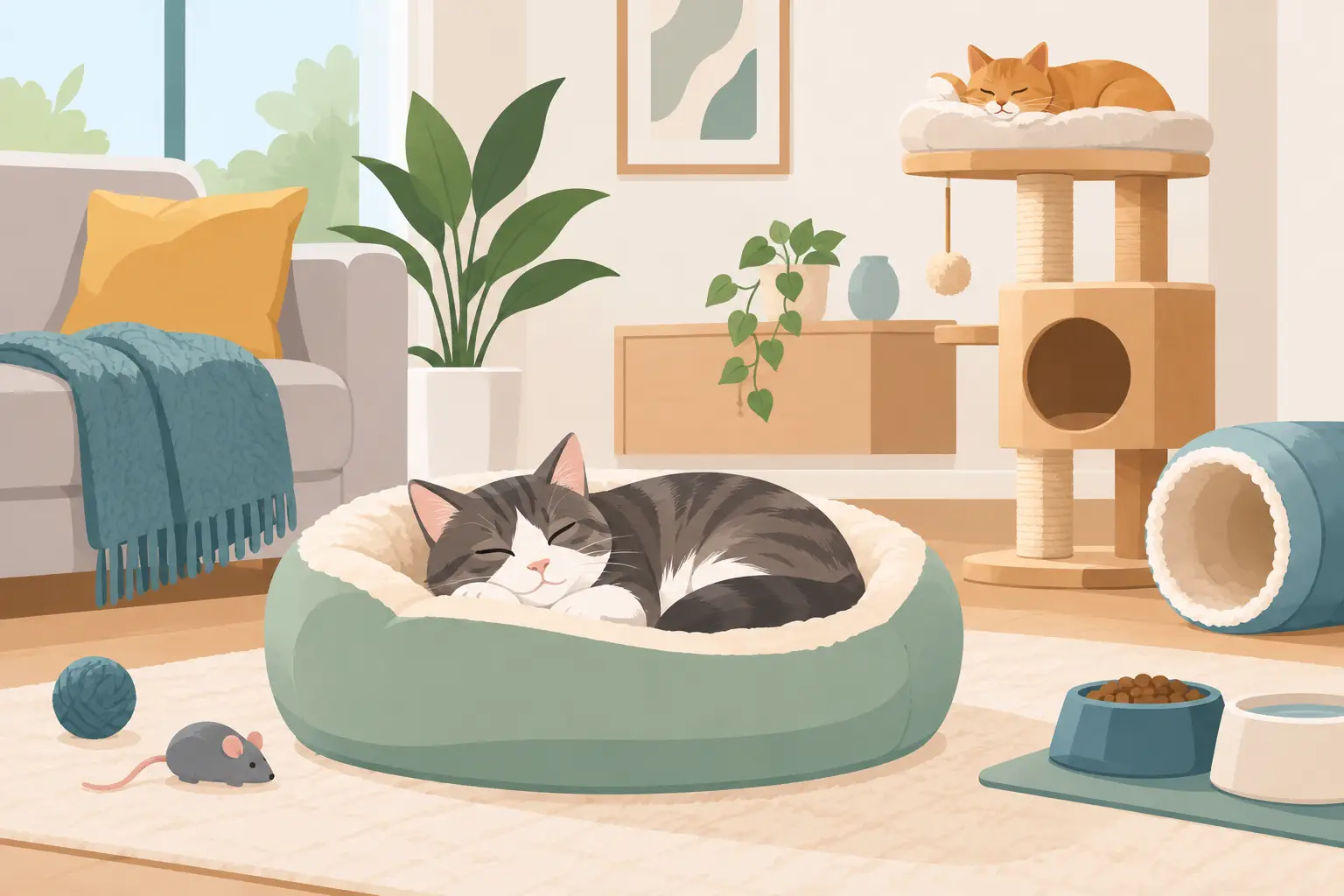
A cat curled up on the sofa may look perfectly content, but comfort is about far more than a soft blanket. Cats notice the small changes in a home: a moved litter tray, a noisy visitor, an empty food bowl at the wrong time or a favourite hiding spot that is suddenly out of bounds. To keep cats comfortable at home, think like your cat does: familiar, safe, quiet and predictable usually wins.
Every cat has its own personality. Some will happily greet visitors at the door, while others prefer to observe family life from the top of a bookcase. The aim is not to make every cat sociable or busy. It is to give them the choice, routine and reassurance they need to feel secure in their own territory.
Create a home your cat can move through confidently
Cats feel most settled when they can get from room to room without feeling trapped or surprised. Keep the areas they use most easy to access, especially if you have a senior cat, a young kitten or a cat recovering from illness. Food, water, bedding and the litter tray should not all be squeezed into one busy corner.
A comfortable home has options. Offer a quiet sleeping area away from foot traffic, but do not be surprised if your cat also chooses the laundry basket or the sunny patch by the window. A covered bed can suit cats that like privacy, while an open cushion or raised perch may be better for those who enjoy keeping an eye on the household.
Height matters too. Many cats feel safer when they can sit above the action, whether that is on a sturdy cat tree, a shelf designed for cats or the back of the sofa. Make sure any high resting places are stable and accessible. For an older cat, a small step or ramp can make a favourite spot possible again without uncomfortable jumping.
Give them a calm routine, not a rigid timetable
Cats are creatures of habit, and regular meals, playtime and quiet time can make a real difference to their wellbeing. Feeding around similar times each day helps many cats feel secure. If your schedule changes, an automatic feeder can be useful, although it should not replace checking that your cat is eating normally and has fresh water.
That said, a comfortable routine does not need military precision. Family life can be busy, and the occasional late meeting or school event will not upset every cat. What matters is that their essentials remain dependable and that big changes are introduced gently. If you are redecorating, having work done or welcoming a new pet, set up one peaceful room where your cat can retreat with everything they need.
Try to avoid forcing interaction. A nervous cat does not become confident because they are repeatedly picked up or brought into a busy room. Sit nearby, speak softly and let them decide when to approach. This patient approach often builds more trust than constant attention.
Make food, water and litter arrangements easy to use
Cats can be particular about their daily essentials, and rightly so. Place food and water bowls away from the litter tray, ideally in a quiet area where your cat is not likely to be startled while eating. Some cats prefer wide, shallow bowls that do not brush against their whiskers. Fresh water in more than one location can encourage drinking, particularly in multi-storey homes.
Litter trays deserve just as much thought. A useful rule is one tray per cat, plus one extra, particularly in homes with several cats. Position them in calm, accessible places rather than beside a washing machine, boiler or frequently opened door. Scooping waste daily and cleaning the tray regularly helps your home stay fresh and gives your cat a cleaner, more inviting toilet area.
If a normally reliable cat starts toileting outside the tray, do not assume they are being difficult. Stress, a dislike of the tray location, changes at home and health concerns can all play a part. Speak to your vet if the behaviour continues, especially if you notice straining, frequent trips to the tray or changes in appetite and drinking.
Build in play without overwhelming them
Indoor cats still need opportunities to stalk, chase, pounce and investigate. A few short play sessions can be more enjoyable than one long, exhausting session. Wand toys, soft balls, puzzle feeders and cardboard boxes can all add interest, but the best choice depends on what your cat actually enjoys.
Rotate toys every few days rather than leaving everything out at once. A toy that has been forgotten for a week can suddenly feel new again. Always put string, ribbon and wand toys away after supervised play, as loose pieces can be unsafe if chewed or swallowed.
For cats that watch the garden, a window perch can offer gentle entertainment. Check that windows are secure and that blinds or cords cannot become a hazard. If your cat spends time outdoors, provide a comfortable indoor base they can return to freely, with somewhere warm and dry to rest after exploring.
Keep cats comfortable at home during busy family life
Children, visitors and household noise do not have to make a cat unhappy, but they can be tiring. Give your cat a room, perch or quiet corner where nobody follows them. This should be a genuine safe space, not somewhere they are regularly disturbed for cuddles.
Help children understand that a hiding cat needs space. Calm strokes, quiet voices and letting the cat come to them are better ways to build a friendship. Visitors can be asked to ignore a shy cat at first. Often, once the room settles, curiosity takes over.
Be especially mindful around seasonal changes. Bonfire Night, parties, building work and even a new vacuum cleaner can be unsettling. Close curtains, provide familiar bedding, keep doors and windows secure, and use low, steady background sound if it helps mask sudden noises. If your cat is severely anxious, your vet can offer tailored advice before a stressful event.
Notice the signs that comfort is slipping
Cats are skilled at hiding discomfort, so it helps to know their normal behaviour. A happy cat may sleep a lot, but they should still have periods of interest in food, grooming, play or affection in their own way. Changes are worth paying attention to.
Watch for persistent hiding, reduced appetite, over-grooming, sudden aggression, unusual vocalising or a change in litter habits. These signs can be linked to stress, pain or illness. A prompt veterinary conversation is always kinder than waiting to see if a worrying change disappears on its own.
Regular grooming checks are useful, too. Long-haired cats may need gentle brushing to prevent knots, while all cats benefit from owners noticing changes in their coat, weight, eyes or mobility. Keep handling calm and brief if your cat is not a fan. Comfort includes respecting their boundaries.
Plan ahead when you cannot be there
Cats are often thought of as independent, but they still need daily care, company on their terms and someone to spot a problem quickly. Leaving extra food out for a weekend is not a safe substitute for a responsible person checking in. Water can spill, a cat can become unwell, or a normally confident pet can feel unsettled by an empty house.
For many cats, care at home is the least disruptive option when their owners are working late, travelling or away on holiday. A familiar environment means familiar smells, routines and hiding places. A professional cat sitter can provide fresh food and water, clean litter trays, play and affection where welcomed, as well as reassuring updates for you.
At Scamps and Champs, our local, insured and DBS-checked pet carers understand that cat visits are never one-size-fits-all. Some cats want a lap and a chat; others prefer a quiet meal service and a respectful check from a distance. Sharing your cat’s routine, feeding preferences, medical needs and favourite hiding spots before care begins helps create a visit that feels reassuring rather than intrusive.
The kindest home for a cat is not always the tidiest, quietest or most perfectly equipped one. It is the place where they can eat, rest, play and retreat with confidence, knowing that the people caring for them understand what makes them feel safe.