
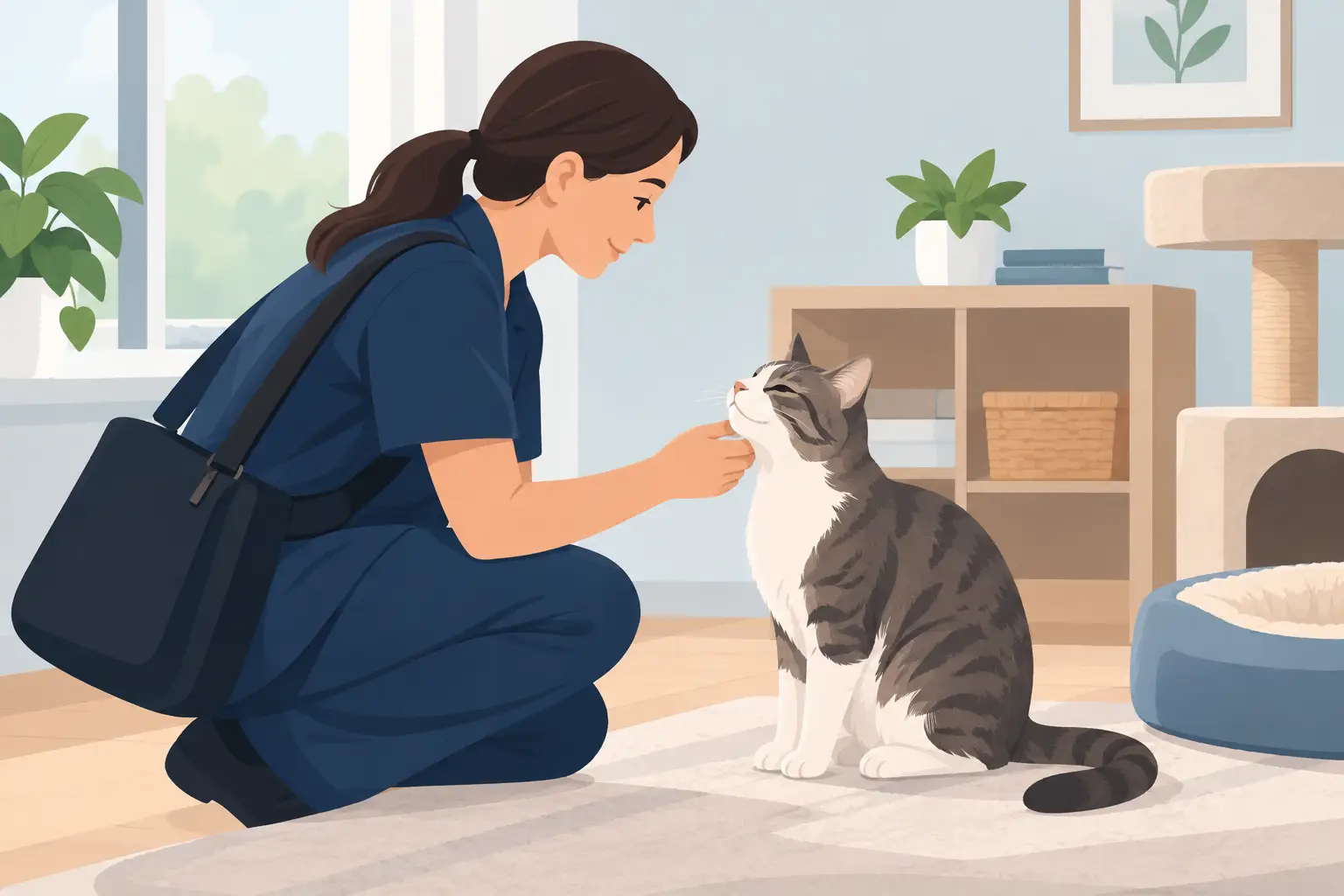
A cat can look perfectly relaxed when you put your suitcase by the door, then spend the next few days wondering why their routine has changed. For many owners, the question is simple: are home visits good for cats? In most cases, yes. Having a reliable cat sitter visit them at home is often the kindest and least disruptive choice, because your cat stays in the territory, bed, feeding spot and daily rhythm they already know.
That does not mean every cat or every trip calls for the same plan. The right level of care depends on your cat’s age, health, confidence and habits, as well as how long you are away. A good arrangement is never just about topping up a bowl. It is about making sure your cat is safe, comfortable and properly noticed while you cannot be there.
Why home visits are often good for cats
Cats are usually more attached to their home environment than to a particular change of scenery. Their home smells right, the furniture is familiar, and they know where to hide, sleep, watch the birds and use the litter tray in peace. Taking them to a cattery, however well run, can mean unfamiliar noises, scents and neighbouring cats. For some cats, that can be a stressful experience.
With home visits, your cat can carry on with their normal life. They can choose their favourite sunny patch, patrol the same garden if they have outdoor access, and settle down in their usual place at night. This continuity can be particularly helpful for shy cats, older cats and those who dislike visitors or travel.
There is a practical benefit for owners too. A professional carer can spot changes that may otherwise go unnoticed: food left untouched, sickness, diarrhoea, a litter tray that has not been used, or a cat behaving unusually. Regular updates mean you are not left worrying through a holiday or long day at work.
Are home visits good for cats who need company?
They can be, but visit frequency matters. Cats have a reputation for being independent, yet most still benefit from calm, familiar human contact. Some will greet a sitter at the door and demand a game, while others prefer a quiet chat and a slow blink from across the room. A thoughtful carer works at the cat’s pace rather than expecting affection on demand.
For a healthy adult cat, one good visit a day may suit a short absence, especially if they are naturally reserved and have another cat for company. Two visits a day are often a better choice when you are away overnight, have a sociable cat, or want closer checks on eating, toileting and general wellbeing. Morning and evening visits also help keep meals and medication close to the routine your cat knows.
Kittens, senior cats and cats with medical needs often require more than a standard once-daily call. Kittens can get into trouble quickly and need more interaction. Older cats may need help with medication, mobility or appetite monitoring. If your cat is diabetic, recovering from illness, or has a condition that can change quickly, speak openly with your vet and care provider about the level of supervision needed. In some situations, overnight pet sitting or veterinary-led care may be the safer option.
What a proper cat home visit should include
A reassuring visit is more than a quick in-and-out feed. Your sitter should spend enough time to see how your cat is really doing, rather than simply assuming all is well because they have appeared briefly.
A typical visit should include fresh food and water, cleaning litter trays, checking for signs of illness or injury, and making sure doors, windows and any cat flaps are secure. It should also include time for gentle interaction, play or company if your cat wants it. Cats who hide should never be dragged out. Instead, a patient sitter should check discreetly that they are present and safe, then give them room to build confidence.
If your cat goes outdoors, clear instructions are essential. Tell your sitter whether your cat has a cat flap, whether they should be kept in at certain times, and what to do if they have not returned by the agreed time. It helps to leave a recent photo, microchip details, vet information and an emergency contact in one easy-to-find place.
The small jobs matter as well. Bringing in post, opening and closing curtains, and switching lights on or off can make the home look lived in while you are away. More importantly, they allow the sitter to notice if something in the home needs attention.
When a cattery or other option may suit better
Home visits are not automatically best for every cat. A confident cat who already copes well with new surroundings may settle happily in a high-quality cattery, particularly if they need close supervision that cannot be provided through visits alone. A reputable cattery can also be a sensible choice if your home is undergoing building work, you are moving, or a household issue means it is not currently a calm or secure place for your cat.
Multi-cat homes need a little extra thought. Cats who share a house do not always share a friendship. If there is tension around food, sleeping spots or litter trays, a sitter needs to know each cat’s routine and be able to check that every one of them has eaten and is comfortable. Feeding them separately may be the safest approach.
Then there are cats who are extremely anxious when strangers enter the house. Home visits can still work well, but do not expect an instant bond. A meet and greet before you travel lets your cat hear the sitter’s voice and see them in the home with you present. For a very nervous cat, consistency is valuable. The same familiar carer is usually preferable to a different person at every visit.
Choosing a cat sitter you can feel comfortable with
Letting someone into your home and trusting them with a much-loved pet is a big decision. The best place to start is with a conversation. A good sitter will ask questions about feeding, personality, hiding places, medical history, outdoor access, routines and what is normal for your cat. They should want to understand the individual in their care, not treat every booking the same.
Look for clear professional standards too. Carers should be insured, DBS-checked where appropriate, and willing to arrange a meeting before the first booking. Ask how they handle keys, what happens if a carer is delayed or unwell, and how they would contact you in an emergency. You should also know whether they can administer medication and when they would call your vet.
Updates are not a luxury when you are away from your cat. A short message and photo after a visit can make a huge difference, particularly during your first trip away or if your cat has a health concern. It shows that the visit happened, lets you see your cat’s mood, and gives you confidence that any concern will be raised promptly.
At Scamps and Champs, cat care is built around these everyday reassurances: local, vetted carers, personalised routines and regular communication, so owners can leave home knowing their cats are being treated with patience and genuine affection.
Help your cat settle before you leave
Keep the lead-up to your trip as ordinary as possible. Avoid changing food, moving litter trays or introducing a new pet just before you go away. Leave enough food, litter and any medication for the full period, plus a little extra in case your return is delayed. Write instructions clearly, even if you have discussed them in person.
It is also wise to make the home safe for an unsupervised cat. Put away string, hair ties, toxic plants, cleaning products and anything easily knocked over. Check that windows cannot be opened wide enough for an escape, and make sure your sitter knows about any room your cat must not enter.
A familiar blanket or favourite toy can be comforting, but there is no need to turn the house upside down trying to entertain your cat. What most cats value is predictable care, a clean space, familiar smells and a person who understands that a friendly head bump and a cautious hiding place can both be signs of a cat feeling at home.
When you choose visits that match your cat’s real needs, time away does not have to mean upheaval for them. It can simply mean a kind, dependable person keeping their usual little world ticking over until you are back at the door.