
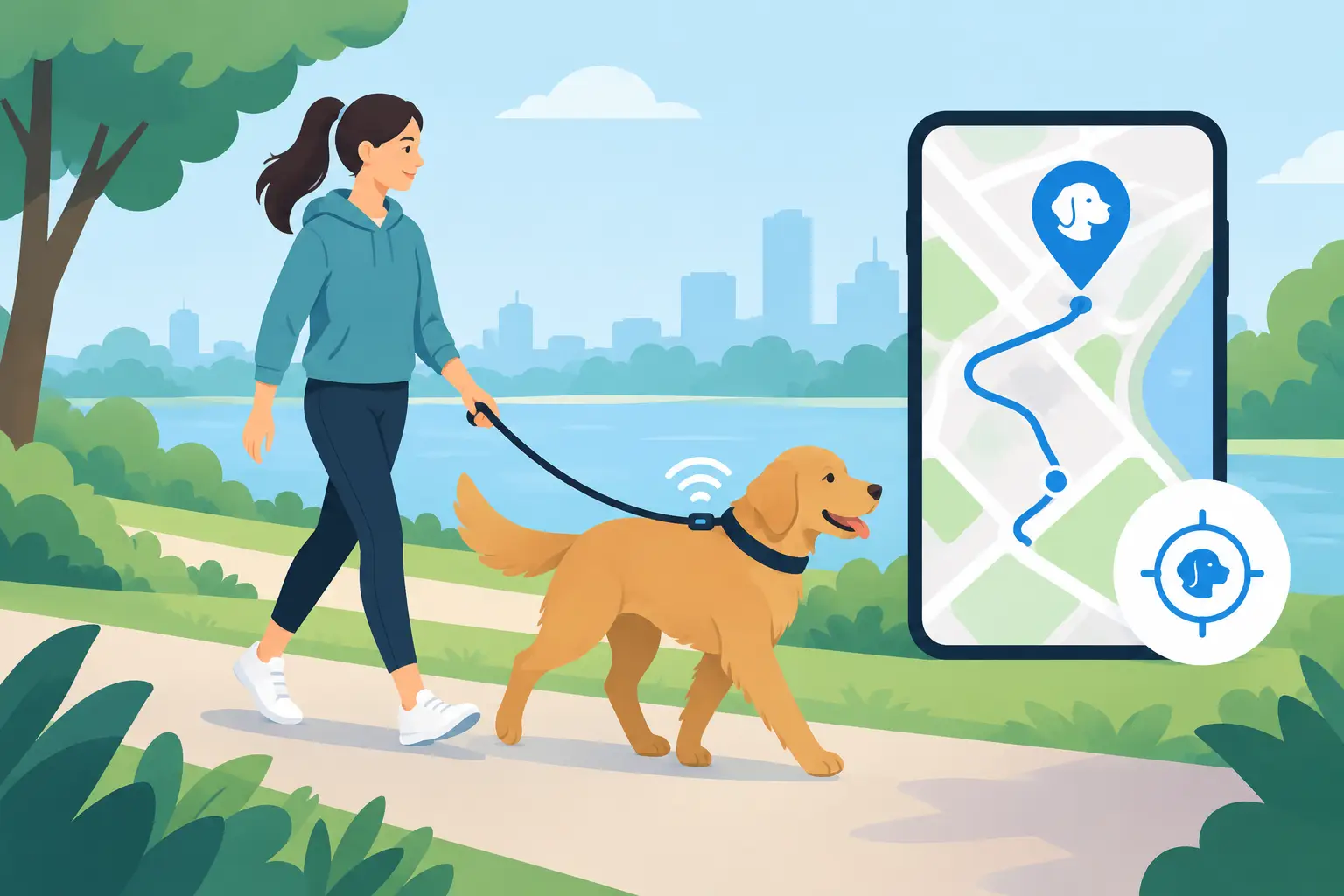
Your dog cannot tell you about the squirrel they chased, the muddy puddle they found or whether they enjoyed their walk. Dog walking GPS tracking fills in part of that picture, giving you a clear record of where they have been and how long they have been out. For owners juggling work, school runs or a busy household, that little bit of visibility can make a real difference.
A GPS update is not about watching every pawstep. It is about knowing that the person caring for your dog has arrived, followed an appropriate route and returned them safely. When it sits alongside a caring local walker, sensible safety procedures and good communication, it turns a routine walk into a service you can feel genuinely comfortable relying on.
What dog walking GPS tracking can show you
GPS tracking records the route taken during your dog’s walk. Depending on the system used, you may receive a map of the outing, start and finish times, distance covered and sometimes notes or photos from the walker. It is a simple way to replace the uncertainty of “I hope they had a good walk” with useful, reassuring information.
For many dogs, consistency matters as much as distance. A senior dog may be happiest with a gentle, familiar stroll and plenty of time to sniff. A young, energetic dog may need a longer route, more opportunities for exercise and careful lead management around distractions. A route record helps show that the walk booked is the walk delivered, while allowing the care plan to be shaped around the individual dog.
It can also be particularly helpful when someone else needs to know how the day is going. If you are in meetings, travelling for work or managing a family emergency, an update from your dog walker gives you one less thing to worry about. You can get on with your day knowing your pet has had company, fresh air and the attention they need.
Why a tracked route is only one part of safe care
A GPS map is reassuring, but it is not a substitute for a capable, attentive person at the other end of the lead. The best dog walking service combines technology with local knowledge, clear procedures and a real understanding of dog behaviour.
Before a walk begins, a responsible carer should know the essentials: your dog’s usual routine, health needs, feeding arrangements, recall, fears, triggers and whether they can safely walk with other dogs. They should also check that collars, harnesses and leads fit properly and that identification details are up to date. GPS tracking can document a route, but these everyday checks are what help prevent problems in the first place.
Weather also changes the plan. On a hot day, a shorter, shaded walk at a cooler time may be safer than pushing for a usual distance. Heavy rain, icy pavements or high winds can call for a different route or more indoor enrichment. A good walker uses judgement rather than treating a tracking target as something to chase.
That is why shorter routes are not automatically a concern. If a dog has stopped to investigate every hedge, needed a comfort break, seemed tired or was avoiding a busy area, the right decision may be to slow down or head home early. Honest updates explain the reason, so you understand the care behind the route rather than simply seeing a number on a screen.
GPS accuracy has its limits
GPS is very useful, but it is not perfect. Signal can be less precise near tall buildings, under dense tree cover or in poor weather. A map may occasionally show a line that cuts across a garden, field edge or road even though the walker stayed on the proper path. Small variations are normal and do not necessarily mean anything is wrong.
It is also worth remembering that a route cannot show the whole walk. It will not tell you that your dog paused for a fuss, practised calm lead walking or was given space from another dog. Photos, notes and a chance to speak to your walker add the personal detail that technology cannot provide.
What to ask before choosing a GPS-tracked dog walker
When comparing dog walkers, tracking is a useful feature to ask about, but it should not be the only question. Trust is built through the full service, from the first meet and greet to the way your dog is settled after they return home.
Ask how the walker matches dogs to walks and whether solo or small-group options are available. Some sociable dogs love a carefully chosen walking companion, while others are more relaxed alone. Ask what happens if your dog is anxious, pulls towards other dogs, has a medical condition or needs medication. Clear, straightforward answers matter.
You should also feel comfortable asking about insurance, DBS checks and emergency procedures. A professional carer will not be offended by these questions. They will understand that leaving your dog with someone is a big decision, and they should be happy to explain how they keep pets secure and owners informed.
It is helpful to find out how updates are sent and when. Some owners prefer a route report after every walk; others would rather receive a photo and a short message. There is no single right level of contact. The important thing is agreeing on what will reassure you without interrupting your day or taking attention away from the dogs.
Making the most of GPS updates without worrying more
For most owners, the healthiest approach is to use tracking as confirmation, not a reason to monitor every minute. Check the route when it suits you, enjoy the update and save questions for the end of the walk unless there is a genuine concern. Your walker needs to stay focused on the dogs, their surroundings and safe handling.
It helps to agree on a few practical details from the start. Let your walker know which nearby areas your dog enjoys, any places you would prefer them to avoid and whether there are off-lead permissions. Be honest about behaviour around livestock, cyclists, children, traffic or other dogs. This is not about judging your pet – it gives the walker the information they need to make good decisions.
Keep contact details current, including an emergency contact and your vet’s information. If your dog is wearing a tracker or special harness, explain how it works. If plans change, such as a relative visiting the house or a builder needing access, a quick message can avoid confusion at collection time.
For dogs that are new to professional walking, the first few outings may look different from later ones. A careful walker may keep routes short and close to home while they build trust and learn your dog’s pace. This is a sensible introduction, not a reduced standard of care. Once your dog is settled, the routine can develop naturally around their confidence and needs.
A local service should feel personal
There is real value in having a local pet care team who understands the area, the usual walking spots and the practical realities of your day. At Scamps and Champs, GPS updates are part of the reassurance we aim to give owners, alongside friendly communication and carers who treat every pet as an individual.
Whether your dog needs a regular weekday walk or a little extra support while you are away, the goal is the same: they should come home content, cared for and safely settled. The route on your phone is useful proof of their adventure, but the wagging tail at the door is often the update that matters most.