
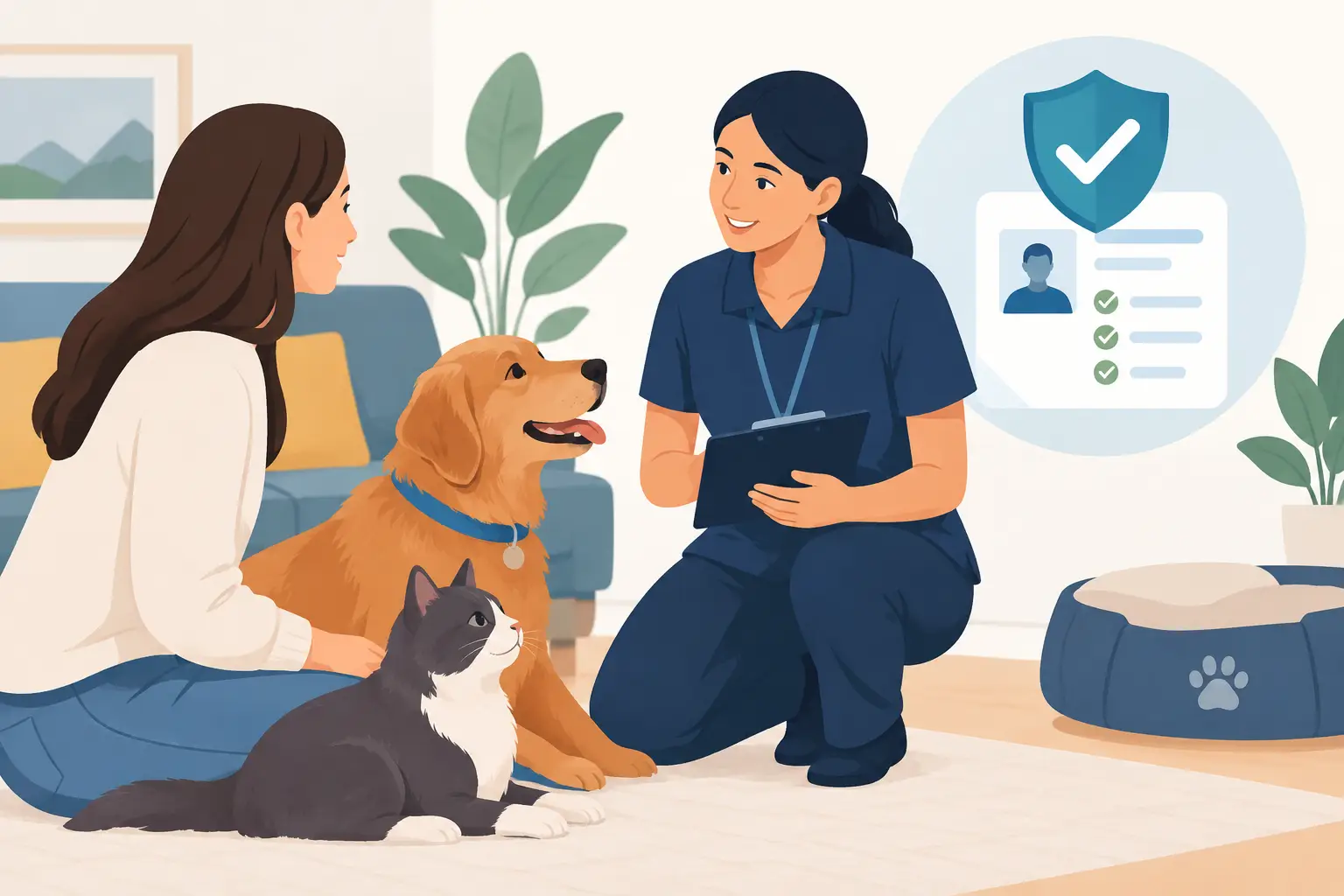
Leaving your dog, cat or smaller pet with somebody else is a big step. Whether you need a daily dog walk, cat visits while you are away, or overnight care during a holiday, one question rightly comes first: are carers vetted? The answer should be clear, specific and easy for a pet care provider to explain – not hidden behind a vague promise that they are ‘animal lovers’.
A caring nature matters enormously, but it is only one part of safe pet care. Good vetting helps protect your pet, your home and your peace of mind. It also gives you a clearer idea of who holds responsibility if plans change or something goes wrong.
Are carers vetted by every pet care service?
Not automatically. The pet care industry includes established local businesses, sole traders, online marketplaces and informal arrangements between neighbours. Their checks, insurance and standards can vary widely.
A professional provider should be able to tell you how its carers are screened, what training or experience they have, whether they are insured, and how it handles emergencies. If a business arranges care through a team rather than one named person, ask whether every carer follows the same process.
It is reasonable to expect openness. You do not need every private detail of a carer’s background, but you should be given enough information to make a confident, informed choice. A provider that takes safety seriously will welcome sensible questions from a pet owner.
What does a DBS check tell you?
In the UK, a DBS check looks at a person’s criminal record information at a particular point in time. For pet care, businesses commonly use a Basic DBS check, which shows unspent convictions and conditional cautions. Standard and Enhanced checks are only available for certain eligible roles, so do not assume that a carer should hold an Enhanced certificate simply because they work with animals.
A DBS check is a valuable trust signal, especially when someone will have access to your home keys or spend time alone with your pet. However, it is not a guarantee that somebody will be the right fit for your animal, nor does it replace careful management by the business.
It is worth asking when the check was completed and whether the provider has a policy for renewing checks. Some carers may also use the DBS Update Service, which can help keep a certificate current where the level and workforce details match. The provider should explain this in plain English rather than making claims that sound reassuring but mean very little.
Vetting should go beyond a DBS certificate
A certificate is one part of the picture. The best pet care services build several checks and safeguards around it, because pets have individual needs and real life does not always go to plan.
A careful recruitment process may include checking identity and right-to-work documentation, speaking to references, interviewing carers about their experience, and assessing how they handle different situations. For example, a carer should know what to do if a dog becomes distressed on a walk, a cat refuses food, or a key cannot be accessed at a scheduled visit.
Insurance matters too. Appropriate public liability insurance can offer protection if accidental damage or injury occurs in connection with the service. Ask what cover is in place and what it applies to. It is also sensible to ask about keyholding procedures, including how keys are labelled, stored and returned.
Training and practical knowledge are just as relevant as paperwork. A carer may have years of hands-on experience with nervous rescue dogs, elderly cats or pets on medication. Another may have pet first aid training. Neither point alone makes someone perfect, but together with strong checks, clear policies and good communication, they help build a safer service.
The right match matters as much as the checks
A fully checked carer is reassuring. A fully checked carer who understands your pet is better still.
Before regular care begins, a good provider should gather detailed information about your animal’s routine, health, behaviour and preferences. Your dog may be friendly with people but worried by busy roads. Your cat may hide when visitors arrive and only eat a particular food at a certain time. A young puppy, a senior dog and a confident indoor cat need very different care plans.
A meet and greet gives you the chance to see how the carer interacts with your pet and to share the little details that make them feel secure. It also lets the carer ask useful questions. How do you know your dog is overwhelmed? Where is your cat’s favourite hiding place? What should happen if your pet seems unwell?
There is a trade-off here: a service that takes time to match you with the right local carer may not always be able to accept a last-minute request. That care in the planning is often a positive sign, particularly for animals that are anxious, reactive or need medication.
Extra checks for dog home boarding
If your dog will stay in a carer’s home in England as part of a business, home boarding requires a licence from the local authority. This is separate from DBS checking. Licensing standards cover areas such as accommodation, welfare, records, hygiene and emergency arrangements.
Ask where your dog will sleep, how many dogs may be boarded at once, whether resident pets are present, and how introductions are managed. Your dog might thrive in a lively family home with suitable companions, while another will be happier with a quieter set-up and fewer changes.
For care in your own home, ask about overnight routines, security and how the provider deals with unavoidable sickness or emergencies. A reliable service should have a contingency plan, so your pet is not left without care if their usual carer cannot attend.
Questions to ask before you book
You should never feel awkward asking how a pet care provider works. The answers can tell you far more than a polished social media post or a low price. Before booking, ask:
- Are all carers DBS checked, and what level of check is held?
- What insurance do you have, and does it cover the service I am booking?
- How do you recruit, reference and match your carers?
- What happens if my assigned carer is ill or delayed?
- How will I receive updates, and who do I contact in an emergency?
Listen for clear, calm answers. A trustworthy provider does not need to promise that nothing will ever go wrong. Instead, it should explain the systems it has in place to reduce risks and respond quickly when something unexpected happens.
Watch for vague reassurance and missing details
Most independent pet carers are hardworking people who genuinely love animals. Still, it is wise to pause if somebody cannot explain their insurance, avoids discussing keys and access, has no clear emergency contact process, or seems reluctant to meet you and your pet beforehand.
Be wary of arrangements that rely entirely on messaging with no written booking details. A clear confirmation should set out the service, dates, pet care instructions and how to reach the right person. This avoids confusion over feeding, walking times, medication or collection arrangements later on.
Price can be a factor, but it should not be the only one. Cheaper care may suit a straightforward, occasional need, while a pet with anxiety, health concerns or a complex routine may benefit from a provider with more structured support. Choose the level of care that gives both you and your pet the greatest confidence.
Reassurance continues after the handover
Vetting is not only about the moment someone joins a team. It should be supported by good day-to-day communication. Updates after a walk or visit, photos where appropriate, GPS-tracked walks where offered, and prompt replies can make a real difference when you are at work or away from home.
At Scamps and Champs, carers are fully insured and DBS checked, but the relationship does not stop there. Care is built around getting to know each pet, keeping owners informed and making sure there is a dependable local team behind every booking.
The best sign that you have found the right carer is often a simple one: your pet settles into the routine, and you can get on with your day without wondering whether they are safe, comfortable and cared for like family.