
Your dog may be part of the family, but that does not mean they will enjoy a long day of hairdryers, unfamiliar guests, confetti and loud music. Understanding how wedding pet chaperones work helps you include them in the moments that matter, while making sure their comfort, routine and safety still come first.
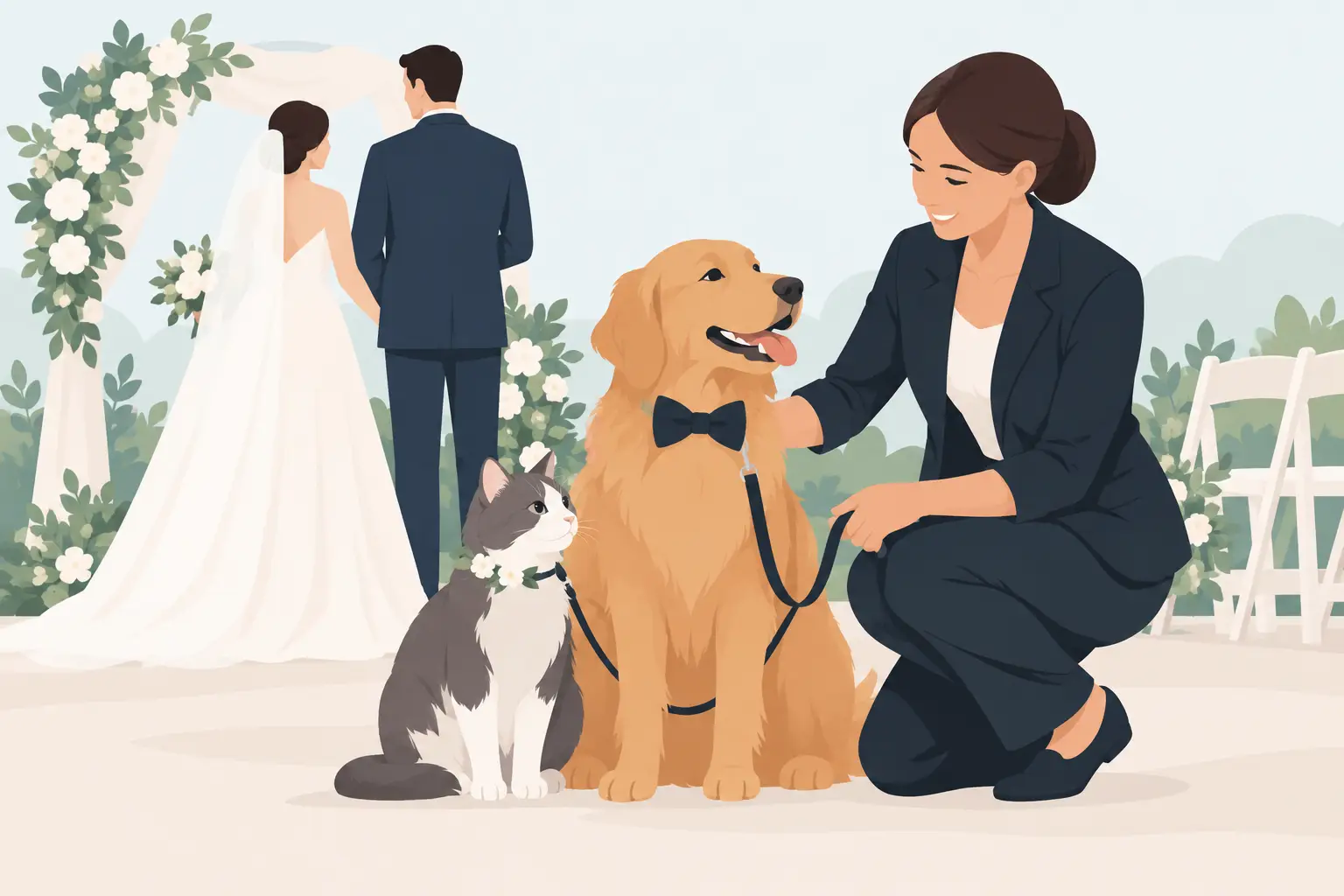
A wedding pet chaperone is a dedicated carer who looks after your pet before, during and after the parts of the day you would like them to attend. Rather than asking a relative to juggle leads, photographs and their own celebration, you have someone whose focus is entirely on your pet. That means you can enjoy the cuddles, portraits and aisle appearance, then return to your guests knowing your companion is settled and properly cared for.
How wedding pet chaperones work from first meeting to home time
The service should begin well before the wedding itself. A good chaperone gets to know your pet’s personality, routines and needs, as well as the practical details of your plans. This is especially valuable for dogs who can be wary around new people, excitable in busy places or particular about their walk times.
At a meet and greet, you can discuss feeding, medication, toileting, lead manners, favourite treats and any triggers to avoid. You will also talk through the venue, parking, timings, photography plans and who the chaperone should contact if plans change. For a pet who needs time to build trust, arranging a walk or short care visit beforehand can make the wedding-day handover feel far more familiar.
Your chaperone will then create a plan around your pet, not simply bring them along for the whole day. For some couples, that means collection from home, a walk and a short appearance for the ceremony. Others want their dog present for getting-ready photographs, the ceremony and a few group photos before being taken home for dinner and a quiet evening. There is no prize for keeping a pet at the venue longer than they are comfortable with.
Before the ceremony
On the day, the chaperone usually collects your pet from home or meets them at an agreed location. They will make sure your pet has had the chance to toilet, stretch their legs and settle before any big moment. If the pet is travelling, safe and suitable transport is arranged, with the right restraint or crate where needed.
The chaperone can also help with the practical details that often get forgotten in the excitement: water, poo bags, treats, a towel for muddy paws, a spare lead and a familiar blanket. If your pet is wearing a floral collar, bow tie or bandana, it should be comfortable and introduced in advance. Cute photographs are lovely, but no outfit is worth a stressed or overheated dog.
At the venue, the carer remains responsible for your pet. They can keep them close during a quiet arrival, take them outside while guests find their seats, or bring them in at exactly the right moment. If your dog is walking down the aisle, the chaperone will be ready to guide them calmly, rather than relying on a guest who may be caught up in the occasion.
During photographs and celebrations
Wedding pets rarely need to be present for every photograph. In fact, short, well-planned sessions tend to produce happier pictures than trying to hold a dog’s attention for an hour. A chaperone can bring your pet over for key shots, use familiar cues and rewards, then take them for a breather while you carry on with family photographs.
This is where professional care makes a real difference. Your pet may need shade on a warm day, a coat if it is cold, a drink after greeting lots of people or simply five quiet minutes away from the noise. The chaperone watches their body language and can step in before excitement becomes overwhelm.
They also handle the less glamorous moments with no fuss. If your dog gets muddy, barks at a delivery van, needs an extra toilet break or decides the flower girl is more interesting than the photographer, someone experienced is already there to manage it. You are not pulled away from your reception to solve a problem.
After your pet’s starring role
Once the planned appearance is over, the chaperone takes your pet home, to their usual sitter or to another agreed safe location. They can feed them, offer a calm walk, settle them for the evening and follow their normal routine as closely as possible. Depending on the service you arrange, this may include further visits or overnight care.
Many couples appreciate updates after the handover. A photo of a dog asleep on their own bed can be the reassurance you need to relax into the evening celebrations. At Scamps and Champs, the aim is always for pets to feel cared for as individuals, not treated as an extra item on a wedding checklist.
Is a wedding pet chaperone right for your pet?
A chaperone can make it possible for many pets to be involved, but it depends on the animal and the setting. A sociable dog who enjoys short outings may love greeting a few familiar faces and posing for treats. A nervous rescue dog, elderly pet, puppy or dog who reacts to crowds may be happier staying at home and appearing only in a pre-wedding photo session, if at all.
Be honest about what your pet enjoys. Weddings can involve music, children running about, food at nose height, other dogs near the venue and changes to routine. A caring chaperone will not push a pet through a plan that is clearly not working. Sometimes the kindest option is a brief visit, or letting them skip the venue altogether while still receiving proper care at home.
It is also worth checking the venue’s rules early. Ask whether dogs are allowed inside, which spaces they can use, whether there is a quiet area, and whether they must remain on a lead. Confirm who is responsible for clearing up after them and whether there are restrictions around food, water bowls or outdoor access.
How to prepare for a calm wedding-day visit
A little preparation gives your pet the best chance of enjoying their role. Keep their routine as normal as possible in the days leading up to the wedding, and avoid trying new food, accessories or grooming products at the last minute. If they will wear a bow tie, harness or flower collar, let them practise at home first.
Share clear written instructions with the chaperone, including your vet’s details, allergies, medication, feeding amounts and emergency contacts. Tell them about any habits that may not be obvious, such as a fear of umbrellas, a tendency to slip a collar, or a dislike of being picked up. This is useful information, not a judgement.
Pack familiar essentials rather than relying on the venue to provide them. Bring their usual lead and harness, water bowl, food if needed, treats that suit their diet, a blanket, waste bags and a towel. If photographs are important, ask your photographer to work around your pet’s attention span and schedule those images early, before tiredness sets in.
What to look for in a pet chaperone
Trust matters when you are handing over a family member on such a significant day. Look for a carer who takes time to ask questions, offers a proper meeting beforehand and is clear about what is included in the service. Professional insurance, DBS checks, experience handling pets in public places and reliable communication all provide useful reassurance.
You should also ask how the chaperone handles transport, emergencies, venue coordination and changes to the schedule. Weddings rarely run exactly to plan. A flexible carer will be ready to adjust collection times, extend a quiet walk or bring your pet over later for photographs without making you feel that you have failed to follow a rigid timetable.
The best wedding pet chaperoning is not about making your dog perform. It is about giving them a safe, well-supported place in a day that would not feel complete without them. With the right plan and a trusted person by their side, you can share the moment, give them a fuss, and then let them head back to the comfort of home while you celebrate.