
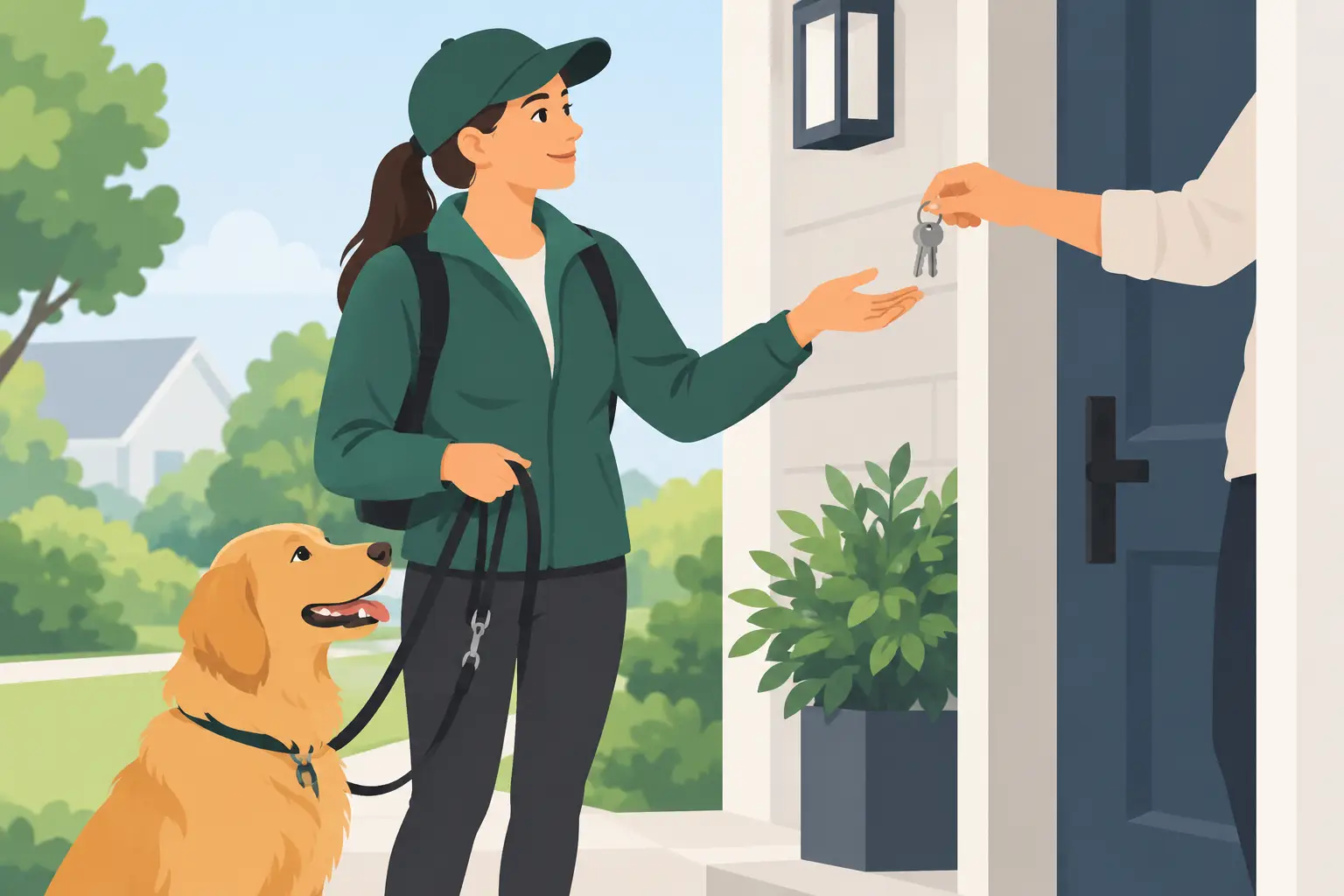
A last-minute meeting, a school run that overruns, or an early train can make key handover feel like one more thing to juggle. So, can dog walkers collect keys? In many cases, yes – and a professional collection service can make regular dog walks far easier to arrange. The key is not simply who has access, but how that access is managed from the moment your key is collected.
For pet owners, this is about more than convenience. Your dog needs a reliable walk, while you need to feel confident that your home is respected and secure. A trusted local pet carer should be happy to explain their key procedures clearly, answer sensible questions, and keep the arrangement straightforward.
Can dog walkers collect keys from your home?
A dog walker may collect a key from your home, workplace, a nominated neighbour or another agreed location. The best option depends on your routine, how often you need walks, and what feels safest for your household.
For a one-off booking, meeting your walker at home for a handover may be easiest. It gives you a chance to show them where the lead, towels, treats and dog food are kept, as well as explain your dog’s usual routine. If walks will happen every week, a planned key collection before the first walk is often more practical. It means you do not need to be at home for every visit and your dog can keep to a familiar schedule.
A professional carer should never assume they can pick up a key without your agreement. Collection arrangements should be confirmed in advance, including where the key will be obtained, who is authorised to hand it over, and whether anybody else has access to the property.
Why a proper key process matters
A house key represents trust. It can also be a practical safety issue if it is labelled carelessly, left in an obvious place or passed between people without a record. Good key handling protects your home, helps avoid confusion, and means your dog walker can get to your pet when expected.
It is especially useful when dogs are walked while owners are at work. A delayed handover can result in a missed walk, an anxious pet and a stressful afternoon of messages. Clear arrangements let your walker focus on the job you booked them for: giving your dog safe, attentive exercise and returning them home settled and comfortable.
For owners with cats or smaller pets, the same principle applies. A secure key arrangement makes feeding visits and holiday pet sitting more dependable, particularly when travel delays mean you cannot get back when planned.
What secure key collection should look like
There is no single method that suits every household, but the process should be deliberate and traceable. Before handing over a key, ask how it will be identified, stored and returned. A professional business will have a clear answer rather than treating it as an informal favour.
Keys should not carry your full name, address or any detail that identifies your property. Instead, they can be marked with a reference code that only the pet care provider can match to your booking details. They should be kept securely when not in use, rather than loose in a car, coat pocket or unattended bag.
It also helps to agree whether your walker will hold the key for future bookings or return it after the service ends. Keeping a key on file can be handy for regular walks and unexpected work commitments, but some owners prefer its return after every holiday or booking block. Neither choice is wrong. It comes down to your comfort and the frequency of care.
A good handover process usually covers five practical points:
- the agreed collection location and time;
- the key reference or receipt record;
- any alarm, lockbox or entry instructions;
- who to contact if access is not possible; and
- how and when the key will be returned.
These details may sound small, but they prevent avoidable problems. For example, a new door lock, a changed alarm code or a key that sticks in cold weather can all affect access. Tell your carer about anything unusual before their first visit.
Should you use a key safe instead?
A key safe can be a useful alternative where regular collection is difficult. It allows an authorised carer to access a spare key without keeping it off-site, and it can be particularly helpful for owners with changing work patterns or several booked visits over a holiday.
However, a key safe is not automatically the best answer. It needs to be fitted in a discreet, secure location and its code should be treated like any other security information. Avoid sharing the code widely or leaving it unchanged for years. If several people have had access, changing the code is a sensible precaution.
Some households prefer the reassurance of a key held securely by their pet care company. Others prefer a key safe because it keeps the spare key at the property. Think about your own routine, the layout of your home and how often you expect to use dog walking or pet sitting services.
Questions worth asking before you hand over a key
You do not need to feel awkward asking about security. A dependable dog walker will expect it. Ask whether carers are DBS-checked and insured, whether keys are coded rather than named, and whether there is a record of collection and return. You can also ask who will be visiting your home and what happens if your usual walker is unavailable.
Continuity matters to many dogs. A familiar face can make a big difference to a nervous rescue dog, an excitable puppy or an older dog who prefers a quieter pace. But cover arrangements matter too. If another trusted team member may step in, you should know how your key information and your pet’s routine will be shared safely.
It is also reasonable to ask about updates. A message after the walk, GPS tracking where offered, or a photo of your dog enjoying their outing can offer welcome reassurance. It confirms that access went smoothly and that your pet has had the care you expected.
Help your dog walker enter safely
The smoothest visits start with clear instructions. During a meet and greet, show your walker the usual entry point and explain how your dog reacts to the doorbell, a key in the lock or someone entering the hallway. Some dogs are delighted by visitors; others bark, hide or rush towards the door.
If your dog is likely to bolt, arrange a safe setup before you leave. A stair gate, closed internal door or a lead placed within reach can make all the difference. Let your walker know about any rooms that are off limits, fragile items near the entrance, other pets in the home, and any feeding restrictions before a walk.
It is worth leaving emergency contact details and your vet’s information in an agreed place or on your booking record. Tell your carer if a neighbour may be concerned about someone entering your property, especially in close-knit streets where people look out for one another.
When key collection may not be suitable
There are occasions when collecting a key is not the right arrangement. If you are renting and your tenancy has particular security requirements, check what is permitted. If the property is shared, make sure every relevant householder is comfortable with the plan. A building with concierge access, restricted fobs or strict entry rules may need a different approach.
You may also prefer to be present for the first few visits if your dog is unsettled around new people. A gradual introduction can build confidence for everyone. Your walker may recommend shorter familiarisation visits before taking your dog out alone, particularly for puppies, reactive dogs or pets with health concerns.
At Scamps and Champs, we know that handing over a key can feel like a big step. The right arrangement should leave you feeling calmer, not pressured. Choose a carer who treats the access to your home with the same care they give your pet, agree the details before the first booking, and you can head out knowing your dog’s day is in safe hands.