
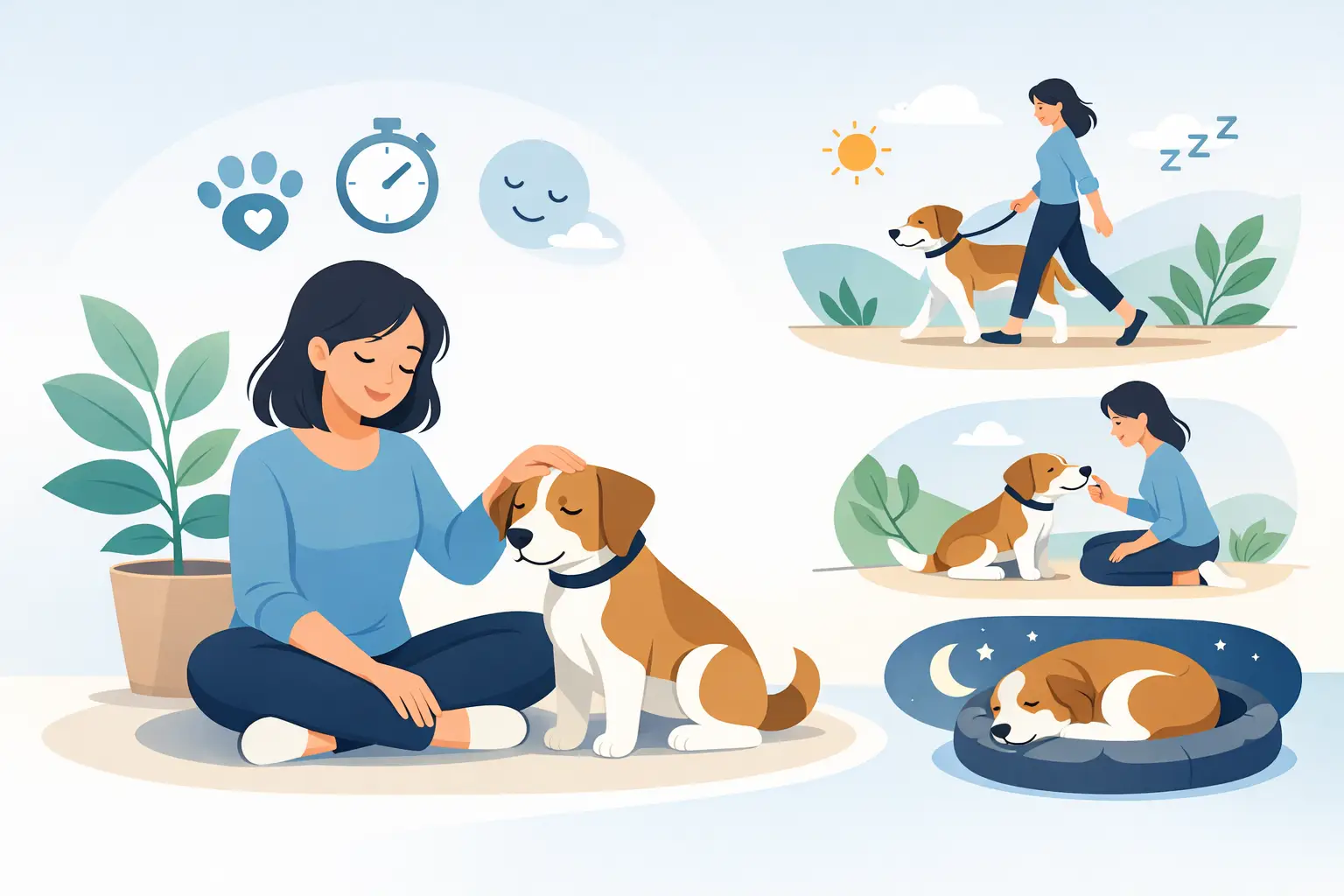
A dog who shadows you from room to room, trembles when the lead comes out, or cannot settle after the doorbell is not being naughty. They are telling you that something feels too much. Calming anxious dogs starts with noticing those small signals, then giving them predictable, kind support rather than expecting them to simply get used to it.
Anxiety can look different from one dog to the next. Some become noisy or destructive, while others go quiet, hide away or refuse food. The most helpful approach is usually not one quick fix. It is a combination of understanding the trigger, reducing pressure and building your dog’s confidence at a pace they can manage.
Start by working out what your dog finds difficult
Keep a simple note of when your dog seems unsettled. Is it only when they are left alone, or do they worry about visitors, traffic, other dogs, car journeys or changes to their normal routine? Look for patterns around the time of day, location and what happens just before their behaviour changes.
Common signs of anxiety include pacing, panting when it is not warm, lip licking, yawning, whining, barking, trembling, toileting indoors, chewing and struggling to rest. A dog may also become unusually clingy or seem less interested in walks. These signs can overlap with pain or illness, so a sudden behaviour change should always be taken seriously.
It also helps to think about what your dog is trying to achieve. A dog barking at the window may be trying to create distance from people passing by. A dog pulling towards home may be overwhelmed, not stubborn. Seeing the behaviour as communication makes it easier to respond calmly and choose a useful next step.
Create a calmer routine at home
Dogs generally cope better when the important parts of their day are easy to predict. Regular meal times, toilet breaks, walks and quiet periods can make home feel more secure, particularly after a house move, a new baby, a change in working hours or a stay away from home.
Give your dog a quiet resting place that nobody disturbs. This could be a bed in a peaceful corner, a covered crate if they already enjoy using one, or a room away from the busiest part of the house. Add familiar bedding and make it a place where good things happen, such as a long-lasting chew or a scatter of treats. Do not use it as a punishment or shut your dog away there when they are frightened.
Background noise can help some dogs when there are sudden sounds outside. Closing curtains before dark, moving a bed away from the front window and offering a food puzzle during a busy time can all lower the intensity of a trigger. These are management tools, not cures, but management gives your dog space to feel safe enough to learn.
Exercise matters too, although more exercise is not always the answer. A highly anxious dog can become more wound up after a long, busy walk. For some, a shorter walk in a quieter area, with plenty of sniffing time, is far more settling. Sniffing, gentle searching games and calm chewing can provide useful mental enrichment without adding pressure.
Calming anxious dogs when you need to leave
Separation-related anxiety can be especially upsetting because both dogs and owners can feel trapped by it. A camera may show pacing, barking, howling, scratching at doors or distress that begins within minutes of you leaving. It is rarely solved by letting a dog “cry it out”. Repeatedly experiencing panic can make the fear stronger.
Start with departures that are shorter than the point at which your dog becomes distressed. For one dog that might mean stepping outside for ten seconds; for another, it may mean picking up keys and sitting back down. Gradually build duration only when your dog is relaxed at the previous stage. This takes patience, and progress is rarely perfectly linear.
Keep leaving and returning low-key. An exciting farewell can make the change feel bigger. Before you go, offer a special food toy only if your dog is calm enough to use it. If they cannot eat it once you leave, that is useful information: they may be too worried for food to help at that stage.
When your schedule means you cannot practise gradually, arrange care rather than asking your dog to cope beyond their limits. A familiar friend, family member or trusted local carer can break up the day and reduce the number of difficult absences. For many dogs, care in their own home or a carefully matched home-boarding arrangement feels less overwhelming than a busy kennel environment.
Make walks feel safer, not harder
Walks should not be an endurance test. If your dog is worried by other dogs, cyclists, children or traffic, create distance early. Cross the road, turn down a quieter street or step behind a parked car while the trigger passes. Distance is often the quickest way to help a dog think clearly again.
Reward your dog for noticing a trigger and then looking back at you, moving away with you, or choosing to sniff the ground. A cheerful voice and a small, high-value treat can help create a new association, but only work at a distance where your dog can still take food and respond. If they are staring, lunging, barking or frozen, the situation is probably too close or too intense.
Avoid forcing greetings with people or dogs. Many friendly dogs still prefer space, and a lead removes their ability to move away naturally. Letting your dog choose whether to approach is a simple way to build trust. It is also sensible to avoid punishment-based equipment or corrections for fearful reactions. These may suppress warning signs without changing the emotion underneath, and can make a worried dog feel less safe.
Prepare gently for visitors, travel and care changes
A little planning can make a big difference when routine has to change. Before visitors arrive, exercise your dog in a calm way, set up their quiet space and explain that they should not be crowded or fussed over immediately. Give guests a simple job: ignore your dog at first and allow them to approach when ready.
For car journeys, begin with tiny, positive steps if travel is a worry. Sit near the parked car, then sit inside with the engine off, then try a very short drive. Pair each stage with something your dog enjoys, and stop before anxiety rises. Some dogs are anxious because they feel sick in the car, so speak to your vet if drooling, nausea or vomiting is part of the picture.
If you are arranging pet care for a holiday, wedding or demanding work week, introduce the carer gradually where possible. A meet-and-greet, a short walk or a brief visit can help your dog learn that this person is safe. Leave clear notes about their feeding, medication, routines, favourite treats, walking preferences and anything that makes them uneasy. Familiarity and consistency are reassuring.
At Scamps and Champs, our local carers understand that a quiet welcome, clear communication and care shaped around the individual dog can matter just as much as the practical details. Regular updates can also give owners peace of mind while their dog settles into a new routine.
When to ask for professional help
Contact your vet if anxiety appears suddenly, becomes more intense, affects eating or sleep, causes self-injury, or leads to aggression. Pain, hearing changes, cognitive changes and other health issues can all alter behaviour. Your vet can rule out medical causes and discuss whether further support is needed.
For ongoing anxiety, a qualified, reward-based behaviour professional can create a plan tailored to your dog and household. This is particularly worthwhile for severe separation distress, fear-based aggression, phobias and cases where daily life is becoming difficult. There is no shame in needing help. Early support is often kinder and more effective than waiting for the problem to grow.
Your dog does not need to become the boldest dog at the park. The goal is simpler: more moments when they feel safe, understood and able to relax. Small, steady changes made with patience can give an anxious dog a much easier day.