
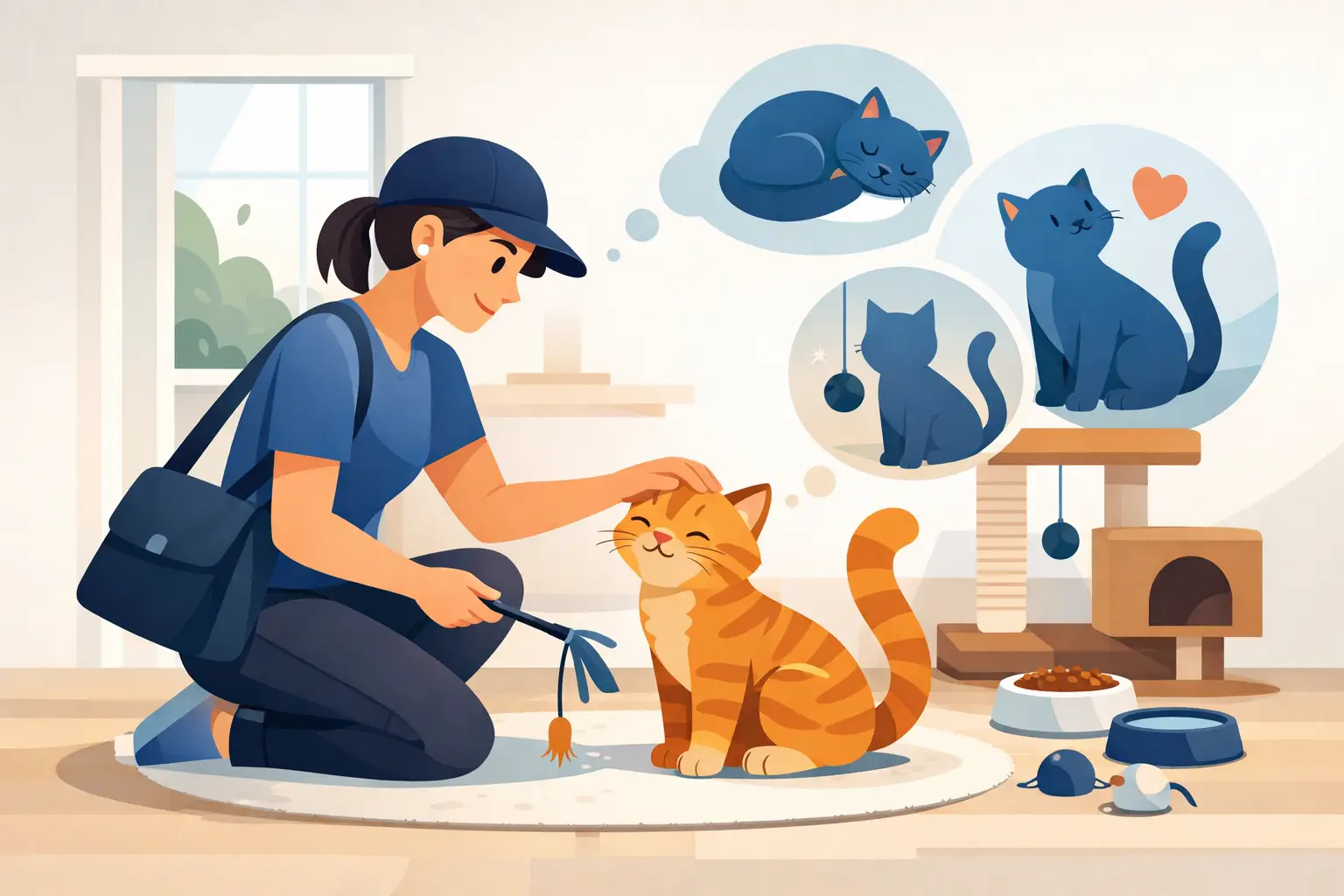
A full food bowl does not tell you whether your cat has eaten. A clean litter tray does not show whether they are hiding, feeling unwell or simply missing their usual routine. This is how cat sitting home visits help: they provide proper, personal care in the place where most cats feel safest – their own home.
For many cats, being moved to unfamiliar surroundings can be more unsettling than being without their people for a short time. Home visits allow them to keep their favourite sleeping spots, familiar scents and normal daily pattern, while a trusted carer makes sure the essentials – and the little things – are taken care of.
How cat sitting home visits help anxious and independent cats
Cats have a reputation for being independent, but that does not mean they are happiest being left entirely alone. Some will welcome a visitor at the door; others may watch from under the bed for the first couple of visits. Both reactions are normal. A good cat sitter works at the cat’s pace, rather than expecting instant cuddles.
Staying at home can be particularly helpful for cats that dislike travel, become stressed around other animals or take a while to settle in new places. There is no carrier journey, no strange enclosure and no need to adjust to unfamiliar noises, smells or routines. Instead, your cat can eat from their usual bowl, use their own litter tray and curl up in their favourite chair.
For nervous cats, consistency matters. Visits at agreed times from a familiar, patient carer can build trust over repeat bookings. Even a cat who prefers quiet company benefits from someone checking that they are comfortable and behaving normally.
A visit is more than feeding and changing litter
Reliable cat care is not just a quick stop to put food down. A home visit should include a proper wellbeing check, tailored to your cat’s normal habits and care plan. That may mean serving measured meals, refreshing water, cleaning litter trays, giving prescribed medication and spending time playing or sitting quietly nearby.
Just as valuable is observation. Cats can be very good at hiding discomfort. A change in appetite, toilet habits, energy levels or behaviour may be the first sign that something is not right. A professional carer who gets to know your cat’s routine is more likely to notice those changes and contact you promptly if needed.
The right amount of interaction depends on the cat. A confident, playful youngster may enjoy wand toys and a lively game of chase. An older cat may prefer gentle fuss, a warm blanket and a calm presence. Multi-cat households need individual attention too, especially where one cat is more reserved or has a special diet.
Keeping routines steady while you are away
Cats often notice small changes. Breakfast arriving later than usual, an empty water bowl or a missed medication dose can disrupt their day. Home visits keep key parts of their routine in place, which can make time apart less stressful for everyone.
Before care begins, it helps to share clear instructions: what and when your cat eats, where they like to hide, whether they are allowed outdoors, any health conditions and your vet’s details. Mention the details that might sound minor, too. Perhaps your cat only drinks from a certain bowl, needs the bathroom door left open or tries to steal another pet’s food. Those familiar quirks help a sitter provide care that feels genuinely personal.
It is also sensible to discuss how often visits are needed. Many owners choose one or two visits a day, depending on their cat’s age, personality, health and how long they will be away. Kittens, elderly cats, cats on medication and cats with medical concerns may need more frequent checks. A healthy adult cat may cope well with one thorough daily visit for a short break, but this is not a one-size-fits-all decision.
Peace of mind for owners, not just comfort for cats
Being away from your pet is easier when you know who is coming into your home and what care your cat is receiving. Professional cat sitting offers reassurance that a neighbour popping in may not always be able to provide, particularly during longer holidays or busy periods.
At Scamps and Champs, carers are fully insured and DBS-checked, so owners can feel more confident about arranging support at home. Clear booking arrangements and regular communication also remove much of the uncertainty that comes with leaving a pet behind.
Updates can be a real comfort. A short message and a photo of your cat eating, playing or lounging in their usual spot can make a big difference when you are away for work, visiting family or enjoying a holiday. If your cat is shy, an update explaining that they have eaten well and been seen safe and settled is often just as reassuring as a photograph.
Home visits can also provide a quiet level of household oversight. A sitter can bring in post if agreed, check that your cat has not knocked over their water bowl and make sure doors and windows are secure. The focus remains your cat’s wellbeing, but it is reassuring to know that someone is regularly attending the home.
When home visits may not be the best fit
Home cat sitting is an excellent option for many households, but it is worth being realistic about your cat’s needs. If a cat requires round-the-clock observation, intensive nursing or has a condition that is rapidly changing, veterinary advice should come first. In some situations, overnight pet sitting or another level of care may be more appropriate than brief visits.
Very social cats may also benefit from longer visits or more than one call each day. If your cat usually follows you from room to room and becomes distressed when alone, tell your sitter honestly. The care plan can then reflect their personality, rather than relying on the idea that all cats prefer solitude.
The same applies to outdoor cats. You will need to agree clear instructions about access, curfews and what to do if your cat has not returned by the usual time. A responsible sitter will never guess when it comes to your pet’s safety.
Preparing your cat and home for a smoother visit
A little preparation helps the first visit go well. Arrange a meet and greet before you travel so your cat can see the sitter in a relaxed setting and the carer can learn the layout of your home. Show them food storage, litter supplies, cleaning products, carriers and any hiding places your cat favours.
Leave enough food, litter and medication for the whole booking, plus a little extra in case plans change. Keep instructions straightforward and written down, including emergency contacts and veterinary details. If your cat has a microchip, check that the registered contact information is current before you go away.
Avoid making lots of last-minute changes. Moving the litter tray, switching food or introducing a new automatic feeder just before a trip can create unnecessary problems. Familiarity is one of the greatest benefits of home care, so let your cat keep the things they know.
The value of care that notices the small things
The best cat sitting visits are built around attention, not assumptions. They respect that your cat may be affectionate, aloof, playful, cautious or all four depending on the day. They provide food and clean litter, certainly, but they also provide a watchful eye, a steady routine and the comfort of familiar surroundings.
When you choose a carer who takes time to understand your cat, you are not simply arranging someone to visit the house. You are giving your pet calm, dependable support while life carries on – and giving yourself the freedom to be away without wondering how they are doing.