
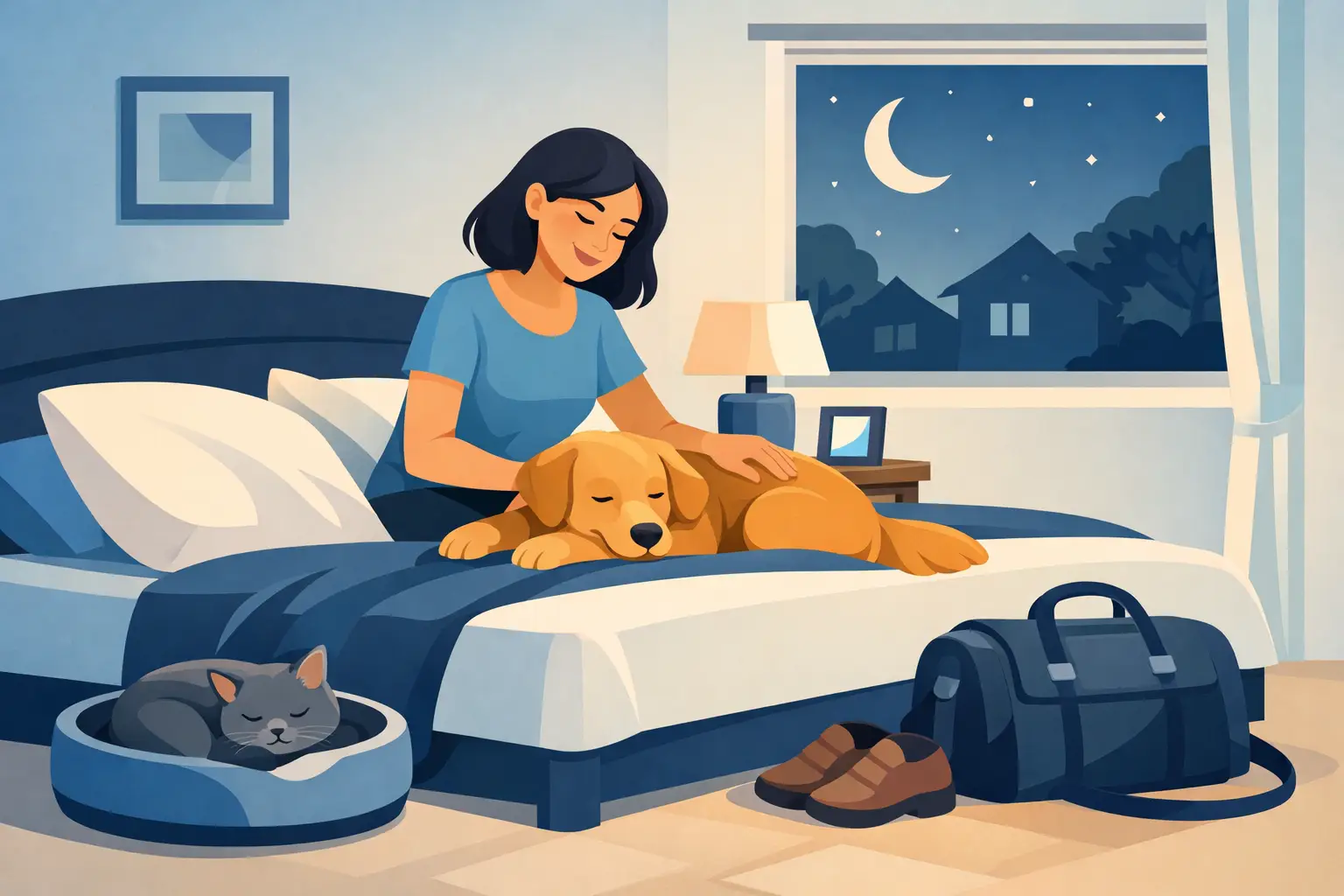
The suitcase is packed, the journey is booked, and then comes the difficult part: leaving your pet behind. For many owners, overnight pet sitting in your home offers a kinder alternative to kennels, catteries or asking a neighbour to pop in when they can. Your pet stays where they know the smells, sounds, sleeping spots and daily routines, while a dedicated carer provides company and care.
It is not the right choice for every pet or every trip. Some dogs thrive in home boarding, while others are happiest sleeping in their own bed with their usual view from the window. Understanding what overnight care involves can help you make a decision that feels good for both you and your animal companion.
What Overnight Pet Sitting in Your Home Means
An overnight pet sitter comes to your home and stays with your pet through the evening and night, usually following an agreed care plan. This is more than simply putting food down before bed. A good sitter gets to know your pet’s routine, from walk times and feeding arrangements to medication, favourite games and the little habits that help them settle.
For dogs, this may include an evening walk, companionship while they wind down, a morning walk and breakfast before the sitter leaves or continues with planned daytime care. For cats, it can mean keeping their familiar feeding, play and litter routine, while giving them the quiet presence many cats prefer. Smaller pets can also benefit from care at home when their feeding, cleaning or temperature needs are clearly explained.
The arrangements should always be discussed in advance. Some households need care for one night around a wedding or work trip; others need a sitter for a week or longer holiday. The most suitable plan depends on your pet, your home and how much daytime support is needed alongside the overnight stay.
Why Familiar Surroundings Can Make a Difference
Pets do not understand a holiday itinerary. They only know that their people are away and their usual routine has changed. Staying at home removes one major source of disruption: an unfamiliar environment.
This can be especially helpful for pets who are anxious, older, recovering from illness or simply creatures of habit. A cat who spends most of the day on the same windowsill may find a cattery stressful, even if it is well run. A dog who gets unsettled by new noises may sleep more peacefully in their own home, with a familiar route for their morning walk.
Home-based care also allows routines to remain recognisable. Mealtimes can stay the same, beds do not need to be moved, and the sitter can follow your usual instructions rather than fitting your pet into a large group schedule. That personal attention is often what owners are looking for when they want a friendly alternative to traditional boarding.
There is a practical benefit, too. Your home is occupied while you are away, which can provide extra reassurance. But the focus should always remain on the pet’s welfare, not on using a sitter as a substitute for home security.
Is Your Pet a Good Fit for Overnight Care?
Many pets enjoy overnight care at home, but it helps to be honest about their personality. A sociable dog who becomes worried when left alone may benefit greatly from having someone nearby overnight. A nervous cat may be more comfortable at home, provided the sitter is patient and happy to let them approach in their own time.
There are occasions when another option may suit better. Dogs who become distressed by unfamiliar people in the house may need several meet-and-greets before an overnight stay feels comfortable. Very young puppies may require more intensive daytime supervision than an overnight booking alone can provide. Pets with complex health needs may need a sitter with specific experience, or veterinary support arranged as part of the plan.
Be open about behaviours that might affect care. Does your dog bark when the doorbell rings? Does your cat hide when visitors arrive? Is your rabbit fussy about how their enclosure is secured? These details are not a problem – they are the information that allows a sitter to care safely and confidently.
Choosing Someone You Can Trust
Letting someone stay in your home and care for a much-loved pet requires trust. It is reasonable to ask clear questions before you book. Professional pet care should never feel vague or rushed.
Look for a service with insured, DBS-checked carers and a clear process for introductions, booking and communication. Local knowledge matters too. A sitter who understands your area can follow your usual walking routes where appropriate, know where nearby veterinary support is available, and arrive without relying on guesswork.
A meet-and-greet is one of the most valuable parts of the process. It gives your pet a chance to meet their potential carer while you are present, and gives you the opportunity to explain the routine properly. Watch how the sitter interacts with your pet. The aim is not to force an instant friendship – some animals need time – but to see calm, respectful handling and genuine interest in their needs.
Ask how updates work while you are away. A short message, photo or video can make a huge difference when you are missing your pet. Agree what feels useful without expecting a sitter to spend every moment on their phone. The right balance is regular reassurance for you and proper attention for your pet.
Preparing Your Home and Pet for the Stay
A little preparation makes overnight pet sitting calmer for everyone. Your sitter should have written instructions, even if you have already talked everything through. Holidays can be busy, and it is easy to forget a detail when you are leaving for the airport or trying to get the children into the car.
Include feeding amounts, walk timings, medication instructions, vet contact details and your own emergency contact. Explain any household rules, such as rooms your pet is not allowed into, where leads and towels are kept, and whether your dog can be off lead in a secure area. If your pet has a particular recall word, fear trigger or bedtime ritual, write that down too.
Make sure there is enough food, litter, bedding and medication for the full stay, plus a sensible extra supply in case travel plans change. Leave cleaning products and pet waste bags somewhere easy to find. It is also helpful to show the sitter how heating, alarms, keys and bins work, especially during winter when a warm home and safe access matter.
Try to keep your departure low-key. A long, emotional goodbye can sometimes make an anxious pet more unsettled. Give them a normal walk or meal, let the sitter take over calmly, and leave with confidence. Pets often take their cue from us.
Questions Worth Agreeing Before You Go
Clear expectations prevent awkwardness later. Confirm the sitter’s arrival and departure times, whether daytime visits or walks are included, and how any extra needs will be handled. If your dog needs a longer adventure walk each day, or your cat requires medication at a precise time, make this part of the booking rather than an assumption.
It is also worth discussing emergencies. Your sitter should know which veterinary practice you use, whether you have pet insurance, and who can make decisions if you cannot be reached immediately. A professional carer will have a sensible plan, but your instructions are still essential.
Finally, talk about visitors. If family members, cleaners or tradespeople might need access while you are away, let the sitter know. Most pets settle best with a predictable, quiet household, so avoid arranging non-essential visits during the stay where possible.
The Comfort of a Consistent Carer
The best overnight care feels personal rather than transactional. Your pet is not simply a booking in a diary – they are an individual with their own routines, preferences and quirks. A consistent carer can notice if a normally food-loving dog seems off their dinner, if a cat is hiding more than usual, or if an older pet is moving differently on their walk.
At Scamps and Champs, that combination of affection and professional care is at the heart of what we do. Owners should be able to go away knowing their pet is being treated with patience, kindness and proper attention, not simply checked off a list.
A well-planned overnight stay gives your pet something valuable: the comfort of home, with someone reliable close by. When you return, the best sign of all is often a relaxed pet who is pleased to see you, but clearly felt safe while you were gone.