
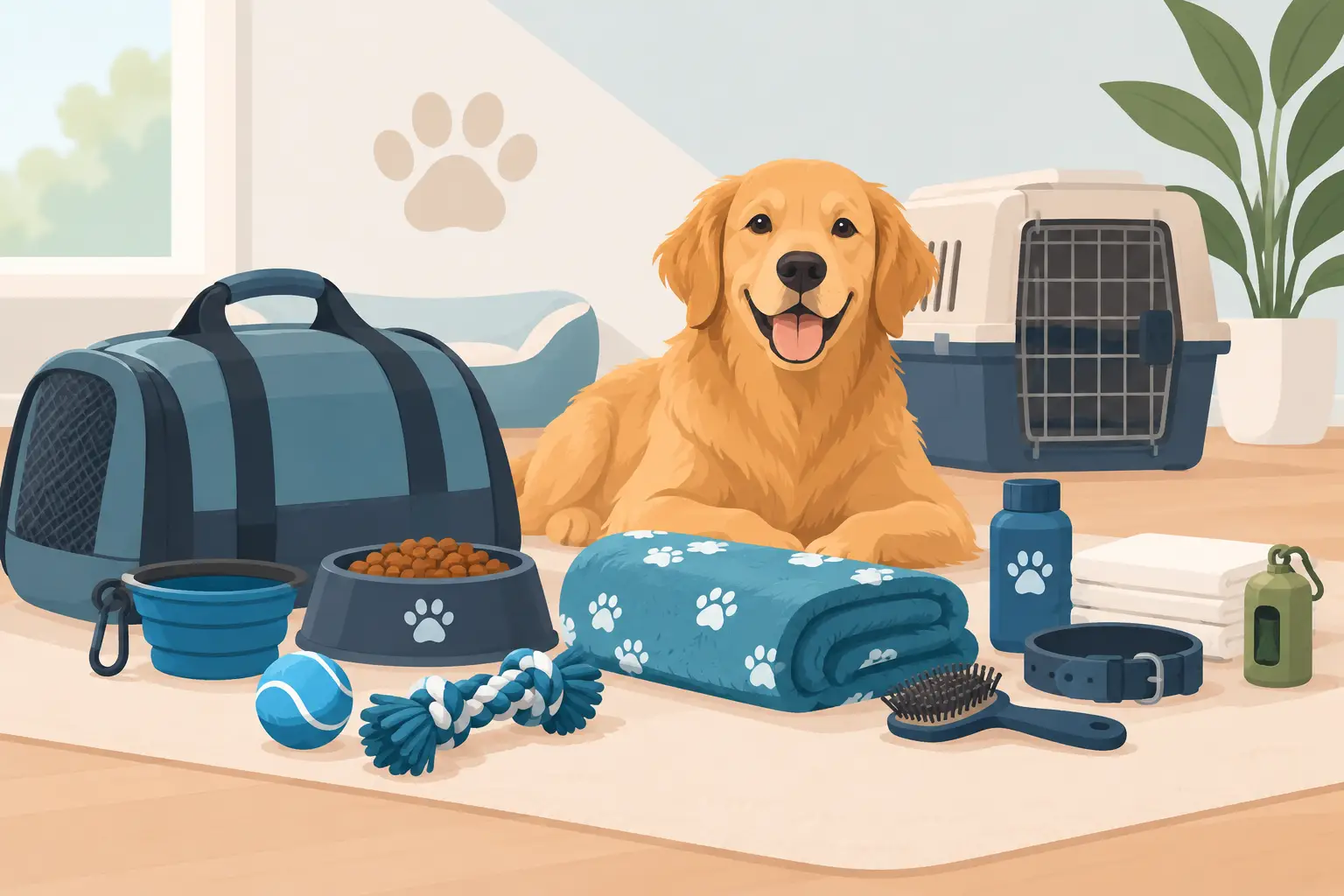
The lead-up to a holiday can be busy enough without standing in the hallway wondering whether your dog needs three toys, two blankets and their entire treat cupboard. Knowing what to pack for home boarding helps your dog settle more easily and gives their carer everything needed to keep their routine safe, happy and familiar.
Home boarding is designed to feel more like a stay with a trusted family friend than time in a kennel. Your dog will still be somewhere new, though, so thoughtful packing makes a real difference. The aim is not to send everything they own. It is to provide the essentials, a little bit of home comfort and clear information that helps their carer understand them properly.
What to pack for home boarding
Start with the items your dog uses every day. Consistency matters, particularly for dogs who are sensitive to change, have a particular feeding routine or take time to relax in new places.
Enough food for the full stay
Pack your dog’s usual food in clearly labelled, portioned containers where possible. Include enough for the whole booking, plus a little extra in case travel is delayed or your plans change. A sudden switch in food can upset a dog’s stomach, so this is not the ideal time to try a new brand or flavour.
Write down how much your dog eats, when they are fed and whether they need any food softened, warmed or served in a particular bowl. If they are prone to eating too quickly, mention this too. The same goes for treats: send the ones they normally enjoy, but be clear about how many they can have and whether there are any ingredients they must avoid.
If your dog follows a raw diet, speak to the boarding provider before the stay. Raw food needs safe storage and handling, and it is best to make sure the arrangements suit both your dog’s needs and the carer’s home.
Medication and health information
If your dog needs medication, pack the full supply in its original packaging and provide straightforward instructions. Include the dose, times it should be given, whether it needs to be taken with food and what to do if a dose is missed. A simple written note is helpful even if you have discussed everything at the meet and greet.
Let the carer know about any allergies, ongoing health conditions, mobility issues or recent changes in behaviour. This is not about making a fuss – small details can help someone spot when your dog is simply tired after a walk or might need extra attention.
It is also wise to provide your vet’s name and telephone number, your dog’s insurance details if applicable, and an emergency contact who can make decisions if you cannot be reached. A professional home boarder will have their own procedures in place, but clear information from you supports quick, confident action if it is ever needed.
Collar, lead and secure walking gear
Your dog should arrive wearing a well-fitting collar with an ID tag. Pack their usual lead, harness and any other walking equipment they need, such as a long line, muzzle or high-visibility coat. Familiar equipment often makes walks feel more normal for a dog, especially during the first day or two.
Be honest about their walking habits. Do they pull towards squirrels? Are they worried by bicycles, buses or large dogs? Can they be let off lead, or do they need to stay attached to a long line? Do not assume a carer will know from your dog’s friendly welcome. The more specific you are, the safer and more enjoyable their walks can be.
For dogs that are escape artists, anxious around traffic or unreliable with recall, say so clearly. Good carers would always rather have too much information than too little.
A bed or blanket that smells like home
A familiar bed, blanket or crate can be reassuring in a new setting. Your scent and your dog’s own scent on these items can help them settle at bedtime, particularly if they are used to sleeping close to family.
There is a balance here. Send something comforting that you will not be distressed to see well loved after a few days. Dogs may chew, shed, drool or bring in muddy paws, even in the best care. If your dog guards their bed or becomes unsettled when it is moved, mention this in advance.
Not every dog needs a full bed brought along. Some are perfectly content with a favourite blanket, while others settle best in their own crate. Discuss what works at the meet and greet rather than packing on instinct.
Toys, chews and calming comforts
One or two favourite toys can make a stay more enjoyable, especially for dogs who like to carry a soft toy around or settle with a familiar chew. Choose safe, durable items your dog already knows well. Home boarding is not the place to introduce a new toy that might be ripped apart or swallowed.
If your dog enjoys a lick mat, puzzle feeder or long-lasting chew, check whether the carer is happy to use it and explain how often. These can be useful for calm enrichment, but every dog is different. Some become possessive around high-value chews, and in a multi-dog household it may be safer for them not to be offered.
For nervous dogs, avoid overpacking and overthinking. A calm handover, a familiar blanket and a consistent routine often do more than a bag full of exciting new things.
The information your home boarder needs
The most useful thing you can pack may not fit in a bag. A short care sheet gives your carer a clear picture of your dog beyond their booking form. It should cover their feeding and toilet routine, sleeping preferences, exercise needs and any habits that make them uniquely themselves.
Mention practical things such as whether they bark at the doorbell, dislike being dried after rain, need encouragement to drink, steal socks or become worried during thunderstorms. Tell the carer what helps them settle: perhaps a quiet word, a particular cue, a little space, or a bedtime biscuit.
You should also be open about behaviours that could affect care. This includes reactivity, separation anxiety, resource guarding, fear of men, discomfort around children or a history of escaping. There is no judgement in responsible care. Sharing the full picture allows the carer to put sensible arrangements in place and decide whether home boarding is the right fit.
At Scamps and Champs, we know owners can feel nervous about leaving a dog who is part of the family. A detailed handover helps build the trust that makes a stay feel easier for everyone.
What not to pack
Avoid sending valuables, sentimental toys, clothing you would hate to lose or more belongings than your carer can realistically store. Too much equipment can create clutter and make it harder to keep track of what belongs to whom.
It is also best not to pack medication without instructions, loose food in unlabelled bags or treats that other dogs could accidentally access. If your dog has special dietary needs, make this unmistakably clear.
You do not usually need to pack grooming supplies unless your dog needs a particular shampoo, ear cleaner or skin treatment. Ask beforehand if there is anything else the carer requests, as each home boarding set-up works slightly differently.
Make the handover calm and clear
Before you leave, check that your dog has had a toilet break and arrives on time with everything labelled. Keep your goodbye warm but low-key. Long, emotional farewells can sometimes make an anxious dog more unsure, while a confident handover tells them they are safe.
Take a final moment to confirm feeding, medication, collection arrangements and the best way to contact you. Then let your dog start getting to know their temporary home at their own pace. With familiar comforts, honest care notes and a trusted local carer, you can head away knowing they have what they need to feel settled and cared for.