
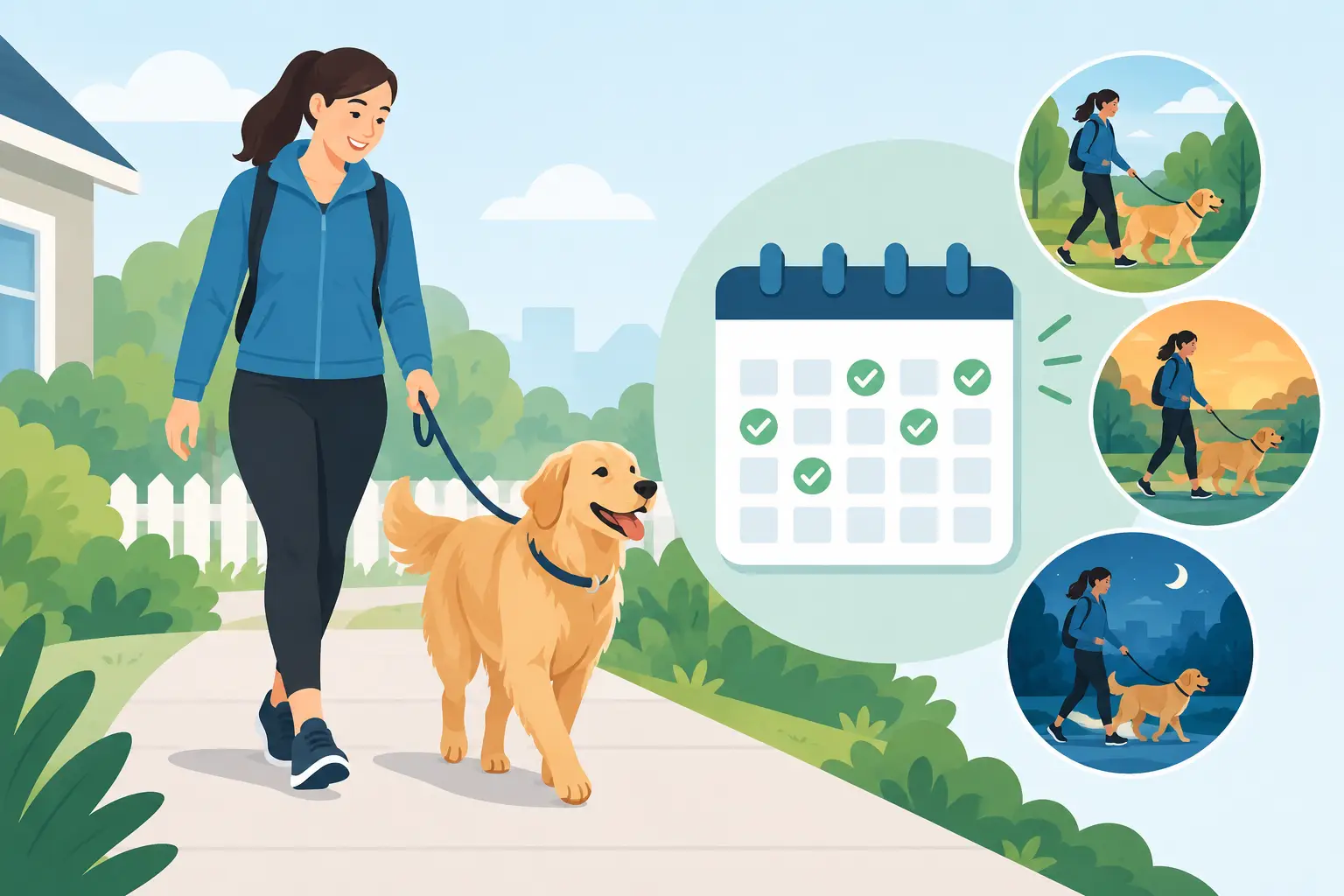
A dog who has been alone since breakfast does not think in terms of calendars or convenience. They simply know they need the loo, a stretch, a sniff and some company. So, how often should dog walkers visit? For many adult dogs, one well-timed visit during a working day is a good starting point. But the right answer depends on your dog, their routine and how long they are left at home.
A regular walker is not just there to add steps to a fitness tracker. The visit can break up a long day, support toilet routines, ease boredom and give you confidence that someone caring and reliable has checked in. The best schedule is one that leaves your dog comfortable, settled and happy rather than merely managing until you get home.
How often should dog walkers visit during the day?
For a healthy adult dog, a midday walk or home visit is often suitable when owners are out for a standard working day. This gives them an opportunity to toilet, have a drink, enjoy gentle exercise and return home ready to rest. If your dog is alone for eight hours or more, or your commute makes the day longer, two visits may be kinder.
There is no single number that suits every household. A young, energetic spaniel may benefit from a proper walk plus a second garden break or pop-in, while a calm older dog may prefer a shorter, slower visit. Some dogs also find long walks overwhelming and are happier with quiet company, a toilet break and familiar enrichment at home.
Think about the whole day, not only the walking slot. Your dog’s needs before work, after work and overnight all matter. A good dog walking routine should complement the exercise, attention and rest they already get with you.
Your dog’s age changes the answer
Puppies usually need more frequent care than adult dogs. Their bladders are smaller, their attention spans are shorter and their early experiences can shape how they feel about time alone. Depending on their age and confidence, a puppy may need visits every two to four hours rather than one long walk in the middle of the day.
For puppies, a professional visit is often focused on toilet training, gentle play, feeding if required and calm social interaction. Exercise should be age-appropriate. A very young puppy does not need an exhausting walk, and pushing them too far can be unhelpful for growing joints. Consistency, safety and positive experiences matter far more than distance.
Adult dogs vary hugely. A fit dog with plenty of energy may need a longer walk, a chance to sniff and explore, and perhaps an extra visit on your busiest days. A dog who is naturally relaxed may be content with one decent outing and a reassuring check-in. Breed can offer clues, but personality is just as important. Not every collie wants the same day, and not every small dog has low exercise needs.
Senior dogs often benefit from more frequent but gentler support. They may need the toilet more often, struggle with long distances or feel stiff after resting for too long. Short walks at a comfortable pace can keep them moving without asking too much of them. Dogs with medical conditions should follow the routine advised by their vet, including any medication, feeding or mobility requirements.
Start with time alone, not a fixed rule
As a general guide, most adult dogs should not routinely be expected to go from morning until evening without a chance to toilet and have human contact. Occasional unavoidable delays happen to everyone, but a regular plan is kinder than hoping your dog will simply cope.
If you leave at 8am and arrive home at 6pm, a visit around lunchtime may not be enough for every dog, particularly if there are travel delays. In that situation, an earlier visit, a later afternoon check-in or two shorter visits can make the day more comfortable. Owners who work shifts may need a completely different pattern, such as a late-morning walk after an early start or an evening visit before a night shift.
Watch for signs that your current arrangement is not quite working. Indoor accidents, pacing, excessive barking, chewed belongings, frantic greetings or reluctance to settle can all suggest that your dog needs more support. These behaviours can have several causes, so it is worth discussing any sudden change with your vet as well as reviewing their care routine.
Choose the type of visit as well as the frequency
A visit does not always need to be a full dog walk. The most useful service depends on what your dog needs that day.
A lively dog may thrive on a structured walk with time to sniff, toilet and enjoy appropriate company. A nervous dog may be more comfortable with an individual walk in familiar local areas. A puppy, elderly dog or dog recovering from illness may need a home visit with a garden break, feeding, medication and a little calm companionship instead.
Weather matters too. During very hot weather, midday pavement walks can be unsafe and uncomfortable. A responsible carer may adjust the route, shorten the exercise, focus on shaded time outside or provide a welfare visit instead. Heavy rain, icy conditions and high winds can also mean adapting the plan. Flexibility is part of good care, not a missed service.
The quality of the visit matters as much as the clock. A rushed walk with little attention may not meet your dog’s needs, while a thoughtful visit from someone who understands their habits can make a real difference. Your walker should know your dog’s lead manners, recall rules, worries, favourite routes, feeding instructions and what to do if they seem unwell.
Build a routine your dog can rely on
Dogs tend to feel safer when their days are predictable. Try to book visits at roughly similar times, especially if your dog is toilet training, elderly or prone to anxiety. That does not mean every walk must happen at the exact minute, but a familiar rhythm helps them understand that someone will return.
Before arranging care, be honest about your dog’s normal behaviour. Tell the walker if they pull on the lead, react to other dogs, guard food, dislike traffic, have allergies or need medication. It is also helpful to explain how they behave when left alone and whether they have any fears, such as loud noises or unfamiliar people entering the house.
A meet and greet gives everyone the chance to get acquainted before the first booking. Your dog can meet their carer while you are present, and you can talk through routines, keys, feeding, access to the garden and emergency contacts. This is particularly reassuring for dogs who are cautious around new people.
At Scamps and Champs, local carers are fully insured and DBS-checked, with clear communication designed to keep owners reassured. Practical touches such as GPS-tracked walks and regular updates can be especially helpful when you are at work, travelling or simply trying to settle into a new routine.
Review the plan when life changes
Your dog’s needs will not stay exactly the same forever. A new job, a house move, school holidays, injury, ageing or a change in household routine can all affect how often they need a visit. Review the arrangement every few months rather than waiting for problems to appear.
It is also sensible to allow for busier days. If you know you have a long meeting, a hospital appointment or an event that will keep you out late, arranging an extra pop-in can take the pressure off. The aim is not to fill every moment of your dog’s day, but to make sure their essential needs are met with care.
The right dog walking schedule should feel reassuring at both ends of the lead. When your dog has a familiar person, a sensible routine and enough chances to stretch, sniff and settle, you can leave home knowing their day has been planned with the same care you would give them yourself.