
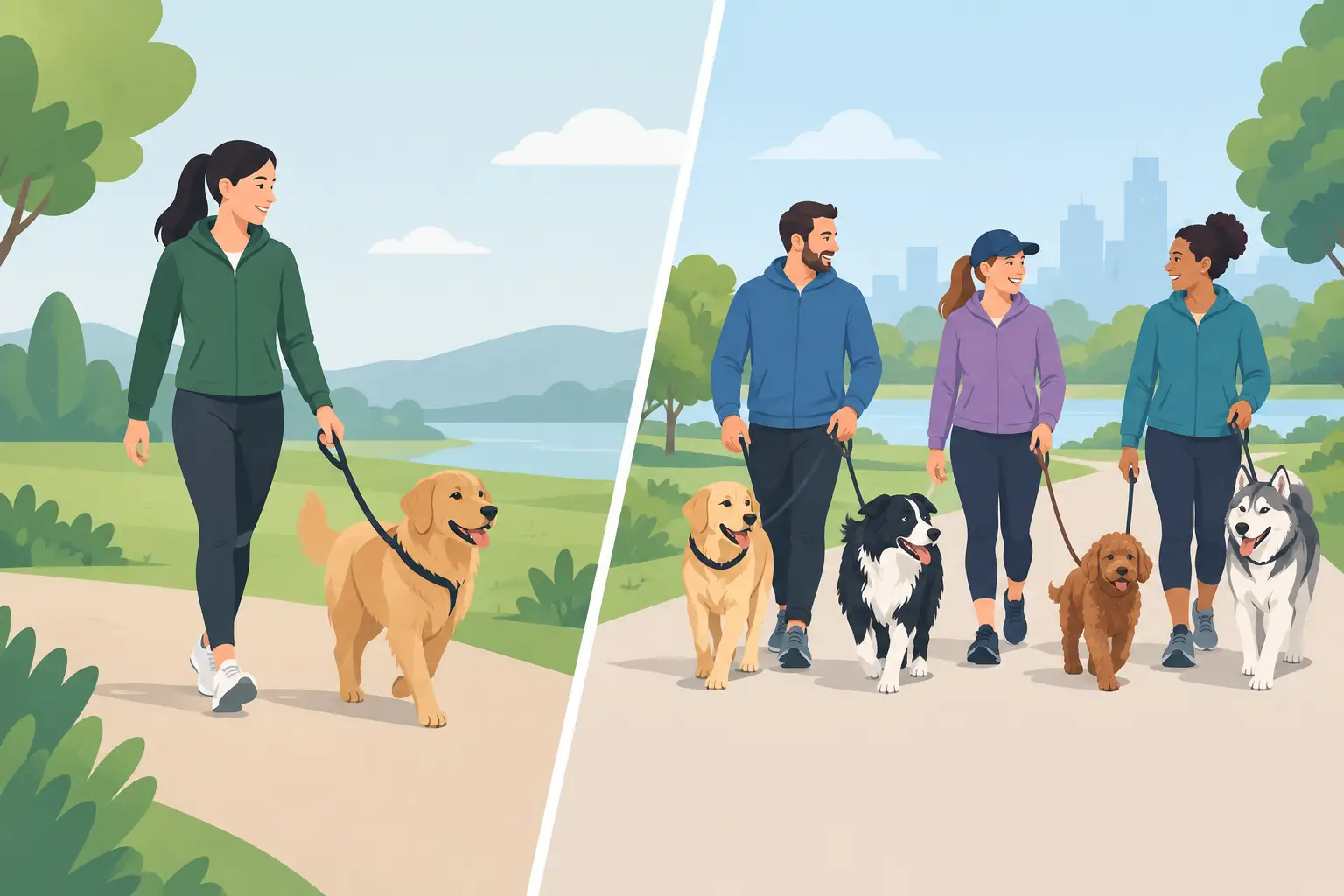
The choice between private walks versus group walks often comes down to one simple question: what helps your dog feel safe, settled and happy? A lively young spaniel may come home glowing after a sociable woodland walk with canine friends. A nervous rescue dog may get far more from quiet time with a familiar walker, away from busy paths and boisterous play. Neither option is automatically better – the right one is the one that suits the dog in front of you.
For busy owners, a dog walk is also about trust. You need to know who has your dog’s lead, where they are going, how they will be managed around other dogs, and whether someone will tell you if anything seems out of character. Understanding the difference between the two types of walk can make arranging regular care much less worrying.
Private walks versus group walks: the main difference
A private walk is a one-to-one outing between your dog and their walker, or a walk shared only with dogs from the same household. The route, pace and activities can be planned around your dog’s needs on that particular day. If they need a slow sniff around the park, a little lead training, or a shorter stroll because they are recovering from an upset tummy, there is room to adapt.
A group walk involves a small number of compatible dogs walking together under the supervision of a professional dog walker. It offers company, shared exploration and, for the right dogs, a healthy outlet for play and social skills. Good group walks should never be a case of gathering as many dogs as possible and hoping for the best. The group needs thoughtful matching, careful supervision and sensible handling at every stage.
The decision is not always fixed for life. Some dogs begin with individual walks while they build confidence, then move into a small group. Others enjoy a group walk once or twice a week but have private walks on quieter days. Changes in age, health, home routine or behaviour can also change what feels right.
When a private dog walk is the better fit
Private walks are particularly valuable for dogs who need focused attention. Puppies who are still learning lead manners and recall can benefit from calm, consistent guidance without the distraction of several other dogs. The same is true for dogs who pull, bark at other dogs, react to traffic or find unfamiliar environments overwhelming.
Older dogs often appreciate the freedom of a gentler pace. They may want to stop often, potter along a familiar route or avoid slippery ground and rough play. A private walker can respond to those small signals rather than keeping up with the pace of a group.
One-to-one walks can also help dogs who simply prefer people to other dogs. Not every dog wants a canine social life, and that is perfectly normal. A dog that is polite around others may still find prolonged group time tiring. Choosing a private walk is not denying them fun; it is respecting their personality.
There are practical benefits for owners too. Private walks can work well where medication, feeding schedules or specific handling instructions are involved. If your dog needs a particular route, must avoid certain areas, or has a changing recovery plan from your vet, an individual outing gives the walker more flexibility to follow those instructions closely.
That focused care does usually mean private walks cost more than a shared walk. The value lies in the dedicated time, tailored route and individual attention, so it is worth considering whether that extra support will make a meaningful difference to your dog’s wellbeing.
What the right group walk can offer
For confident, friendly dogs, a carefully selected group walk can be a brilliant part of the week. Dogs are social animals, but social does not always mean charging around together. Sometimes it means walking companionably, sniffing the same hedgerow, taking breaks together and learning to remain calm near other dogs.
A suitable group can help an energetic dog burn off steam in a positive way. It can also add variety to the day for dogs who spend a few hours home alone while their owners are at work. The mental stimulation of new scents, different walking companions and supervised play can be just as satisfying as the physical exercise.
Group walks are often a more economical option because the walker’s time is shared. That can make regular care more manageable for households that need support several times a week. However, lower cost should not be the only deciding factor. A group is only good value when the dogs are well matched and the service is run safely.
Ask how dogs are introduced before they join a group. A responsible walker will want to understand your dog’s temperament, history, exercise needs and comfort around other dogs. They should not promise that every dog will suit every group, because they will not.
Temperament matters more than breed or size
It is easy to assume that dogs should be grouped by breed, age or size. Those factors can matter, but temperament is usually more useful. A calm large dog may be happier walking with a smaller, steady companion than with a bouncy dog of the same breed. A young dog with lots of energy may enjoy a playmate, while another dog of the same age may prefer space and a quieter walk.
Think about how your dog behaves after meeting other dogs. Do they come home relaxed, or seem overstimulated and unable to settle? Do they enjoy greetings but lose interest quickly? Are they confident on lead but worried if dogs rush up to them? These everyday observations can help a walker make the right recommendation.
It is also worth being honest about any challenges. A good dog walker would rather know that your dog guards toys, becomes nervous near cyclists or finds certain breeds unsettling. Clear information is not a judgement on your dog. It helps create safer, kinder walks for everyone.
Questions to ask before booking dog walks
Whether you choose private or group care, the quality of the service matters as much as the format. Ask how many dogs are walked together, how groups are matched and what happens if a dog becomes stressed or unwell. You should also know whether the walker is insured, DBS checked and trained to manage dogs safely in public spaces.
GPS tracking and regular updates can be especially reassuring when someone else is caring for a much-loved pet. A quick message, photo or walk report lets you know your dog has been collected, exercised and returned home safely. It also creates a useful record of changes in toileting, appetite, energy or behaviour that may need your attention.
Meet-and-greets are valuable too. Your dog should have a chance to meet their walker before the first booking, ideally in a calm setting. Notice whether the walker asks sensible questions about routines, feeding, triggers, veterinary details and emergency contacts. Professional care is not only about a cheerful hello at the door; it is about having the right information before the lead goes on.
At Scamps and Champs, the aim is always to match the walk to the dog, not squeeze the dog into a convenient routine. Local, trusted carers can provide the consistency that helps dogs settle into regular care, while giving owners the reassurance of clear communication and dependable standards.
Review the choice as your dog changes
A dog’s ideal walk can change more quickly than owners expect. A confident adolescent may suddenly become more excitable around other dogs. An older dog may start slowing down. A new baby, house move, illness or change in working hours can affect how well your dog copes with time away from you.
Keep the conversation open with your walker. If your dog is returning from group walks overly tired, muddy is one thing, but anxious or wound up is another. Equally, if a dog seems bored on solitary walks and lights up around a calm, compatible friend, a small group may be worth trying.
The best arrangement leaves your dog content when they get home: comfortably exercised, safe in their routine and ready to settle down. When that is how they finish their walk, you can head into your day knowing their care is in capable, caring hands.