
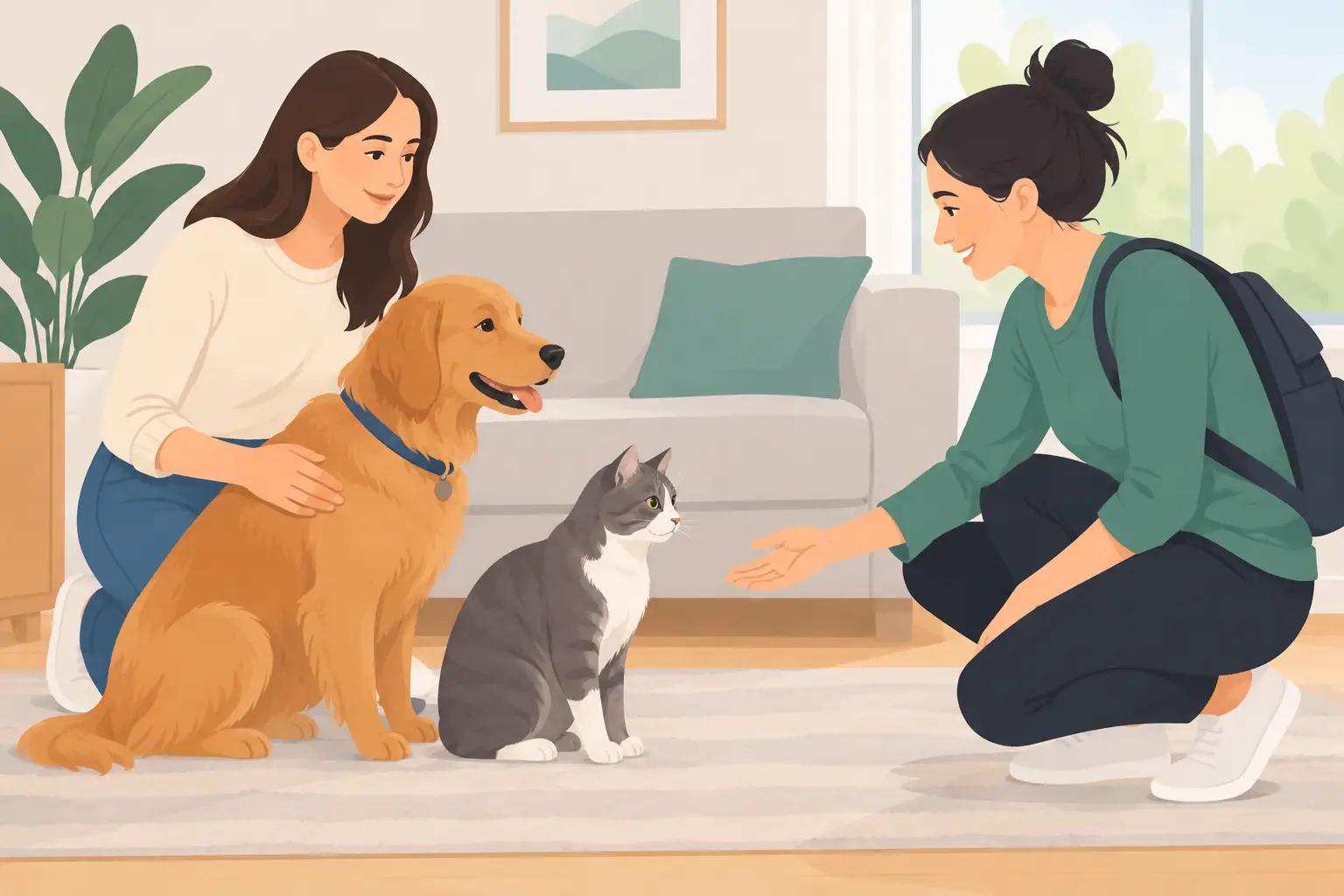
A new sitter can arrive with the kindest voice, a pocket full of treats and plenty of experience, yet your pet may still decide that the person at the front door is highly suspicious. That is perfectly normal. The best way to introduce pets to new sitters is not to force a friendship, but to give your pet time, familiar cues and a calm routine to work with.
For many dogs, cats and smaller pets, the reassurance comes from knowing that their home, food, exercise and favourite resting spot still feel the same. A thoughtful introduction helps the sitter understand your pet properly too, making the first visit safer, more relaxed and more enjoyable for everyone.
Start with the right sitter for your pet
A good introduction starts before anyone meets. Share an honest picture of your pet when arranging care. Mention their age, usual routine, medical needs, feeding habits, exercise level and how they tend to react to visitors. A bouncy young dog, a shy rescue cat and a rabbit who dislikes sudden noises will all need a different approach.
It also helps to explain the less obvious details. Does your dog bark when the doorbell rings but settle quickly? Does your cat only come downstairs after ten minutes of quiet? Is there a particular spot where your guinea pig prefers to be handled? These are not small details. They give a sitter the chance to arrive prepared rather than trying to work things out during a busy handover.
Choose a professional carer who is happy to listen, ask questions and follow your instructions. Trust matters, particularly when you are leaving a much-loved family member in someone else’s care. Look for clear communication, appropriate insurance, DBS checks where relevant, and a reliable booking process that gives you confidence about who will be caring for your pet.
Arrange a relaxed meet and greet
Whenever possible, arrange a meet and greet before the first booking. This gives your pet a chance to see the sitter in their own environment, with you nearby and no pressure to perform. It also allows you to talk through practical arrangements without rushing out of the door with a suitcase in hand.
For dogs, begin in a low-key way. Ask the sitter to come in calmly, avoid looming over your dog and let them choose whether to approach. Some dogs will greet a new person immediately; others may prefer to sniff from a distance or sit beside you for a while. Both responses are fine. The sitter should follow your dog’s pace, rather than insist on fuss or eye contact.
If your dog is wary of people coming into the house, a short walk together can be a useful first step. Meeting outside can feel less intense, and walking side by side gives your dog time to become comfortable with the sitter’s voice, movement and presence. Once everyone is settled, returning home together may feel much easier.
Cats often need an even quieter introduction. Do not carry your cat over for a greeting or pull them out from a hiding place. Let the sitter sit down, speak softly and ignore the cat at first. A curious cat may investigate quickly; a cautious one may observe from behind the sofa. The goal is not a cuddle at the first meeting. It is for your cat to learn that this new person is calm, predictable and not a threat.
With rabbits, guinea pigs, hamsters, birds and other small pets, show the sitter the enclosure routine and safe handling techniques. Explain which doors must be secured, how bedding is managed and any signs that tell you your pet is unsettled or unwell. Small animals can be easily stressed, so consistency is especially valuable.
Keep the first introduction familiar
Pets take confidence from routine. Before the sitter’s first solo visit, write down the parts of the day that matter most: mealtimes, walk lengths, toilet breaks, medication, play, sleeping arrangements and any household rules. A simple care plan is much more helpful than trying to remember everything during a quick chat.
Include the things that bring comfort. Your dog may settle best with their usual lead, bed and post-walk biscuit. Your cat may expect breakfast in the blue bowl, followed by a few minutes with a feather toy. Familiar objects carry familiar scents, which can make a new situation feel less strange.
Avoid making big changes at the same time. If you are trying a new food, moving furniture or changing your dog’s walking route, wait until after the first sitting period if you can. One new person is enough for most pets to process. Keeping everything else steady allows them to associate the sitter with a normal, safe day at home.
Let trust grow in small stages
A short trial visit can make a real difference, particularly before a holiday, overnight pet sitting or a longer stretch of care. Start with the sitter popping in while you are nearby, then progress to a short walk or feeding visit while you are out for an hour or two. This gives your pet a chance to learn that you leave, the sitter looks after them kindly, and you always come back.
For a dog who finds separation difficult, build this up gradually. Keep departures matter-of-fact rather than emotional, and avoid a long goodbye that signals something worrying is about to happen. Your sitter can then use the routine your dog knows best, whether that is a walk, a sniff around the garden or settling with a favourite toy.
Cats may appear indifferent, but they notice changes too. A trial visit lets the sitter learn where your cat likes to hide, whether they will eat with someone else in the house and how much interaction they actually want. It also gives you the chance to check that updates, access arrangements and feeding instructions are all working as planned.
Not every pet will become best friends with a new sitter straight away. Some simply learn to feel safe in their company, and that is a very good outcome. The aim is dependable, calm care, not instant affection on demand.
Give your sitter the information they need
During the handover, make sure your sitter knows where to find food, leads, cleaning supplies, medication and your pet’s carrier or harness. Leave clear contact details for you, your vet and an emergency contact, alongside any relevant insurance or medical information.
It is worth discussing behaviour honestly. Tell the sitter if your dog guards food, pulls towards squirrels, dislikes other dogs or becomes nervous near traffic. Explain if your cat has a habit of slipping through an open door, or if your pet can only take medication hidden in a particular treat. Good carers do not judge these details. They use them to make sensible decisions.
A helpful care note should also cover what is normal for your pet. Your dog’s usual toileting pattern, your cat’s appetite, and the typical activity level of a small pet can all help a sitter spot a change quickly. If your pet has a health condition, make instructions clear and easy to follow, rather than relying on verbal reminders alone.
Make the goodbye calm and clear
On the day care begins, give your pet a little normal exercise or quiet time before the sitter arrives. Dogs often benefit from a relaxed walk, while cats may prefer a peaceful home with their usual hiding places available. Try not to rush around packing and saying goodbye at the last minute, as pets are very good at noticing tension.
Once the sitter is there, keep your departure simple. Say goodbye warmly, then leave with confidence. Repeatedly returning for one more cuddle can accidentally make an anxious pet feel that something is wrong. Your sitter can take over with the routine you have already discussed.
Regular updates can be reassuring for owners, especially during the first booking. A short message, photo or note about a walk, meal or cuddle provides peace of mind without interrupting the sitter’s time with your pet. At Scamps and Champs, clear communication is part of helping owners feel close to their pets, even when they cannot be there themselves.
When your pet needs extra support
Some pets need more than a standard meet and greet. Rescue animals, senior pets, animals with medical needs and pets with a history of fear or reactivity may need several short introductions. In these cases, do not rush because a holiday date is approaching. Talk to the sitter early and make a plan that respects your pet’s limits.
If your pet shows signs of significant distress, such as refusing food for an extended period, persistent panic, aggression or unusual withdrawal, speak with your vet or a qualified behaviour professional. A sitter can support a familiar routine, but they should never be expected to manage a serious behavioural or medical issue without the right guidance.
The kindest introductions are usually the least dramatic: a familiar bowl, a patient hello, a well-explained routine and a carer who pays attention. Give your pet that time, and a new sitter can soon become another trusted person in their world.