
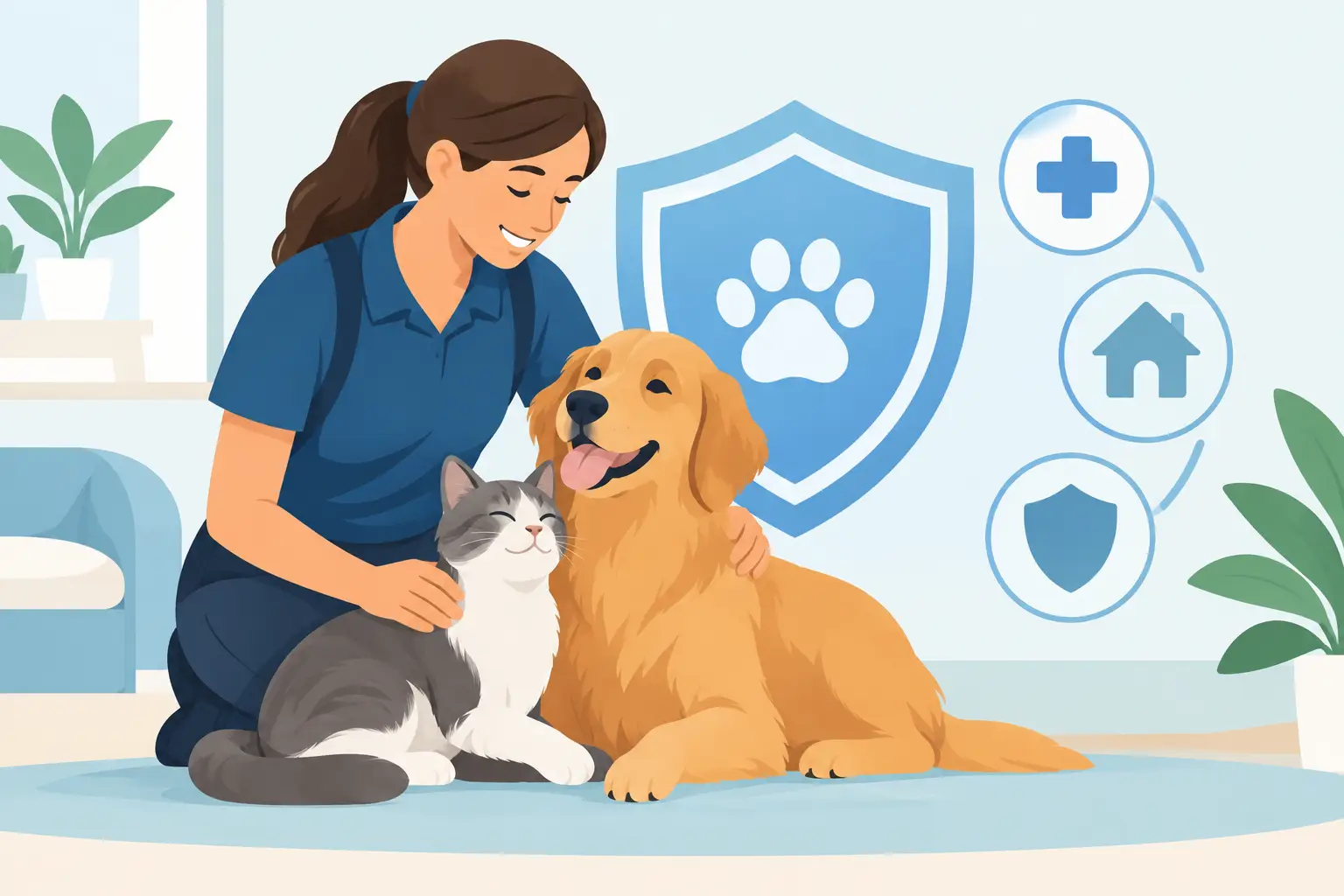
The moment you hand over a lead, a house key or your cat’s feeding instructions, you are placing real trust in another person. Most pet care visits pass happily and uneventfully, which is exactly how everyone wants them to be. But pet sitter insurance is there for the unexpected moments: a dog slipping its collar, an accidental breakage in your home, or a pet becoming unwell while in someone else’s care.
For owners, insurance is not the least exciting part of choosing a sitter. It is one of the clearest signs that a carer takes their responsibilities seriously. Alongside a warm manner, good references and a genuine love of animals, it helps show that the person looking after your pet has considered what could go wrong and has put protection in place.
Why pet sitter insurance matters
A good pet sitter plans their care around the pet in front of them. That might mean a quiet visit for an older cat, a carefully paced walk for a nervous rescue dog, or keeping a lively puppy safely away from hazards at home. Even with experience and careful routines, animals can be unpredictable. They can be startled by a loud noise, pull towards a squirrel, become ill, or knock something over with an enthusiastic wag of the tail.
Insurance helps to protect the sitter, the client and, importantly, the relationship between them if an accident happens. It can provide a route for dealing with certain claims fairly, rather than leaving an owner and carer to work out costs alone at a stressful time.
It should not be treated as a promise that every possible event will be paid for. Every policy has limits, excesses, conditions and exclusions. What it does show is that the business has made a professional commitment to accountability.
What pet sitter insurance may cover
Policies vary considerably, so there is no single checklist that applies to every sitter. However, professional pet care insurance commonly includes public liability cover. This may help if a pet in the sitter’s care causes injury to another person or damages somebody else’s property.
For example, a dog might pull free during a walk and scratch a parked car, or a visitor might trip over a lead left by the front door. These are not situations anyone expects, but they illustrate why liability cover matters.
Many pet sitters also look for care, custody and control cover. This is especially relevant because the animal is temporarily in the sitter’s care. Depending on the policy wording, it may address certain injuries, loss or other incidents involving a client’s pet. The detail matters here: the amount of cover, any age or breed restrictions, and the circumstances in which a claim may be considered can all differ.
Other useful areas can include cover for lost keys, accidental damage to a client’s property and emergency veterinary fees. Some policies may include or offer legal expenses, equipment cover or personal accident protection for the carer. A business with employees may also need employers’ liability insurance. That is a different responsibility from public liability and is relevant where staff are employed.
The right cover depends on the service. A sitter making short cat-feeding visits has different risks from someone providing overnight stays, dog home boarding or group walks. Wedding pet chaperoning brings another set of considerations, from transport arrangements to busy venues and unfamiliar surroundings.
Insurance is one part of safe pet care
It is reassuring to see that a sitter is insured, but it should sit alongside other good practices. Insurance does not make an inexperienced person the right fit for your pet, and it cannot replace sensible preparation.
Before booking, ask how the sitter gets to know each animal. A proper meet and greet is valuable because it allows your pet to become familiar with the carer while you can discuss routines, quirks and worries. Share details about food, medication, triggers, escape routes, recall, favourite hiding places and your usual vet.
For dogs, ask how walks are managed. Will your dog be walked alone or with others? Are leads checked before leaving the house? How are handovers handled? If off-lead exercise is offered, what assessment takes place first? There is no one right answer for every dog. A sociable, confident dog may enjoy company, while a reactive or anxious dog may be safer with individual walks.
For cats and smaller pets, the focus is often on secure access, hygiene, feeding accuracy and observation. A good sitter notices changes in appetite, toileting, behaviour or energy levels and knows when to contact you or seek advice.
DBS checks, clear booking records, emergency contact details and regular updates also matter. They create a more dependable care arrangement and give you a clear point of contact while you are at work, away for the weekend or on holiday.
Questions worth asking your pet sitter
You do not need to interrogate a potential carer, but a few straightforward questions can bring real peace of mind. Ask whether they hold current insurance for the specific service you need and whether they can confirm the type of cover held. A professional business should be comfortable discussing this in plain English.
It is also sensible to ask what happens if your pet becomes unwell or has an accident. Find out whether the sitter will contact you first, when they would take a pet to the vet, and whether they are able to transport an animal safely in an emergency. Leave written consent for veterinary treatment, your preferred practice and a second emergency contact in case you cannot be reached.
Ask about keys and home security if visits take place at your property. You want to know how keys are labelled, stored and returned, who has access to them, and what checks are made when leaving your home. These practical details are often where trust is built.
Finally, be open about your pet. A sitter can only make a safe decision with the information they have. Tell them if your dog has ever bolted, if your cat hides when worried, if your rabbit dislikes being handled, or if your pet has allergies. Honest information is not a nuisance. It helps the sitter provide kinder, safer care.
Check your own pet insurance too
Your own pet insurance and a sitter’s insurance do different jobs. Your policy may cover veterinary treatment for illness or injury, subject to its terms, while the sitter’s policy may relate to liability and incidents connected with their professional care. Neither should be assumed to replace the other.
If your pet has an existing medical condition, needs medication or has a history of behavioural issues, check your policy documents and speak to your insurer if you are unsure. You may also need to make sure your chosen sitter is aware of any requirements. For instance, some veterinary policies have specific rules around pre-existing conditions or authorised treatment.
This is not about expecting the worst. It is about avoiding uncertainty if your pet needs help when you are not there.
Choosing care you can feel good about
The best pet sitting arrangement feels personal as well as professional. You should come away from the meet and greet knowing who will care for your pet, how they will be looked after and what communication you can expect. Photos, GPS-tracked walks where appropriate and a quick update after a visit can make a long working day or a holiday feel much less worrying.
At Scamps and Champs, insured and DBS-checked carers are part of the reassurance we aim to give owners, alongside local, tailored care for pets with their own routines and personalities. But whichever service you choose, look for carers who welcome your questions rather than brushing them aside.
Your pet may not understand an insurance policy, but they do understand calm handling, familiar routines and being cared for properly. Choose someone who has prepared for the practical responsibilities as carefully as they have prepared for the cuddles.