
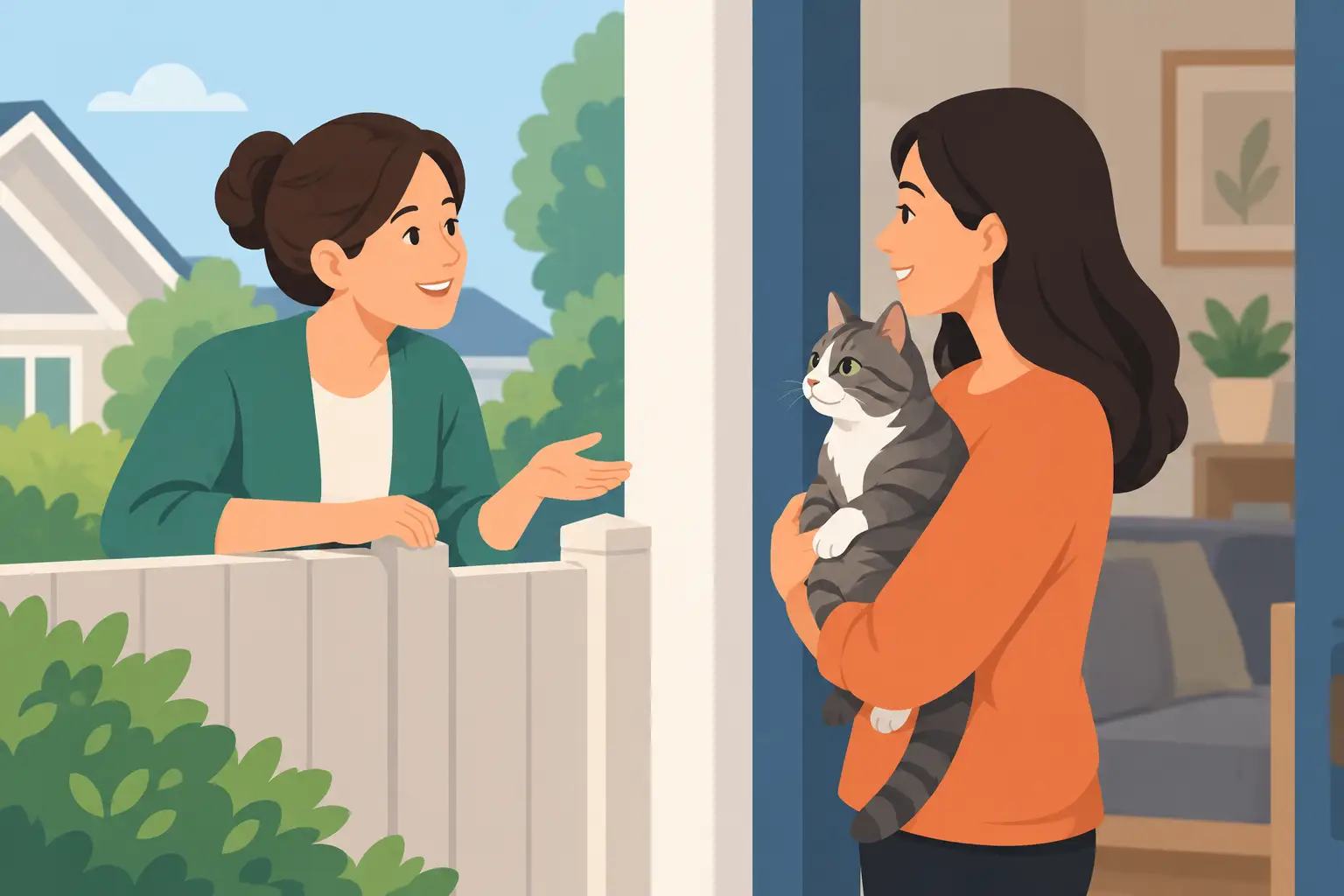
Your cat knows the sound of your neighbour’s front door, has probably watched them through the window, and may even accept the occasional stroke over the fence. So when a holiday, work trip or family emergency comes up, asking next door can feel like the obvious answer. But choosing a cat sitter neighbour is about more than who lives closest.
For some cats and owners, a trusted neighbour is a brilliant arrangement. For others, a professional cat sitter offers the consistency, safeguards and peace of mind that a friendly favour cannot always provide. The right choice depends on your cat’s needs, the relationship you have with your neighbour, and what would happen if plans changed at short notice.
When a cat sitter neighbour can work well
Cats are often happiest staying in their own home. Their familiar smells, favourite sleeping spots and usual routine can make a real difference, especially for cats that dislike travel or become unsettled in new places. A neighbour who can pop in at the usual breakfast and supper times may help your cat feel that life is carrying on as normal.
The practical benefits are clear too. They are nearby if you are delayed on the way home, notice something unusual around the house, or need someone to check a window has been shut. If your neighbour already knows your cat well and genuinely enjoys spending time with them, that familiarity is worth a great deal.
It can be an especially good option for a short break when your cat is healthy, independent and has a simple routine. Fresh food and water, a clean litter tray, a little playtime and company may be all they need. A kind neighbour can provide that beautifully.
Still, proximity is not the same as availability. Even the loveliest neighbour may be juggling work, school runs, their own pets, illness or plans that change without warning. Before relying on them, have an honest conversation rather than assuming that a quick daily visit will be easy.
The questions to ask before relying on a neighbour
Start with the detail that is easy to overlook: how many visits will your cat receive, and at what times? One rushed visit a day may not be enough for a sociable cat, a kitten, an elderly pet or a cat on medication. Most cats benefit from at least daily care, while many are far more comfortable with two proper visits and time for interaction.
Ask whether your neighbour is confident with the less glamorous parts of cat care. Can they spot reduced appetite, vomiting, diarrhoea, changes in litter tray habits or signs that your normally chatty cat is hiding? Would they feel comfortable contacting a vet if something did not seem right? A caring person may still feel out of their depth if a cat suddenly becomes unwell.
It also helps to agree what happens if they cannot make a visit. Perhaps their car will not start, a child becomes poorly, or they have an unavoidable late shift. A back-up plan protects your cat and keeps a neighbourly favour from becoming a source of worry or awkwardness.
Be clear about keys, alarm instructions, feeding quantities, treats, litter, indoor and outdoor routines, and where the carrier is kept. Write it down, even if you have known each other for years. Clear notes are not mistrustful – they are kind to the person helping you and safer for your cat.
Friendly favour or professional cat sitting?
There is no shame in asking a neighbour for help, and there is no need to make a professional service feel like an unnecessary luxury. The difference is accountability and depth of care.
A professional cat sitter is there specifically to care for your pet. Visits are planned around your booking, and your cat’s routine is discussed beforehand. You should know who has access to your home, how to contact them, what happens in an emergency and whether they are insured and DBS-checked. Regular updates, photos and clear communication can be a huge comfort when you are away.
This matters most when your cat has additional needs. A cat requiring medication, a nervous rescue cat, a senior cat, a multi-cat household or a pet with a history of urinary issues needs more than a quick bowl top-up. They need somebody who has the time to observe them properly and act promptly if their behaviour changes.
Professional care can also remove pressure from a good relationship. Your neighbour may be happy to collect a parcel or keep an eye on your property, but that does not mean they should feel responsible for a sick cat at 10 pm. Paying for a dedicated service sets clear expectations and lets neighbours remain neighbours.
A sensible middle ground
You do not always have to choose one or the other. Some owners book professional visits while asking a trusted neighbour to be an emergency contact or simply to keep an eye out. Others use a professional cat sitter for longer holidays and turn to a neighbour for the occasional overnight delay.
That arrangement can work particularly well if you travel frequently. Your cat builds a relationship with a regular carer, while you still have someone nearby who knows your home. It gives you a more resilient plan without asking too much of one person.
If you decide to use both, make responsibilities very clear. Your neighbour should know that the sitter is the main carer, and the sitter should know who can be contacted locally if needed. Confusion is the one thing that never helps when a pet needs attention.
What safe in-home cat care should look like
Whether you choose a neighbour or a professional, good cat care is more than putting food in a bowl. Each visit should include a proper visual check of your cat, fresh water, feeding according to your instructions, litter tray cleaning and a look around for anything unusual in the home. Your carer should take time to see your cat where possible, rather than assuming everything is fine because food has disappeared.
Your cat’s personality should shape the visit. Some cats want a game with a feather toy and a lap to sit on. Others prefer a calm voice, slow movements and company at a respectful distance. A good carer does not force attention. They learn what helps your cat feel safe.
Security matters too. Doors and windows need checking, especially with indoor-outdoor cats. Food must be stored safely, toxic flowers kept away, and any medication given exactly as directed. If a cat is not seen, is not eating, or appears distressed, that should be treated as useful information, not brushed off as ‘typical cat behaviour’.
Preparing your cat and your carer
A little preparation can make a big difference. Leave enough food, litter and medication for your trip, plus extra in case travel plans change. Put your vet’s details, your contact number and an emergency contact somewhere obvious. Let your carer know your cat’s microchip details, usual hiding places, favourite treats and any behaviours that might seem worrying but are normal for them.
If a neighbour is looking after your cat for the first time, invite them round before you go away. Show them where everything is and let your cat see them in the home while you are there. If you are using a professional service, a meet and greet gives you the same opportunity to talk through routines and ask questions.
For owners in Greater Manchester and surrounding areas, a local service such as Scamps and Champs can provide dedicated in-home visits from carers who understand that every cat has their own little ways. The aim is not to replace the comfort of home, but to protect it while you are away.
Your neighbour may be exactly the right person to care for your cat, particularly when trust, availability and your cat’s needs all line up. If you find yourself worrying about missed visits, medication, emergencies or asking too much, choosing dedicated care is a thoughtful decision too. The best arrangement is the one that lets you leave the house knowing your cat is not simply checked on, but genuinely cared for.