
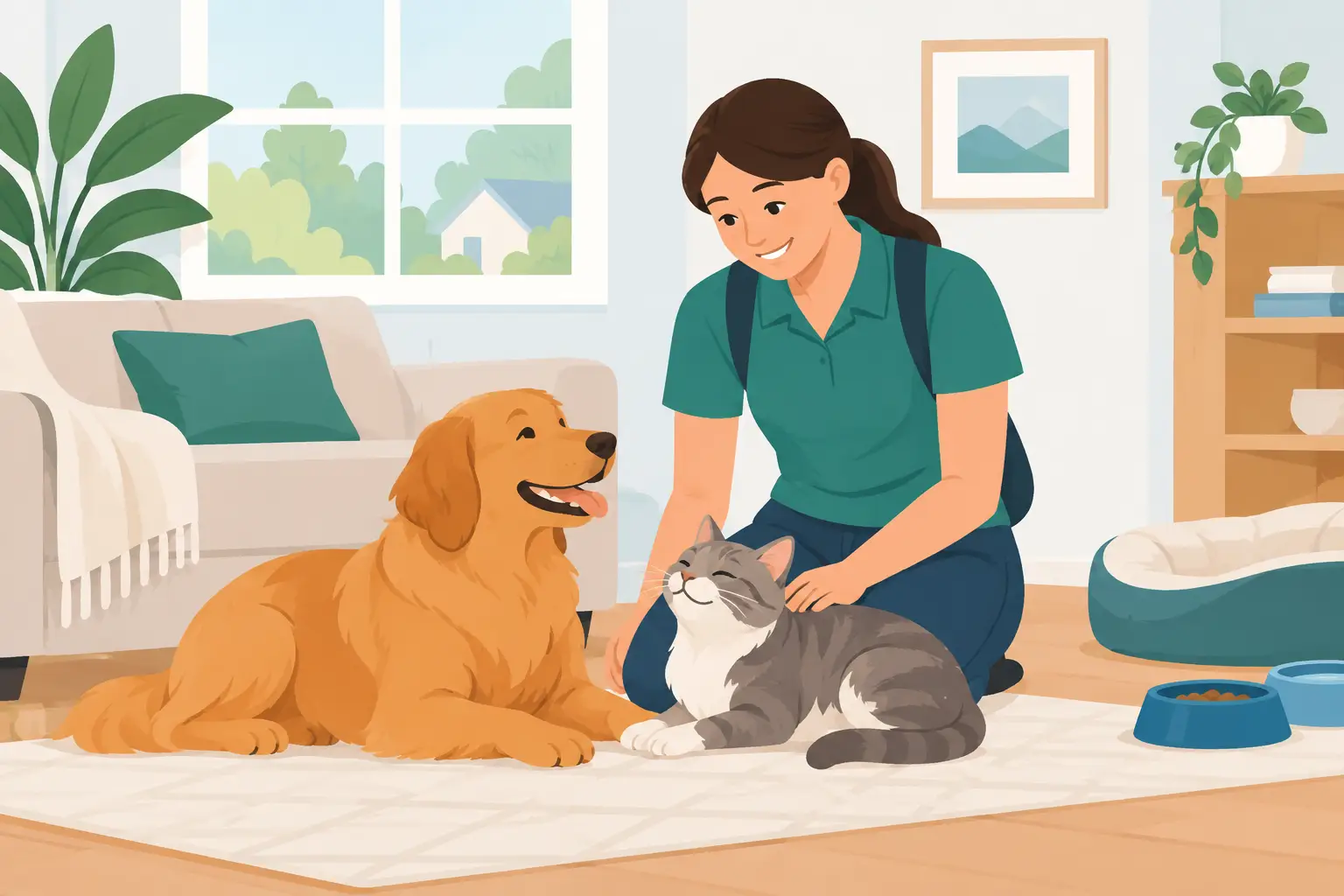
The hardest part of going away is often not packing the car or catching the train. It is looking at your pet and wondering whether they will feel unsettled without you. Pet sitting gives many dogs, cats and smaller pets the comfort of staying in the place they know best, with their usual smells, sleeping spots and daily routine still close at hand.
For owners balancing work, family commitments, weekends away or a longer holiday, care at home can be a friendly alternative to kennels and catteries. The right arrangement is not simply about someone filling a food bowl. It is about choosing a reliable person who understands your pet, follows your instructions carefully and keeps you reassured while you are apart.
What pet sitting looks like in real life
Pet sitting is tailored to the animal and the household. A cat may need one or two visits a day for meals, fresh water, litter tray cleaning, play and company. A dog may need feeding, walks, medication and time at home with a sitter, or an overnight stay if being alone would be difficult. Rabbits, guinea pigs, birds and other small pets also benefit from familiar, consistent care when their owners are away.
The biggest benefit is continuity. Your pet remains in their own environment rather than being transported to an unfamiliar setting with different noises, animals and routines. This can be particularly helpful for cats, older pets, nervous animals and pets who do not settle well around strangers.
That does not mean home care is automatically right for every animal. Very sociable dogs may enjoy home boarding with a suitable carer, while pets with complex medical needs may require veterinary guidance or a more specialist arrangement. A good pet care provider will talk through those differences rather than treating every booking in the same way.
Why familiar surroundings matter
Pets notice small changes. A different feeding time, a missing person at bedtime or an unfamiliar smell can affect how secure they feel. Keeping them at home means their bed, toys, garden and usual resting places are still there. For cats especially, territory often matters more than company from other animals.
Routine is useful for owners too. A thoughtful sitter can follow the practical details that make your pet comfortable: the preferred walking route, the hiding place of the favourite toy, the meal portion that actually gets eaten, or the quiet way your dog likes to be greeted. These details are not fussy. They are how care becomes personal.
Regular updates also make a real difference. A short message, photo or note after a visit lets you see that your pet is content and cared for. It removes the temptation to spend your whole holiday worrying about whether they have eaten or settled for the night.
Choosing a pet sitter you can trust
Inviting somebody into your home and placing your pet in their care is a big decision. Warmth with animals matters, but so do clear standards and accountability. Before booking, ask how the service works from the first meeting to the final handover.
Look for a provider that takes time to learn about your pet before care begins. A proper meet and greet gives you a chance to explain routines, introduce your pet at their own pace and raise anything that could affect their care. It is also your opportunity to see whether the sitter listens, asks sensible questions and makes both you and your pet feel at ease.
You should also be clear about insurance, DBS checks, emergency procedures and how keys are handled. These are not awkward questions. Professional carers expect them. Ask what happens if your pet becomes unwell, if bad weather changes a walking plan, or if a sitter is unexpectedly unable to attend. Knowing there is a clear process behind the friendly face offers genuine peace of mind.
At Scamps and Champs, carers are fully insured and DBS-checked, combining local, personal care with the reassurance of professional standards. For many owners, that balance is exactly what makes asking for help feel comfortable.
Communication should never be an afterthought
Agree how often you would like updates before you leave. Some owners are happy with one daily message, while others appreciate a photo after every visit. There is no wrong preference, provided it is discussed openly.
It also helps to leave more than one contact number and the details of your usual veterinary practice. If you are travelling abroad, make sure the sitter knows how to reach you and who can make decisions locally if needed. A little organisation beforehand means everyone can focus on your pet if an unexpected situation arises.
Getting your home and pet ready
A clear care plan makes pet sitting easier for your sitter and calmer for your pet. Write down feeding times, portion sizes, walk lengths, medication instructions, favourite games and anything your pet dislikes. Be honest about habits such as pulling on the lead, guarding food, hiding from visitors or being frightened by traffic. The more your sitter knows, the safer and more relaxed the care can be.
Leave enough food, treats, litter, bedding and cleaning supplies for the full booking, plus a little extra in case you are delayed. Put leads, harnesses, carriers and medication somewhere obvious. If your pet has a microchip, check that your contact details are current before you go.
For dogs, it is helpful to explain their usual commands and any rules you follow at home. Consistency matters. If your dog is not allowed off lead, sleeps downstairs or needs a quiet walk at certain times, your sitter should know. For cats, mention favourite hiding spots and whether they are likely to try to slip through an open door.
Small pets deserve the same level of detail. Rabbits and guinea pigs, for example, can be sensitive to changes in appetite or behaviour. A sitter needs to know what is normal for them, how their enclosure is cleaned and which foods are safe.
When overnight pet sitting may be the better choice
A daytime visit is enough for many independent cats and settled small pets. However, some animals benefit from someone staying overnight. This can be a good option for dogs who are used to company, young pets, animals recovering from a routine procedure, or pets who become anxious when left alone after dark.
Overnight pet sitting is not about replacing you. It is about maintaining the reassuring rhythm of home while you are away. Your pet can sleep in their own familiar space, wake up to a known routine and enjoy company between walks and meals.
It is worth discussing expectations clearly. Ask when the sitter will arrive and leave, whether daytime visits or walks are included, and how your home will be kept secure. The right option depends on your pet’s personality, your schedule and the level of support that helps you feel comfortable.
A calmer way to be apart
Leaving your pet does not have to mean disrupting their whole world. With a caring, dependable sitter, home can remain the safe and familiar place it has always been, even while you are away. Take time to choose a service that welcomes questions, understands local pet owners and treats the small details as seriously as you do. Your pet may not understand where you have gone, but they will understand a calm routine, kind company and the comfort of home.