
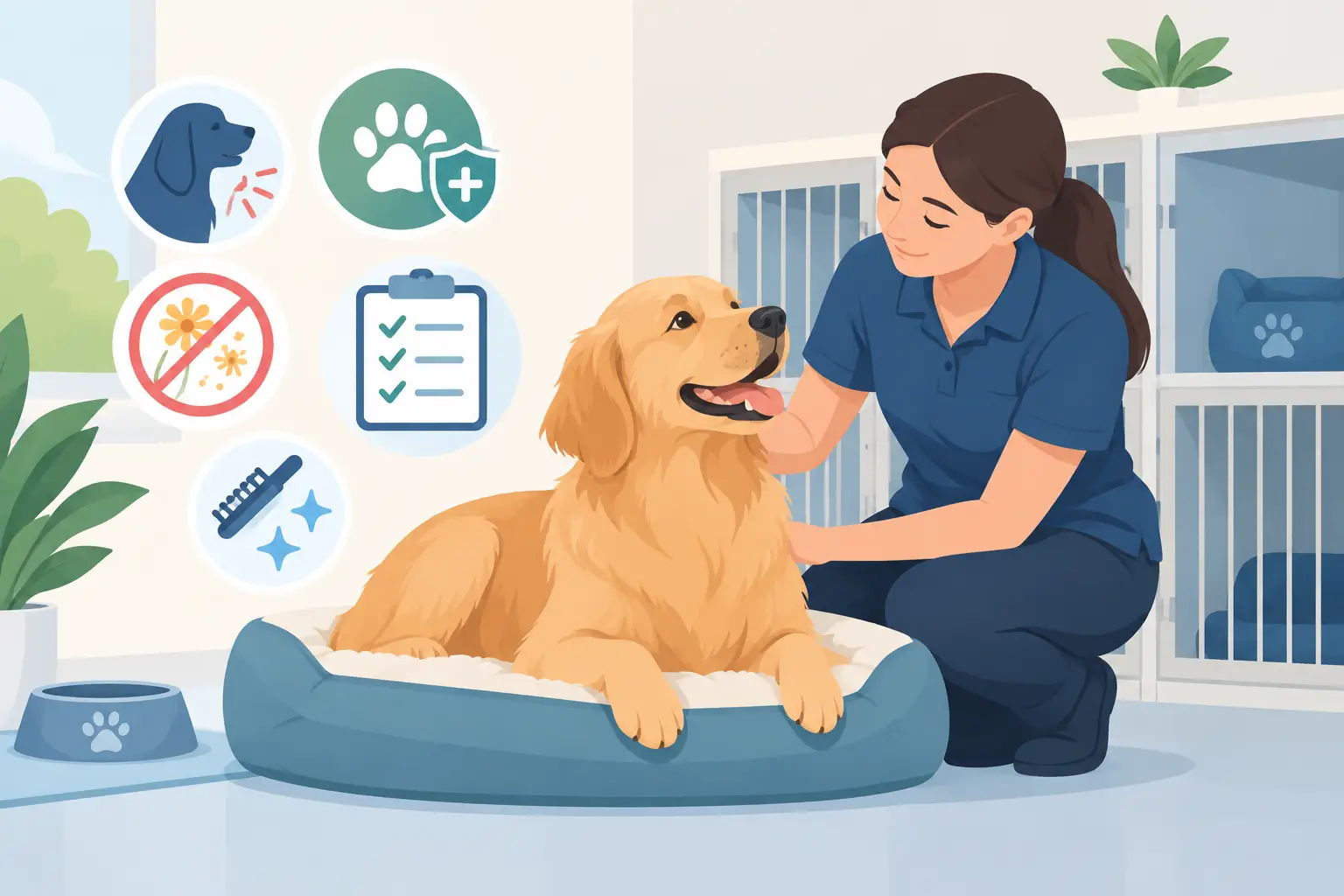
A dog with itchy paws, a sensitive stomach or a strict prescription diet can make planning a holiday feel far more complicated. So, can dogs board with allergies? Often, yes – but only when the care arrangement is right for your dog and the carer has clear, complete information before the stay begins.
Allergies are not a small detail to mention at handover. From an ingredient in a treat to pollen brought in on another dog’s coat, a trigger can be difficult to spot once your pet is away from home. Thoughtful planning gives your carer the best chance of keeping routines consistent, avoiding known triggers and recognising quickly if something is not right.
Can dogs board with allergies safely?
Many dogs with mild, well-managed allergies can stay in home boarding or receive pet sitting care without a problem. The answer depends on the type of allergy, how severe the reaction can be, whether medication is needed and how much control is required around food and the environment.
A dog who gets mildly itchy during grass-pollen season may need regular paw wiping and their usual antihistamine, if prescribed by a vet. A dog with a confirmed food allergy may need every meal, treat and chew carefully controlled. A dog who has previously had facial swelling, breathing difficulty or collapse after exposure needs a much more cautious plan, and boarding may not be appropriate without veterinary guidance.
There is no benefit in playing down a condition because you worry a carer may say no. A responsible carer would rather understand the full picture and make an honest decision than take a risk with your dog’s health. Sometimes the safest option is care in your own home, where food, cleaning products and routines are already familiar.
Start with your vet and your dog’s care plan
Before confirming a stay, ask your vet whether your dog is well enough to be cared for away from home. This is particularly worthwhile if symptoms are currently flaring, a new medication has just started, or your dog has had a severe reaction in the past.
Your vet can clarify what your carer should do if symptoms appear, whether missed doses would be a concern, and when urgent treatment is needed. If your dog carries emergency medication, make sure you understand exactly when it should be given. Carers should not be asked to make medical judgement calls that have not been clearly explained by a veterinary professional.
Bring any medication in its original packaging with the prescription label attached. Provide enough for the whole stay plus a little extra in case travel home is delayed. Written instructions should include the medicine name, dose, timing, how it is given, what it is for and what to do if your dog refuses it or is sick after a dose.
Be specific about the allergy
Saying that your dog has a “sensitive tummy” is useful, but it does not give a carer enough information to protect them. Share the diagnosis, the known trigger if one has been identified, the typical symptoms and how quickly those symptoms tend to appear.
Food allergies require the clearest boundaries. List ingredients your dog must not eat, including common extras such as chicken, beef, dairy, wheat or certain treats. If they eat a veterinary diet, provide all meals yourself in labelled portions. Include their usual treats or confirm that no treats should be given at all.
Environmental allergies can be more variable. Your dog may react to grass, pollen, dust mites, mould, scented sprays, flea bites or household cleaners. Let the carer know whether walks through long grass are best avoided, whether paws need rinsing after each outing, and whether bedding needs to be washed in a particular detergent.
Contact allergies are less common but still relevant. If a collar material, shampoo or cleaning product has caused a reaction before, say so. It is better to mention a possible issue than to assume a product will not be used.
Choose a setting that suits your dog
Traditional kennels can work well for some dogs, but they may be harder to manage when a dog needs strict food separation, frequent skin care or a low-stress routine. There may be more dogs, more changes in routine and more opportunities for accidental treat sharing.
Home boarding offers a more personal setting, although it is not automatically the best answer. Ask whether other dogs will be present, what they are fed, where meals are served and how treats are managed. A friendly resident dog can be lovely company, but shared spaces need careful supervision when allergies are involved.
For dogs who are anxious, medically complex or very sensitive to environmental changes, in-home pet sitting may be the calmer choice. Your dog can sleep in their own bed, eat from their normal bowl and follow their established walking route. That familiarity can reduce stress, which is helpful because stress can worsen skin and digestive symptoms in some dogs.
Scamps and Champs can discuss the practical details of local home-based and in-home care so owners can choose an arrangement that feels safe, not simply convenient.
Questions to ask before booking allergy-aware dog boarding
A good conversation before booking is as valuable as the booking itself. You want to know that your carer is comfortable following instructions, but also that they will be honest about their limits.
Ask how they keep dogs’ food separate, whether family members or other dogs may offer treats, and how medication is recorded. Find out how they manage walk routes, bathing, bedding and cleaning products where these could affect your dog. It is also sensible to ask who will be caring for your pet, whether they are insured and DBS-checked, and what happens if the main carer becomes unavailable.
Discuss emergency arrangements in plain terms. Your carer should have your vet’s details, your preferred emergency contact and consent to seek veterinary treatment if they cannot reach you. Check which practice they would use out of hours and how transport would be arranged. These conversations are not pessimistic – they are part of responsible care.
A meet and greet is especially helpful for allergic dogs. It gives you time to show the medication routine, explain food storage and let the carer see any skin changes or warning signs that are normal for your dog. If possible, a short trial stay can reveal whether the environment and routine suit them before a longer holiday booking.
Pack more than food and medication
A clearly organised bag makes it much easier for a carer to follow your dog’s normal routine. Label food portions by day and meal, and keep treats separate from any items that are not for your dog. If meals need soaking, weighing or serving at particular times, write it down rather than relying on memory.
Pack their lead, harness, coat if needed, bed or blanket, favourite toy and any grooming items approved for their skin. A familiar blanket is not just a comfort item – it may help a dog settle without introducing unfamiliar fabrics or fragranced bedding.
Include a one-page care sheet. Alongside feeding and medication, note what a normal stool looks like, where your dog usually scratches, how they show discomfort and what behaviour may signal a reaction. For example, repeated paw licking, ear shaking, red skin, vomiting or loose stools can be early clues. Add clear instructions on when you would like an update and how you would prefer to be contacted.
Know when boarding should wait
Even the most attentive carer cannot make every situation suitable for boarding. If your dog has active hives, persistent vomiting, infected skin, uncontrolled diarrhoea, breathing changes or has recently needed emergency treatment, speak to your vet before making care plans.
It may also be better to postpone a stay when you are still working out the cause of a reaction. Changing food, location, washing products and daily routine all at once can make it harder to identify the trigger. Waiting until symptoms are settled can be kinder to your dog and less stressful for everyone involved.
The right care arrangement should never leave you wondering whether your dog’s needs are being taken seriously. With an honest briefing, a capable local carer and a plan built around your dog’s own triggers, many allergic dogs can enjoy a comfortable stay while you are away.
Dog home boarding is available from our Halifax branch only. In Stockport we offer cat visits and pet sitting in your own home. Call 0161 399 0317 to check what we can do for your dates.