
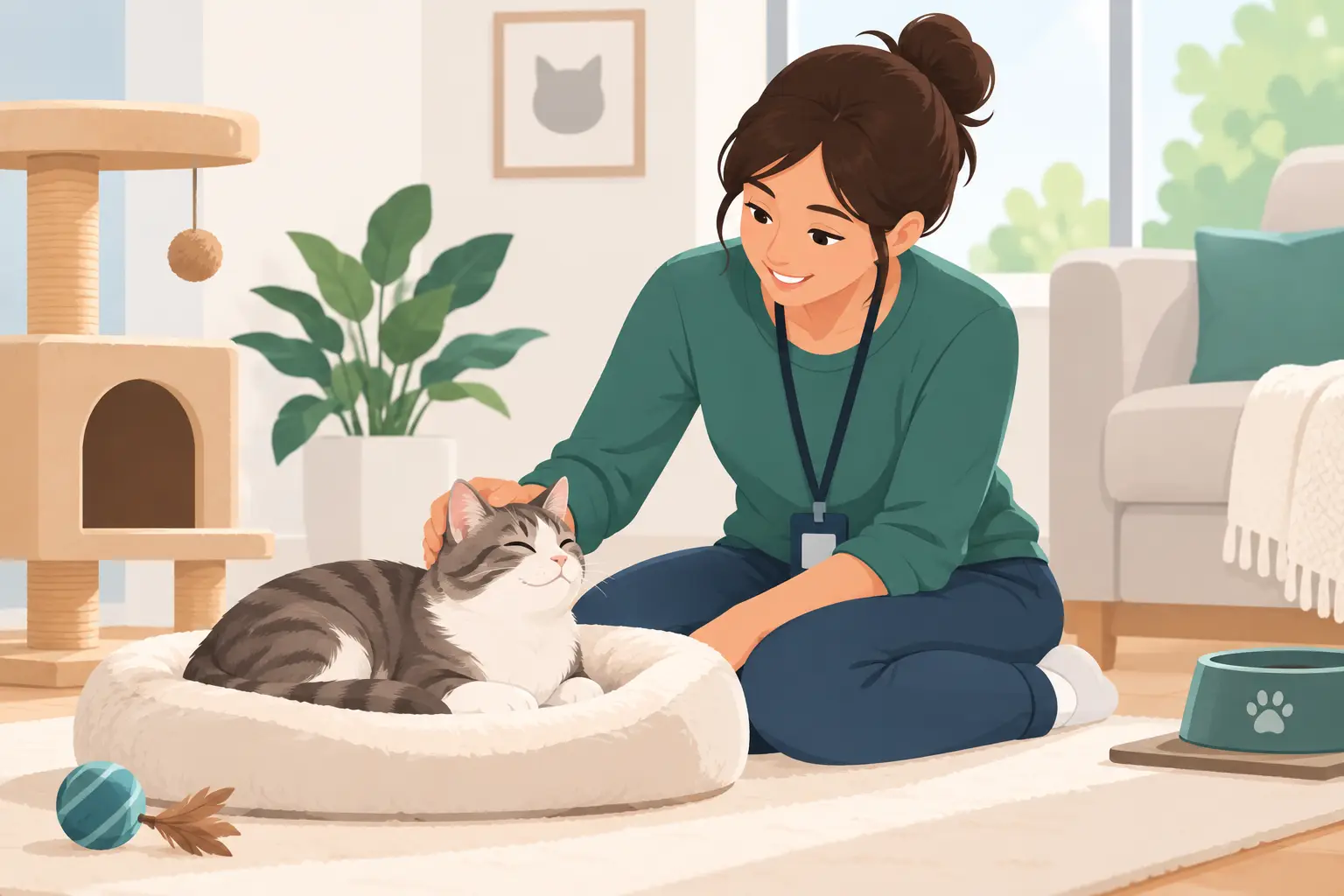
A cat may look wonderfully independent, but most cats notice every small change at home. A suitcase by the door, a different feeding time or an unfamiliar sound can be enough to unsettle them. That is why the right cat sitters do far more than top up a bowl and disappear. They help your cat keep the routine, space and gentle attention they rely on while you are away.
For many cats, staying at home is a kinder alternative to a cattery. They can sleep in their favourite spot, use their usual litter tray and move around their own territory without the noise and unfamiliar smells of other animals. For owners, a professional visit brings reassurance that someone dependable is keeping a proper eye on things.
Why home visits suit so many cats
Cats are territorial creatures. Even sociable cats can find a new environment stressful, particularly if there are other cats nearby, different smells or a change to their normal feeding routine. A home-based care arrangement keeps the biggest part of their world exactly where it should be: familiar.
A good sitter works around your cat rather than expecting your cat to adapt to them. Some cats will greet a visitor at the door and demand a fuss. Others prefer to watch from a safe distance for the first few visits. Both responses are perfectly normal. Patient care gives a shy cat time to build confidence, while a friendly cat gets the play, conversation and companionship they enjoy.
Home visits can also be particularly helpful for older cats, cats on medication and multi-cat households. Instead of organising carriers, travel and a stay somewhere new, you can leave clear instructions and know your pets are being cared for in their own surroundings.
That does not mean a cattery is always the wrong choice. Some owners prefer it for a very long trip, or when home access is not practical. The best option depends on your cat’s temperament, health needs and how long you will be away. For many households, though, regular visits at home offer the calmest balance.
What cat sitters should do on every visit
Reliable cat sitting is built on the small details. Feeding is only one part of the job. Your sitter should follow the diet you set out, refresh water, clean the litter tray and take time to check that your cat seems comfortable and well.
They should also look for changes that can be easy to miss. Is your cat eating normally? Have they used the litter tray? Are they hiding more than usual, moving stiffly or showing signs of sickness? Cats are experts at masking discomfort, so an observant carer matters. If anything does not seem right, you should be contacted promptly and agree on the next step.
The visit should include a little quality time too, based on what your cat likes. That might mean a game with a wand toy, brushing, a lap cuddle or simply sitting quietly nearby while they investigate. A sitter who understands cats knows that affection cannot be forced. Giving a nervous cat space is care too.
Many owners also value practical home checks while they are away. Bringing post inside, opening and closing curtains, switching lights on and off, and checking for obvious issues such as a spill or a cold room can make the house look lived in as well as helping you return to a home that feels in order.
Choosing cat sitters you can trust
You are not only choosing someone to care for your cat. You are giving them access to your home, which makes trust and clear communication essential. Start by looking for a local service that is open about how it works, who will visit and what happens if plans change.
Professional standards make a real difference. Ask whether carers are DBS-checked and insured, how keys are handled, and whether there is a back-up plan if your usual sitter is unexpectedly unwell. A dependable provider will welcome these questions. They understand that reassurance is part of the service, not an extra.
It is also worth arranging a meet and greet before your first booking. This gives you time to explain your cat’s routine, show where food and cleaning supplies are kept, and discuss any worries. It lets your cat meet the person who will be visiting too. There is no need to expect instant friendship, but seeing how the sitter approaches your cat can tell you a lot.
Look for a carer who asks thoughtful questions. They should want to know about your cat’s usual behaviour, hiding places, food preferences, medical history and vet details. A sitter who listens carefully is more likely to notice when something is out of character.
Setting your cat up for a settled stay at home
A little preparation makes the whole experience easier for both your cat and their sitter. Write instructions clearly, even if they seem obvious to you. Cats can have surprisingly particular habits, from insisting on one flavour of food in the morning to drinking only from a certain bowl.
Before you leave, make sure there is enough food, litter and medication for the full trip, with extra in case travel plans change. Leave your vet’s contact details, your emergency contact, and written permission for veterinary treatment if needed. Tell the sitter where the carrier is kept and how to find your cat’s favourite hiding places.
It helps to cover these practical points:
- your cat’s feeding times, portions and treats
- medication instructions and any health conditions
- litter tray routine and preferred cleaning products
- indoor and outdoor access, including microchip cat flap details
- behaviours that are normal for your cat, such as hiding or waking early
Do not make big changes just before you go. Now is not the time to move furniture, try a new food or introduce a different litter. Keep the home calm and familiar, and leave a favourite blanket or bed exactly where your cat expects it.
Updates that offer real peace of mind
When you are away, a brief update can make a huge difference. A message confirming that your cat has eaten, used the litter tray and had some attention lets you relax rather than wondering how things are going. A photo is often a welcome extra, especially when it shows your cat looking comfortable in their usual spot.
The most useful updates are honest ones. A confident, people-loving cat may be ready for the camera straight away. A timid cat may stay under the bed at first, but still eat, drink and use the tray normally. A good sitter will explain that difference rather than sending a vague message that leaves you more worried.
Communication should also be straightforward if something changes. If your cat refuses a meal, is sick or cannot be found at the usual time, you need to know what has happened and what the sitter is doing. Calm, timely communication is one of the clearest signs that your pet is in capable hands.
Local care makes the difference
A local cat sitter is not just convenient for key handovers. They are better placed to understand the area, respond quickly if needed and offer care that feels personal rather than transactional. For pet owners in Stockport and Halifax, having a familiar local team can take a lot of pressure out of holidays, work trips and family plans.
At Scamps and Champs, cat care is centred on the simple things cats value most: familiar surroundings, a routine that feels right and a carer who treats them with genuine patience. With insured, DBS-checked carers and clear booking arrangements, owners can leave home knowing their cat has not been left to fend for themselves.
The best time to find cat sitters is before you urgently need one. Arrange that first meeting while you are still at home, let your cat set the pace, and keep the details of a trusted local carer close by. Then, when your next trip comes around, you can pack your case with one less worry.