
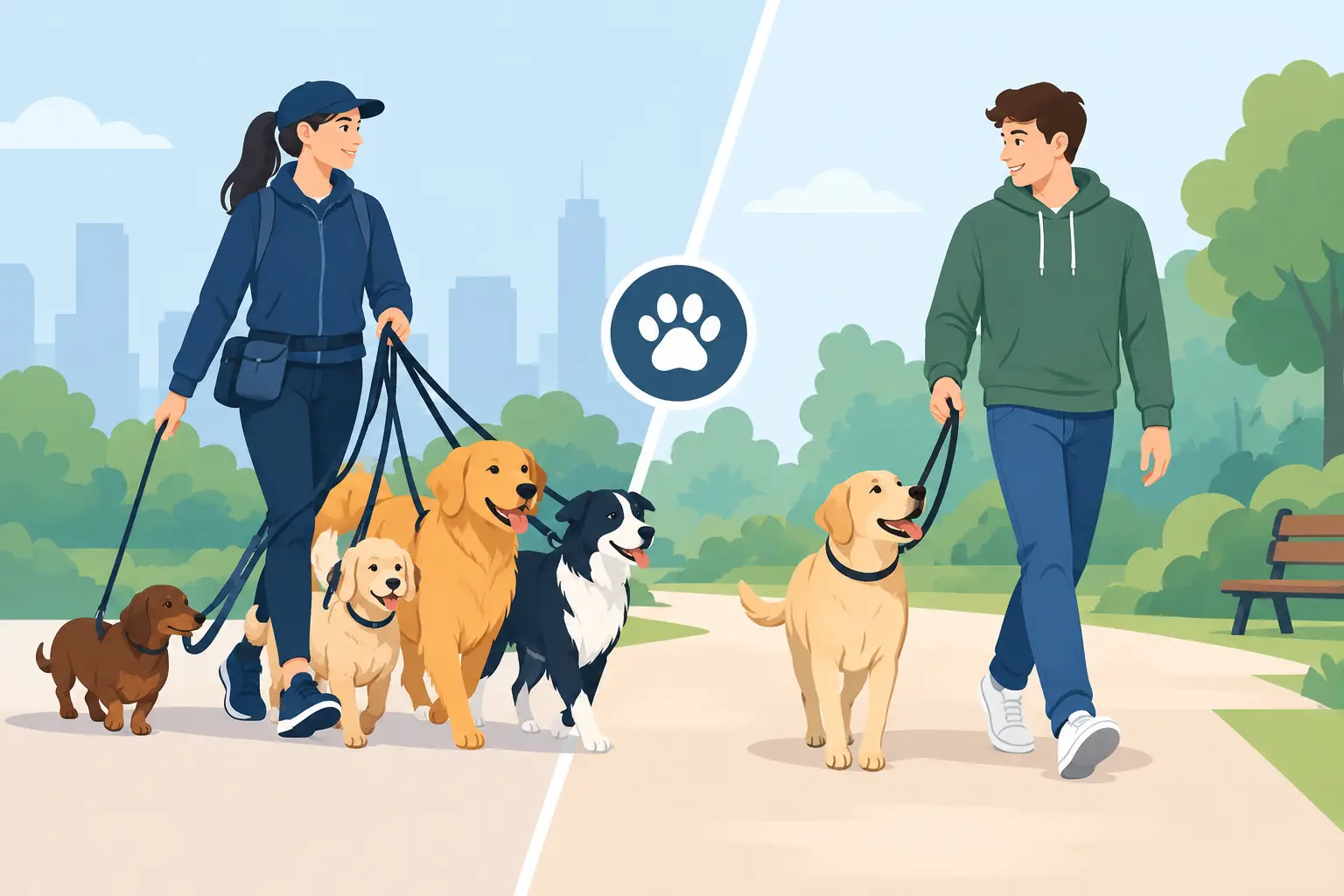
At 4.30pm, when meetings run late and the school run is still to come, asking a mate to take the dog out can feel like the obvious answer. The professional walker versus friend question is not really about who loves your dog more. It is about finding care that remains safe, reliable and right for your dog, even when life gets busy.
A trusted friend can be a wonderful help, particularly for the occasional walk or a one-off emergency. But regular dog walking has practical responsibilities that are easy to overlook. Your dog needs the right pace, suitable company, secure handling and a dependable routine. The best choice depends on your dog, your schedule and how much certainty you need when you hand over the lead.
Professional walker versus friend: the real choice
The biggest difference is usually not affection. Most friends who offer to walk your dog genuinely care about them. The difference is accountability.
A professional dog walker has chosen pet care as their job. That means walks are planned around the dogs in their care, rather than fitted around work, family plans, bad weather or other commitments. A friend may have every intention of helping, but a last-minute appointment, a poorly child or a busy week can change what they can realistically manage.
For some owners, flexibility is more valuable than formality. If your neighbour is retired, knows your dog well and is happy to help at short notice, that arrangement may work beautifully. If you need regular weekday walks to keep a young Labrador settled while you are at work, a professional service often brings more consistency.
Routine matters more than many owners realise
Dogs thrive on knowing what comes next. A predictable midday walk can help with toilet routines, boredom, energy levels and general contentment at home. This is especially useful for puppies, lively breeds, older dogs who need a gentler schedule, and dogs that find long periods alone difficult.
A friend may walk your dog at a different time each day, take a shorter route when they are rushed, or need to cancel occasionally. None of that makes them uncaring. It simply reflects the fact that they are doing a favour around their own life.
A professional walker is more likely to agree a regular slot, understand your dog’s normal behaviour and notice when something is not quite right. Perhaps your dog is slower than usual, has skipped a wee, seems unsettled around another dog, or has a sore paw. Familiarity, built over repeated walks, can make those small changes easier to spot.
Safety is more than holding the lead
Every dog walk carries some level of responsibility. Busy roads, off-lead dogs, livestock, slippery paths and unexpected noises can all change an ordinary outing very quickly. A capable friend may be perfectly comfortable managing these situations, but it is fair to ask whether they have the experience, equipment and cover needed if something goes wrong.
Professional pet carers should have clear safety procedures and appropriate insurance. They should also ask sensible questions before the first walk: whether your dog can be let off lead, how they react to other dogs, whether they pull, what treats they can have, and who to contact if there is an emergency.
For owners, that preparation brings peace of mind. You are not just passing over a lead and hoping for the best. You are sharing the information someone needs to care for your dog properly.
At Scamps and Champs, carers are fully insured and DBS-checked, which offers an added layer of reassurance when someone is entering your home and taking responsibility for a much-loved pet. That professional framework can be particularly valuable for dogs with medical needs, nervous temperaments or a history of difficult encounters.
The value of updates and clear communication
When you are at work, it is natural to wonder whether your dog has been out, eaten a treat, enjoyed the walk or come home settled. A friend may send a lovely photo when they remember, but professional services often make updates part of the arrangement.
GPS tracking, walk reports and photos are not just nice extras for owners who miss their dog. They provide clarity. You can see that the walk happened, understand how your dog got on and raise any concerns early. For first-time customers, regular updates can make the adjustment much easier.
Communication also matters if plans change. If you are delayed on the train, your dog has had an upset tummy, or the weather is too hot for the usual route, you need a carer who can respond calmly and keep you informed. A professional relationship should make those conversations straightforward, rather than leaving you worried that you are asking too much of a friend.
When a friend may be the better option
Professional care is not automatically the right answer for every household. If your dog is already very close to a friend or family member, and that person is genuinely available and confident with dogs, familiar care can be a brilliant choice. Some dogs are happiest with people they already know well.
It can also suit occasional needs. Perhaps you are out for dinner, have a one-off hospital appointment, or need someone to pop in while a delivery is due. A trusted friend can be ideal for those moments, particularly if your dog is relaxed, easy to handle and does not need a strict weekday routine.
The key is to be honest about the arrangement. Is your friend happy to do this regularly? Do they understand your dog’s habits and boundaries? Would they know what to do if your dog slipped a lead, became unwell or reacted badly to another dog? A clear conversation protects the friendship as well as your pet.
When professional walking earns its place
A professional walker is often the stronger fit when dog care is a regular part of your week rather than an occasional favour. Working households, parents juggling changing schedules and people who travel often benefit from having a dependable plan in place.
It is also worth considering professional support if your dog needs individual attention. Puppies may need short, carefully managed walks and help with routine. Senior dogs may need a slower pace and close observation. Reactive or anxious dogs can need a carer who follows agreed handling instructions rather than taking a chance in a busy park.
There is a financial consideration, of course. Asking a friend may cost nothing, while professional care is a paid service. But the fee supports dedicated time, planned routes, insurance, administration and the reassurance that your dog’s walk is not dependent on someone doing you a favour. For many owners, that reliability is worth budgeting for.
Choosing without guilt
Some owners worry that using a professional somehow means they are not asking enough of their support network. Others feel awkward asking a friend repeatedly, even when the friend has offered. Neither feeling needs to dictate the decision.
You can value a friend’s kindness while recognising that regular dog walking is a responsibility. You can also use both options in different ways. A professional may cover weekday walks, while a friend looks after your dog for an occasional evening or joins you for a weekend woodland walk. Your dog can benefit from both dependable routine and familiar faces.
Before choosing, think about your dog’s personality, not just your diary. A sociable spaniel may love structured group walks with suitable companions. A sensitive rescue dog may be happier with a consistent one-to-one walker. A confident older dog may enjoy seeing a familiar neighbour twice a week. The right answer is the one that keeps your dog comfortable, safe and well cared for.
A good dog-care arrangement should leave you heading to work, travelling for the day or managing family life with a lighter heart. Whether that is a trusted friend, a professional walker or a thoughtful mix of both, your dog deserves someone who turns up, pays attention and treats every walk as more than just a trip around the block.